
Mapping the Invisible College: 35 Years of Institutional Evolution in Strategic Management
Mapping the institutional collaboration network of strategic management research: 1980–2014
This study utilizes Social Network Analysis (SNA) and bibliometric techniques to map the evolution of institutional collaboration in the field of Strategic Management (SM) based on articles published in the Strategic Management Journal (SMJ) from 1980 to 2014. It highlights a transition from single-author dominance to complex multi-institutional networks, identifying a persistent hegemony of US-based institutions within the global research landscape.
TL;DR
A deep dive into 34 years of Strategic Management Journal (SMJ) data reveals that while the field has become increasingly collaborative and international, it remains an "elite club" dominated by a few US powerhouses. The transition from "Lone Wolf" researchers to institutional clusters reflects a maturing but still fragmented discipline.
The Shift from Individuals to Institutions
Historically, strategic management was the domain of the lone scholar. However, between 1980 and 2014, the "social structure" of the field underwent a radical transformation. This study uncovers a crucial trend: the decline of single-author/single-institution papers and the explosive growth of multi-institutional collaboration.
Why did this happen? The author suggests that the increasing complexity of SM topics—often crossing into law, economics, and psychology—requires specialized research teams. Furthermore, government funding and university promotion policies have created an "incentive loop" for international partnerships.
Methodology: Seeing the Field as a Web
By partitioning the 35-year window into five 7-year blocks, the research tracks the "maturation" of the collaboration network. The study uses Social Network Analysis (SNA) to identify "Brokers" (institutions with high Betweenness Centrality) and "Influencers" (those with high Degree Centrality).
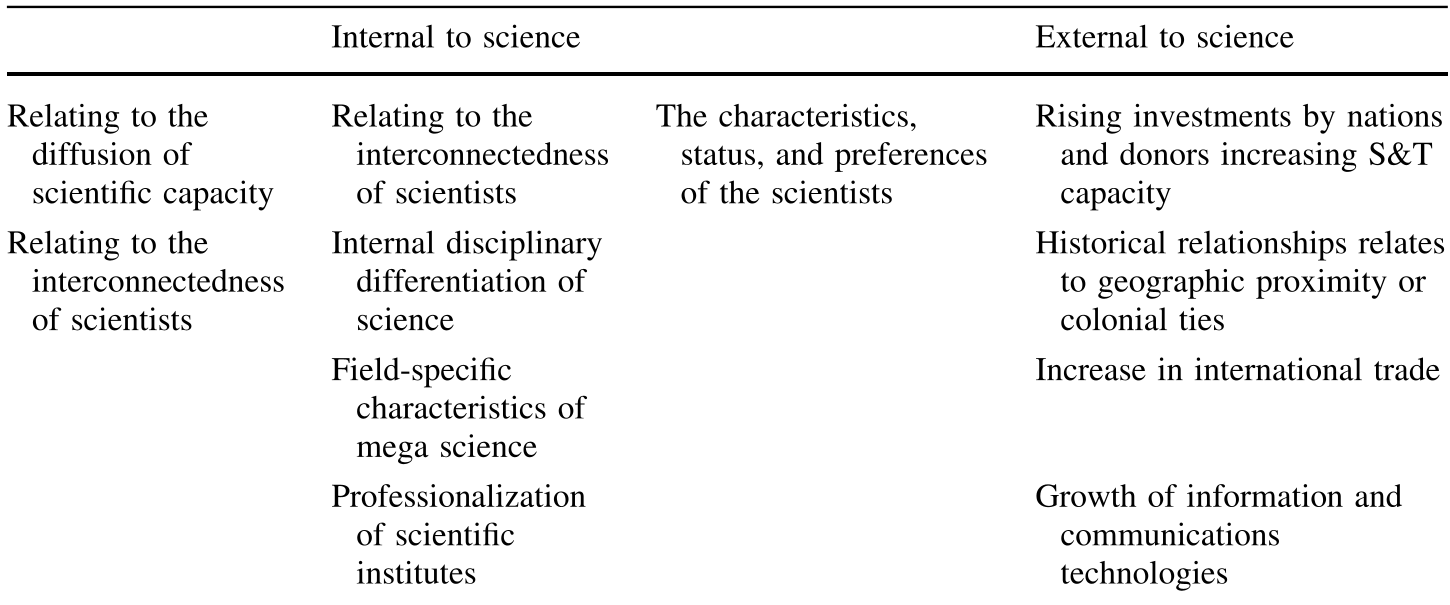 Figure 1: Internal and External drivers of international scientific collaboration.
The Anatomy of Hegemony: Who Rules the Core?
One of the most striking findings is the persistent dominance of US institutions. Despite the growth of international trade and the digital revolution, the center of gravity has barely moved from the American Midwest and Northeast.
- The Power Players: University of Pennsylvania, Michigan, and Harvard remain the most productive.
- The New Guard: Texas A&M and University of Illinois at Urbana have emerged as critical "brokers" in the network, connecting disparate research groups.
- The Global Periphery: While Asian and European participation is rising, institutions in these regions often prioritize collaborating with US centers over collaborating with each other. This adheres to the "Center-Periphery" model, where prestige is sought by aligning with the dominant hub.
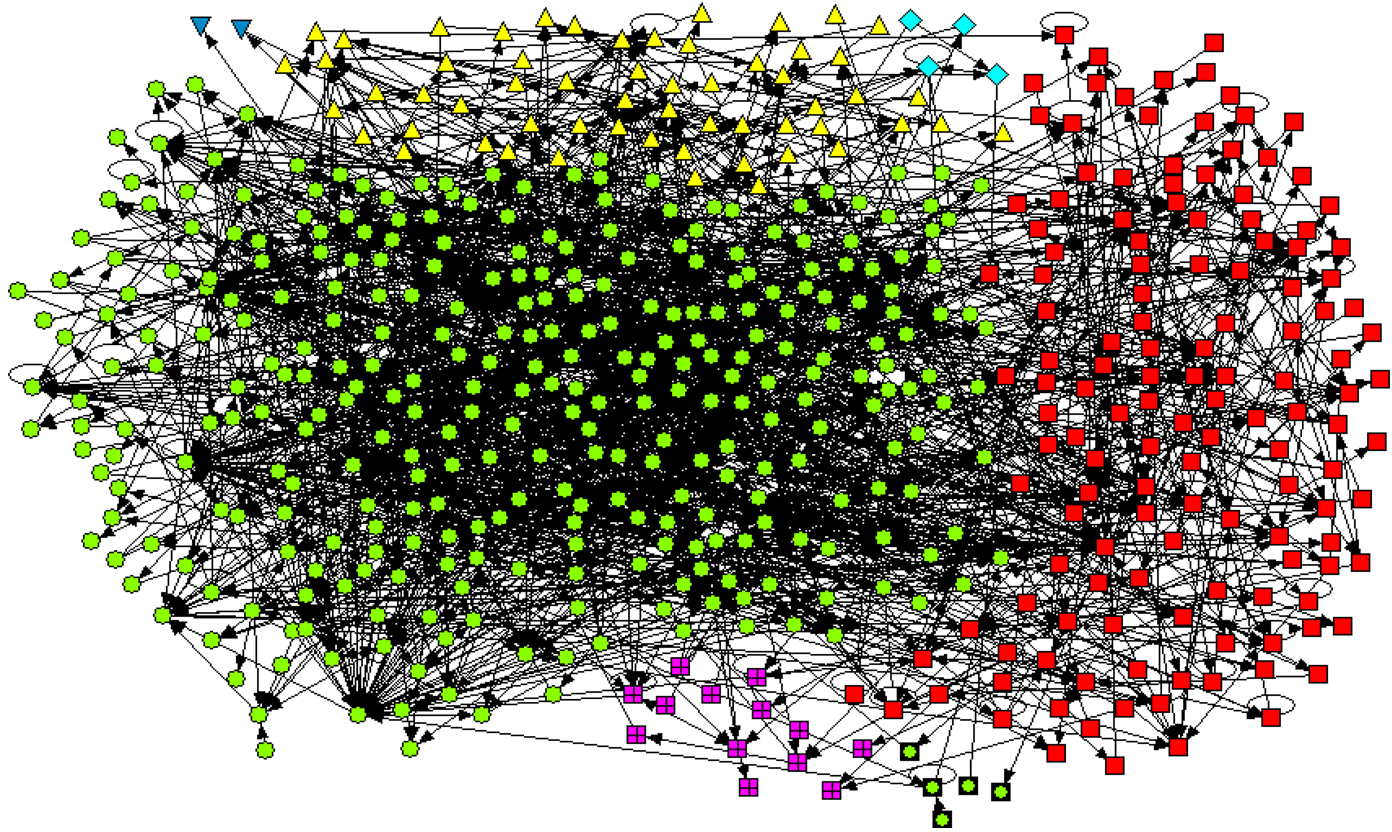 Figure 2: The growth and interconnectedness of the "Main Component" of institutions over time.
Critical Insight: The Fragmentation Paradox
The study reveals a paradox: while more institutions are participating, the network density remains incredibly low (0.005). The network is "weakly clustered, fragmented, and scattered."
Most "cliques" (highly connected sub-groups) didn't even emerge until the final sub-period (2008–2014). This suggests that Strategic Management is a "Young Science"—it has the size of a major discipline but lacks the tight-knit social cohesion seen in older fields like Physics or Chemistry.
Limitations and Future Outlook
The primary limitation is the focus on a single journal (SMJ). While SMJ is the gold standard, the exclusion of other journals might mask collaborative efforts in emerging sub-fields like Business Ethics or Entrepreneurship.
Conclusion: For junior scholars, the takeaway is clear: Institutional position matters. Choosing a "core" institution provides disproportionate access to information flow and high-impact partnerships. For the field at large, the challenge remains moving beyond its US-centric "parochial footprint" to create a truly global discourse.