
Beyond the Screen: Why Great Tech Fails Agricultural Markets
Market Separations Perspective of Agricultural Markets and Successful AMIS: Beyond Technical Rationality
This paper introduces a multi-dimensional framework based on Bartels’ Theory of Market Separations to evaluate Agricultural Market Information Systems (AMIS). It proposes that successful AMIS implementation requires bridging spatial, temporal, financial, and informational gaps at both the agricultural market level and the service delivery level.
TL;DR
Agricultural Market Information Systems (AMIS) are often hailed as the "silver bullet" for farmers in developing nations. By providing real-up-to-the-minute price data via SMS or web, they aim to empower the poor. However, this paper argues that Technical Rationality—the belief that better data automatically leads to better decisions—is a myth. To succeed, an AMIS must bridge not just information gaps, but deep-seated Socio-Political Separations like caste and community power dynamics.
The "Broken" Market: A Multidimensional Problem
Traditional agricultural markets in developing regions like India suffer from high levels of inefficiency. Farmers often sell at a loss because they lack "Spatial" and "Temporal" awareness.
The authors utilize Bartels’ Theory of Market Separations to categorize these failures:
- Spatial: Not knowing the price in the next town.
- Temporal: Not knowing when to store vs. when to sell.
- Informational: The core driver, where traders exploit information asymmetries to profit at the farmer's expense.
Methodology: The Two-Level Analysis
The paper's unique insight lies in its dual-layered evaluation. It doesn't just look at the farm; it looks at the Service Market for the information itself.
Level 1: The Agricultural Market
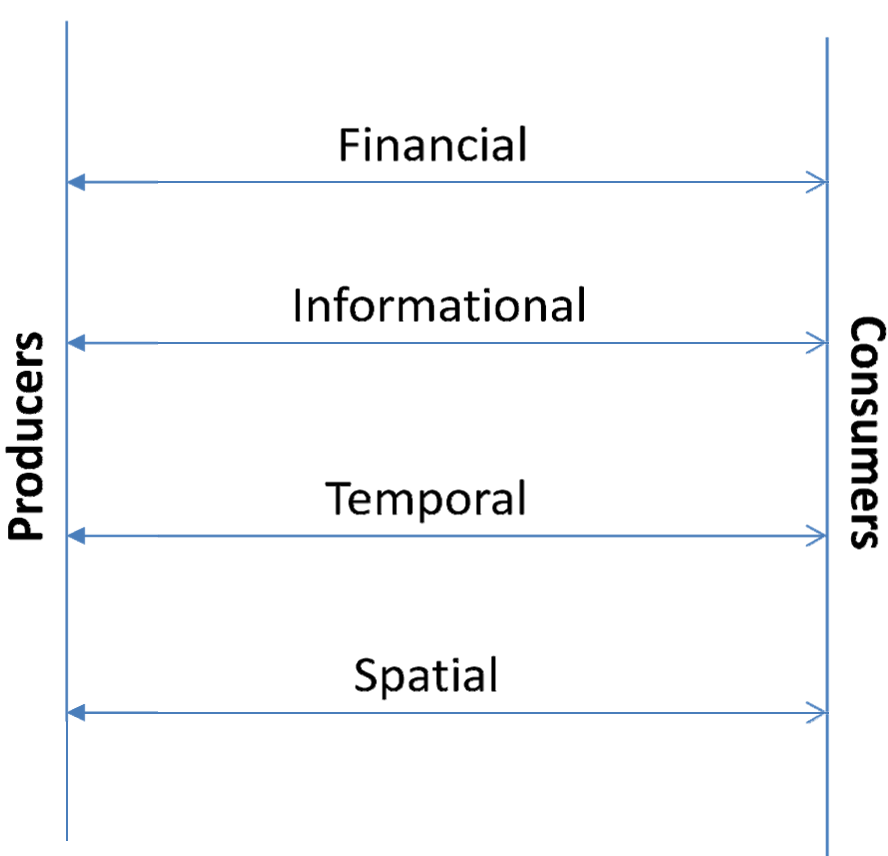 The four traditional separations that prevent a producer (farmer) from reaching a consumer efficiently.
Level 2: The AMIS Design Market
Even if you build a perfect database, the "Service" can fail. The authors map the same separations to the system design:
- Spatial Gap: Information must be delivered through locally accessible modes (Radio, SMS), not just high-spec web portals.
- Financial Gap: Free current price data is essential for equity, while advanced "Extension Services" (forecasts) can be pay-per-use for sustainability.
The "Fifth Dimension": Socio-Political Separation
This is the most critical contribution of the paper. Even with the best data in hand, a farmer might not be allowed to use it.
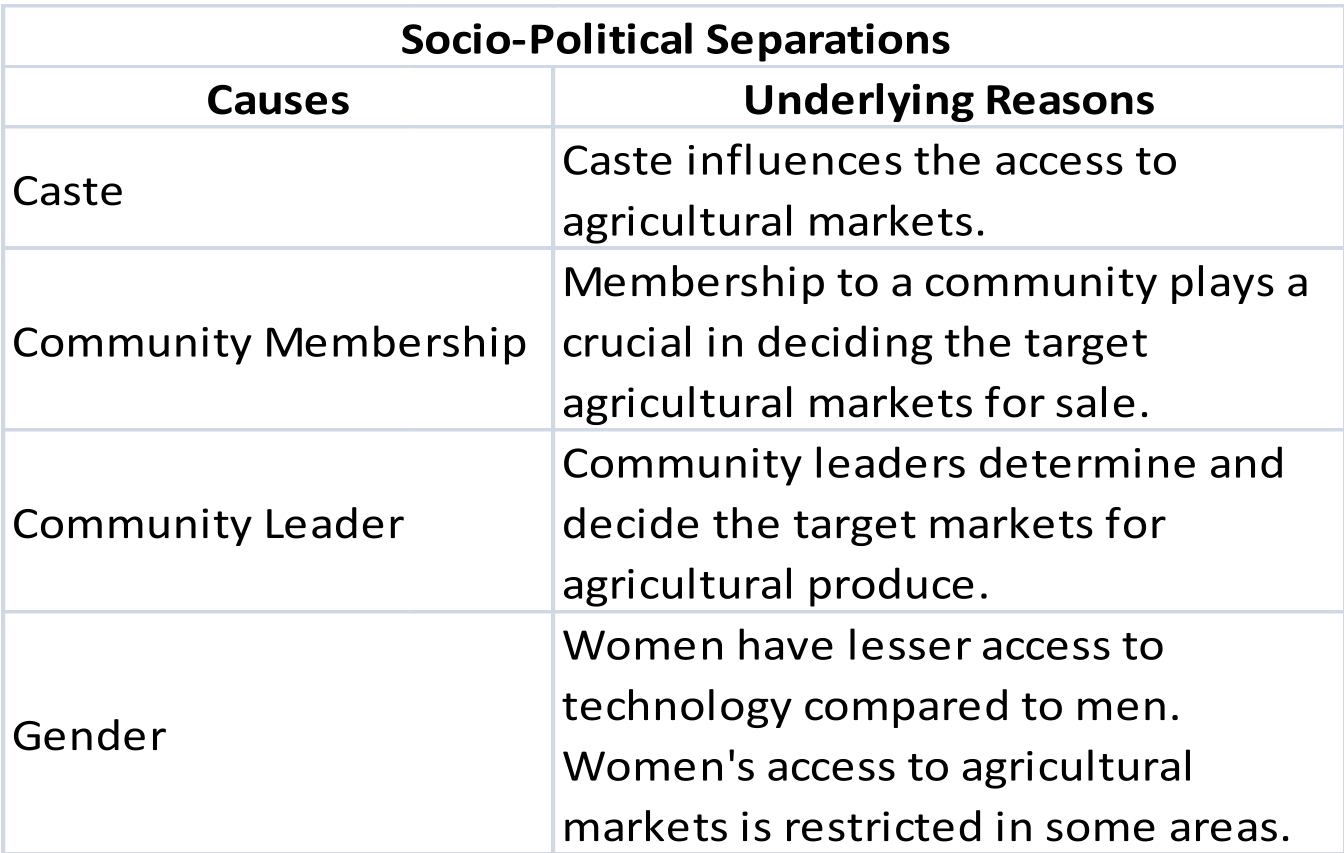 Table showing how non-technical factors like Caste and Gender override economic logic.
Why does a farmer sell to a middleman at a lower price despite knowing the market rate?
- Credit Dependency: The middleman is also the moneylender.
- Community Governance: Leaders may dictate which markets a village "belongs" to.
- Gender Barriers: In many regions, women have significantly less access to the technology needed to view these prices.
Experiments & Results: Mapping Success
The paper synthesizes prior research and field observations to demonstrate that Informational Separation is the "Linchpin."
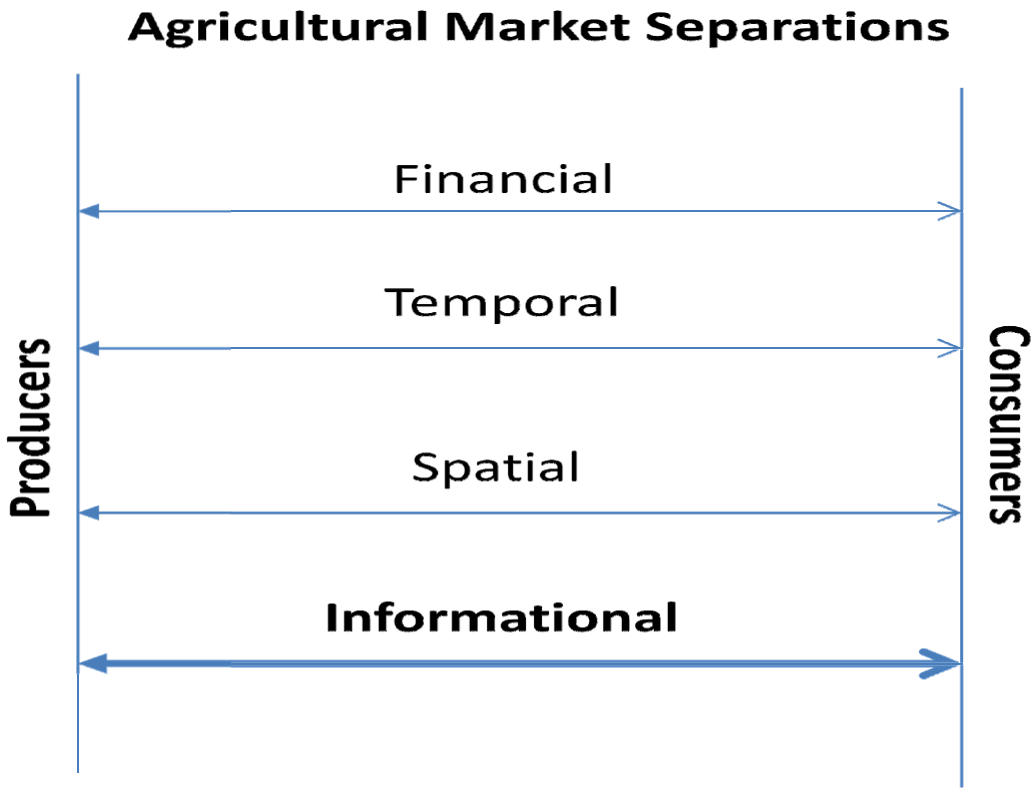 Solving the information gap (center) naturally draws the other three separations closer together.
However, the "Results" section serves as a warning: Technical success (high uptime, accurate data) does not equal Developmental success. A system that ignores the Socio-Political dimension (Fig 3 in the paper) will remain a "technically rational" ghost—available but unused.
Critical Insights & Conclusion
Takeaway
AMIS success is a two-way street. The IS Perspective ensures the system is usable and reliable; the Developmental Perspective ensures the market can actually absorb that information.
Limitations
The paper is conceptual. While it provides a robust theoretical lens, empirical validation through large-scale RCTs (Randomized Controlled Trials) is needed to quantify exactly how much "Caste" or "Credit" impacts the ROI of an AMIS.
Future Outlook
The next generation of Agri-Tech (ICT4D 2.0) must go beyond just "pushing data." It must incorporate Financial Inclusion (breaking the middleman's credit grip) and Social Engineering to be truly transformative.