
Cerberus: Turning Gamers into Planetary Scientists for Mars Exploration
The Mars crowdsourcing experiment: Is crowdsourcing in the form of a serious game applicable for annotation in a semantically-rich research domain?
This paper presents "Cerberus," a serious game designed to crowdsource the semantic annotation of high-resolution Mars surface imagery from NASA's MRO. By integrating gaming mechanics with expert knowledge transfer, the project successfully transitioned non-experts from simple shape recognition to identifying complex geological features like river meanders and sedimentary layers.
TL;DR
Researchers developed Cerberus, a serious game that task participants with identifying complex geological features on Mars using HiRISE satellite imagery. The study proves that by combining rich game mechanics (ranks, avatars) with explicit instructional help, non-experts can produce scientific data as accurate as—and sometimes more comprehensive than—subject matter experts.
Background: Beyond Simple Crater Counting
Crowdsourcing for space science isn't new; projects like Galaxy Zoo and Clickworkers have successfully used the "power of the many" for years. However, these projects typically focus on perceptual levels—tasks like counting circles (craters) or identifying spiral shapes.
The current challenge is semantics. Can a layperson identify a Transverse Aeolian Ridge (TAR) or a River Meander? These require deeper domain knowledge. The authors of "The Mars Crowdsourcing Experiment" set out to see if a game could bridge the gap between "looking" and "understanding."
The "Cerberus" Framework: Motivating the Crowd
The study utilized a experimental design to isolate what actually makes a crowdsourcing game work.
1. The Knowledge Transfer Dimension
- Implicit Help: Only basic tooltips. Players learn by doing and through minor feedback.
- Explicit Help: Detailed, multi-level tutorials synthesized from scientific literature, explaining exactly what geological markers to look for.
2. The Engagement Dimension
- Poor Game Experience: Basic point system and feedback.
- Rich Game Experience: Included avatars, a fictive Mars operations hierarchy (promotion system), and specific training missions.
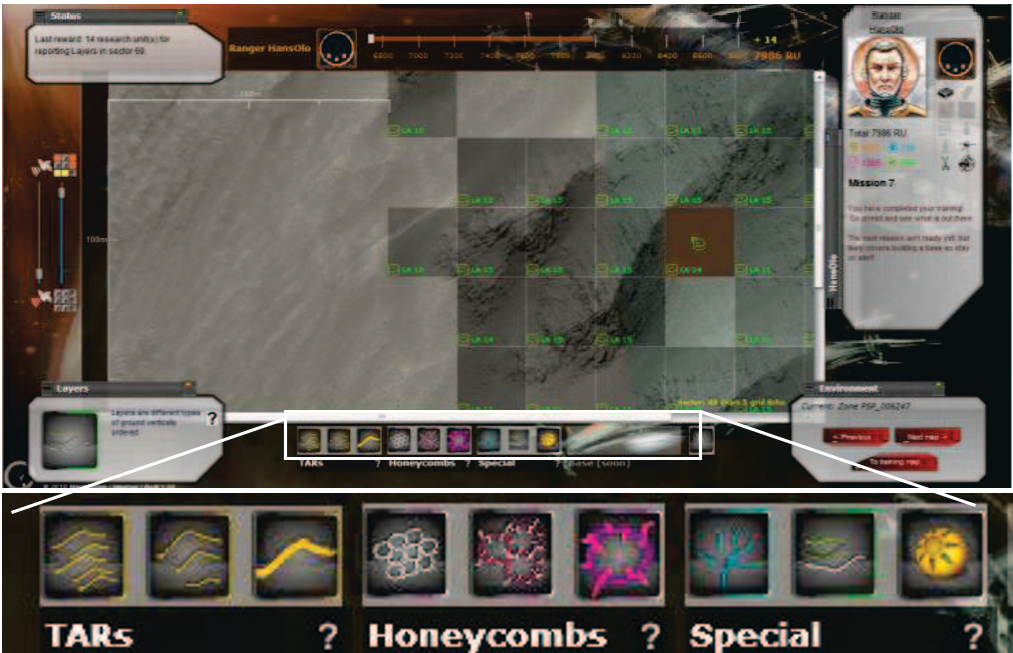 Figure: The Cerberus interface allows players to toggle between color and infrared views while using specialized tools to tag ripples, dunes, and anomalies.
Methodology: The Science of the "Click"
Players were presented with 25cm/pixel resolution photos from the Mars Reconnaissance Orbiter (MRO). Their goal was to annotate four key features:
- Aeolian Processes: Wind-formed patterns like ripples and dunes.
- Gullies & River Meanders: Potential evidence of ancient water.
- Layers: Sedimentary ground indicating geological history.
- Anomalies: Anything unusual (e.g., a "needle in a haystack" find like the Phoenix Lander).
To ensure quality, the game used a collaborative scoring system: if you tagged a feature that others also tagged, you received more points. This rewarded "consensus" and scientifically valid behavior.
Experimental Results: High-Stakes Gaming
The results from 130 participants revealed a stark contrast between the experimental groups:
- Motivation: Condition 4 (Rich + Explicit) was the clear winner. Players performed significantly more annotations, showing that curiosity about Mars (Explicit help) combined with a sense of progression (Rich features) creates the most "sticky" user experience.
- Precision: While individual precision was high across the board, the standard deviation narrowed in Condition 4, suggesting that explicit instruction creates a more reliable, unified crowd.
- Outperforming Experts: In a stunning validation of crowdsourcing, the collective crowd identified 24 cases where the automated or initial expert scan was blank. Upon review, 18 of these were confirmed to be valid geological features—the "crowd" actually corrected the scientists.
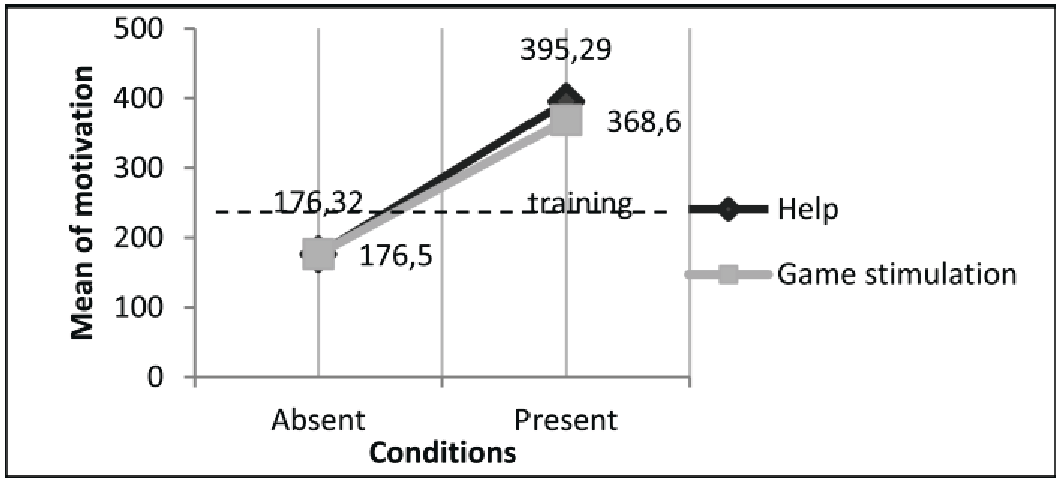 Figure: Mean motivation scores showed that the combination of explicit help and rich game features significantly outperformed basic implementations.
Critical Insight: Why This Matters
The research concludes that a "semantically-rich" domain (like geology or medicine) is not off-limits to the general public. However, the study serves as a warning to developers of serious games: gamification alone isn't enough.
Without explicit help levels, players become bored or confused, leading to low motivation. Without rich game features, players lack the incentive to persist through the "training" phase. The success of Cerberus lies in the synergy between earning ranks and gaining real knowledge.
Conclusion and Future Outlook
Cerberus has since moved into the European Space Agency (ESA) business incubator. Its success with Mars data suggests huge potential for other fields, such as climate change monitoring via satellite imagery or disaster response.
As AI and Machine Learning continue to evolve, the need for high-quality, human-annotated "ground truth" data grows. Cerberus proves that we can turn planetary exploration into a collaborative game where everyone—not just PhDs—can contribute to the "scientific glory."
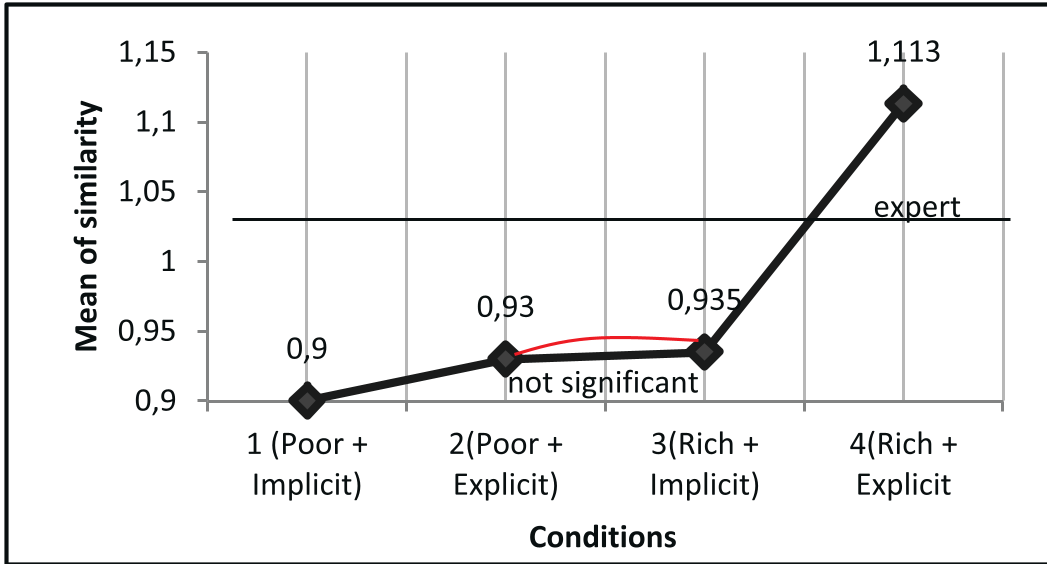 Figure: Success in action—players successfully identified the Phoenix Lander and unique tufa towers on the Martian surface.