
The Inevitability of Inefficiency: How Local Information Shapes Social Networks
Mathematical Social Sciences
This paper introduces the Generalized Conjectural Equilibrium (GCE) framework to model how individuals form and maintain social networks under imperfect monitoring and incomplete information. By characterizing GCE networks under limited observational horizons (x/y-link observation), the study proves that localized information inevitably leads to persistent structural inefficiencies, including redundant connections and fragmented components.
TL;DR
Why are real-world social networks often messy, redundant, or fragmented? Contrary to standard economic models that assume we know "who knows whom," Michael McBride’s research demonstrates that limited observational horizons allow inefficient structures to persist. By introducing the Generalized Conjectural Equilibrium (GCE), the paper shows that as long as your incorrect beliefs about the network aren't contradicted by what you can see nearby, you won't change your behavior—leading to a "stable" but suboptimal society.
Background: Escape from the Nash Trap
In traditional Game Theory, a Nash Equilibrium assumes everyone has a perfect map of the world. In the context of a social network, this means you know exactly how valuable every person is and exactly how many "degrees of separation" exist between all players.
McBride argues this is fundamentally unphysical. In reality, we suffer from two distinct informational blind spots:
- Imperfect Monitoring: You don't know who your "friends of friends" are actually connected to.
- Incomplete Information: You don't know the true value or "type" of people you haven't met.
The Core Mechanism: x/y-Link Observation
The paper formalizes these blind spots through a simple yet powerful metric called x/y-link observation:
- x (Monitoring Range): How many steps away can you see the "wires" (links)?
- y (Information Range): How many steps away can you see the "values" (types)?

If you are at the center of the network, your "horizon" is a circle. Anything inside you monitor correctly; anything outside is subject to conjecture.
Methodology: The Generalized Conjectural Equilibrium (GCE)
The brilliance of the GCE concept is that it doesn't require you to be right; it only requires you to be not proven wrong.
An action-belief pair is a GCE if:
- Your actions are a Best Response to what you think the network looks like.
- Your "conjectured" network matches the signals you actually receive within your x/y horizon.
- You don't encounter any utility "surprises" that contradict your beliefs.
Key Insights: Why Inefficiency Persists
The paper provides a complete characterization (Proposition 1) of these equilibria. The findings reveal a fundamental asymmetry in how we fix networks:
1. The Trap of Redundant Links (Cycles)
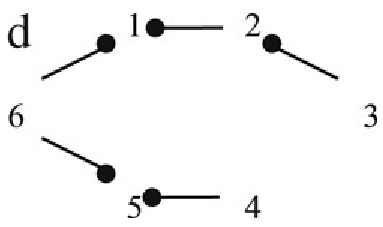
If you can’t see a cycle (a redundant path) because it exists beyond your distance x, you will keep paying for your links even if they contribute nothing to your connectivity. You simply assume that your link is the only way to reach those distant nodes.
2. The Trap of Missing Connections (Fragmentation)
If you don't know the value of people far away (low y), you won't initiate a link to them. You might "pessimistically" assume they have zero value. Since you never link to them, you never learn their true value—a self-fulfilling prophecy of isolation.
Comparison: Monitoring vs. Information
The paper makes a striking distinction:
- Perfect Monitoring (High x, Low y): Solves the "over-connection" problem. You can see cycles and cut them. However, it cannot solve "under-connection." You still won't reach out to valuable strangers because you don't know they are valuable.
- Complete Information (Low x, High y): Solves the "under-connection" problem. You know where the value is and will bridge the gap. However, you might create a mess of redundant, overlapping links because you can't see the structural shortcuts others have already built.
Conclusion: A World of "Good Enough"
McBride’s work suggests that actual social networks are structurally inefficient because individuals are "locally rational." Under 1/0-link observation (knowing only your direct friends and only your own value), almost any network can be an equilibrium.
This teaches us a vital lesson for platform design (like LinkedIn or Twitter): simply showing people who is valuable (y) isn't enough; you must also help them see the structure of the connections (x) to prevent the network from becoming a costly, redundant web of ties.
Takeaway: Information is the antidote to structural decay. To optimize a network, you must expand the horizons of its members.