
tPIDS: Optimizing Social Influence Under Strict Deadlines
Retrieving the maximal time-bounded positive influence set from social networks
The paper introduces the Time-bounded Positive Influence Dominating Set (tPIDS) problem, aimed at identifying the minimum set of seed nodes to influence an entire social network within a specific time limit (t). It proposes a heuristic Moving-Down algorithm and an improved clustered version for large-scale networks, achieving significant reductions in seed set size compared to instant-influence models.
TL;DR
How much can you save on a marketing budget if you don't need to reach everyone instantly? This paper explores the Time-bounded Positive Influence Dominating Set (tPIDS), proving that by allowing influence to cascade over a few time steps, the number of required seed nodes can be slashed by up to 20%. The authors introduce a "Moving-Down" greedy algorithm that efficiently finds these minimal seed sets even in massive, sparse networks.
Background: The Time Gap in Influence Maximization
In the world of social influence, we usually see two extremes:
- Influence Maximization (IM): Find nodes to influence as many others as possible over infinite time.
- Dominating Sets (PIDS): Find the smallest set to influence everyone instantly (in 1 step).
Real life exists in the middle. Whether it's a government trying to stop a rumor before the evening news or a company launching a 48-hour flash sale, time is a hard constraint. The authors bridge this gap by asking: What is the smallest set of nodes needed to ensure 100% coverage by time ?
Methodology: The t-SPREAD Strategy
The core innovation lies in the t-SPREAD Graph. Instead of a flat network, the authors view the influence process as a layered architecture.
The "Moving-Down" Intuition
The algorithm starts with a "brute force" solution—making every node a seed (). It then identifies Redundant Nodes. A node is redundant if, even if it is removed from the seed set and moved to a later time step (layer to ), its neighbors still receive enough "positive influence" (at least 50% of their neighbors are influenced) to eventually turn positive themselves.
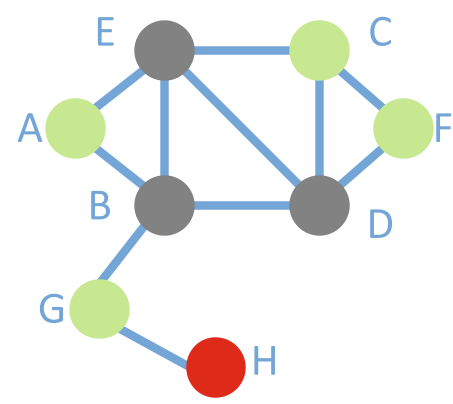 Figure 1: The layering of influence from the initial seed set through successive time steps.
The algorithm uses a cost function to decide which node to "move down" next, ensuring that moving a node doesn't break the chain reaction for others.
Hard Evidence: Does It Work?
The authors tested their approach on synthetic Erdos–Renyi graphs and a real-world dataset of 2,370 Shanghai taxis.
1. The Power of Time
The results confirm a "marginal utility" of time. Moving from (instant) to yields the biggest savings in seed nodes. By , the percentage of the network that needs to be manually "seeded" drops to roughly 40%.
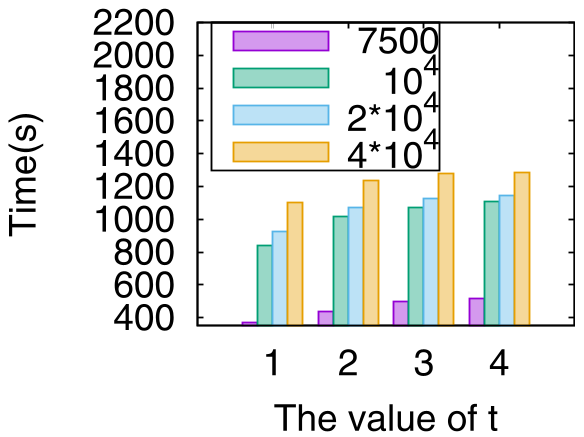 Figure 2: Runtime comparison showing the Moving-Down algorithm significantly outperforming the state-of-the-art PIDS baseline.
2. Efficiency at Scale
For massive social networks, the authors introduced a Clustering Improvement. By dividing the network into clusters and solving tPIDS locally, they achieved a 60x speedup on 10,000-node networks compared to their own basic version, without significant loss in influence quality.
Critical Analysis & Takeaways
The tPIDS framework is a significant step toward practical social network engineering.
- Pro: It acknowledges that group-to-individual interaction (requiring >50% neighbors) is more realistic than simple independent cascade models.
- Limitation: The current model assumes a fixed network structure. In mobile networks (like the taxi example), edges are transient. Future work should integrate Temporal Graphs where connections appear and disappear.
- Takeaway: If you are managing a social campaign, focus on the "Sparse" parts of your network first. The authors found their algorithm is most effective when the network structure is loose, as these areas are harder to influence via natural cascades.
Conclusion
By treating time as a bounded resource rather than an infinite luxury, this research provides a mathematically grounded way to run cost-effective information campaigns. The "Moving-Down" approach proves that patience—specifically steps of patience—is literally worth its weight in gold (or budget savings).