
Decoding Blog Sentiments: A Maximum Entropy Approach to Chinese Emotion Classification
Maximum entropy based emotion classification of Chinese blog sentences
This paper presents a machine learning approach for Chinese blog sentence emotion classification using a Maximum Entropy (Maxent) model. Leveraging the Ren-CECps corpus, the authors classify text into eight basic emotion categories by integrating keywords, part-of-speech (POS), and emotional intensity as linguistic features.
TL;DR
This research tackles the complexity of human emotions in the Chinese blogosphere using a Maximum Entropy (Maxent) model. By leveraging the Ren-CECps corpus, the study categorizes sentences into eight distinct emotions—expect, joy, love, surprise, anxiety, sorrow, hate, and anger—achieving up to 90.62% accuracy in binary tasks by combining keywords with emotional intensity.
Background & Motivation
With the explosion of web-based personal expression, blogs have become a goldmine for understanding social sentiment. However, Chinese sentiment analysis faces unique hurdles: the informal nature of blog language, the scarcity of large-scale annotated corpora, and the difficulty of distinguishing between similar emotions (e.g., anger vs. hate).
The authors argue that a sentence's emotional weight isn't just about the words used, but also the Part-of-Speech (POS) and the Intensity of those words. Their goal was to move beyond simple positive/negative binary classification into a more nuanced, eight-dimensional emotional space.
Methodology: The Power of Maximum Entropy
The core of the study lies in the Maximum Entropy model, a robust statistical tool that makes the least biased prediction possible given a set of constraints (features).
The Feature Triad
- Emotional Keywords: Direct (e.g., "love") and indirect (e.g., "Spring Festival") markers.
- Part of Speech (POS): Identifying how different grammatical structures influence emotion.
- Emotional Intensity: A crucial addition where words are mapped to a scale of 0.1 to 1.0 (Weak, Moderate, Strong).
System Architecture
The workflow involves extracting sentences from the Ren-CECps, preprocessing via the Ren-CMAS segmentation tool, and feeding combined feature vectors into the Maxent classifier.
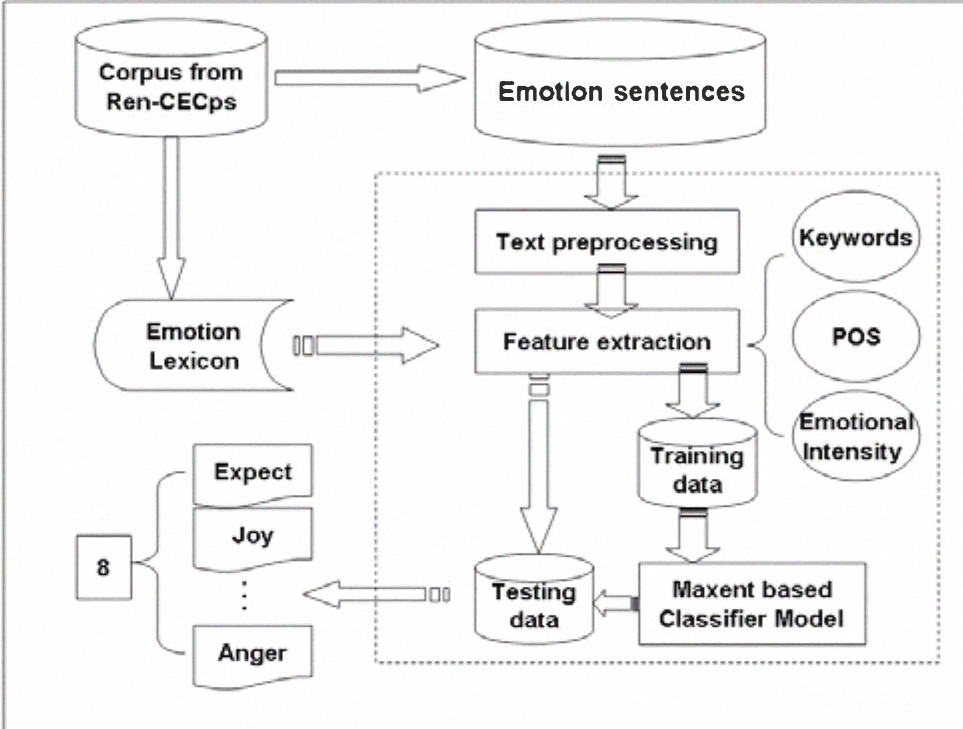 Figure 1: Architectural overview of the emotion classification system.
Experimental Insights & Results
The researchers conducted three types of experiments to test the model's versatility across different feature combinations.
1. The Mastery of Binary Classification
The model excelled at distinguishing "Opposite" emotions. The pair Love and Surprise reached the highest accuracy (90.62%). Conversely, similar emotions like Hate and Anger were significantly harder to separate (57.82%), suggesting that these emotions often share a linguistic vocabulary.
2. The Granularity Gap
While binary performance was strong, the 8-emotion multi-class classification dropped to 35.66%. The authors attribute this to "increased noise" and the fact that blog sentences often contain "mixed emotions" (e.g., joy and love occurring simultaneously), which a single-label Maxent model struggles to resolve.
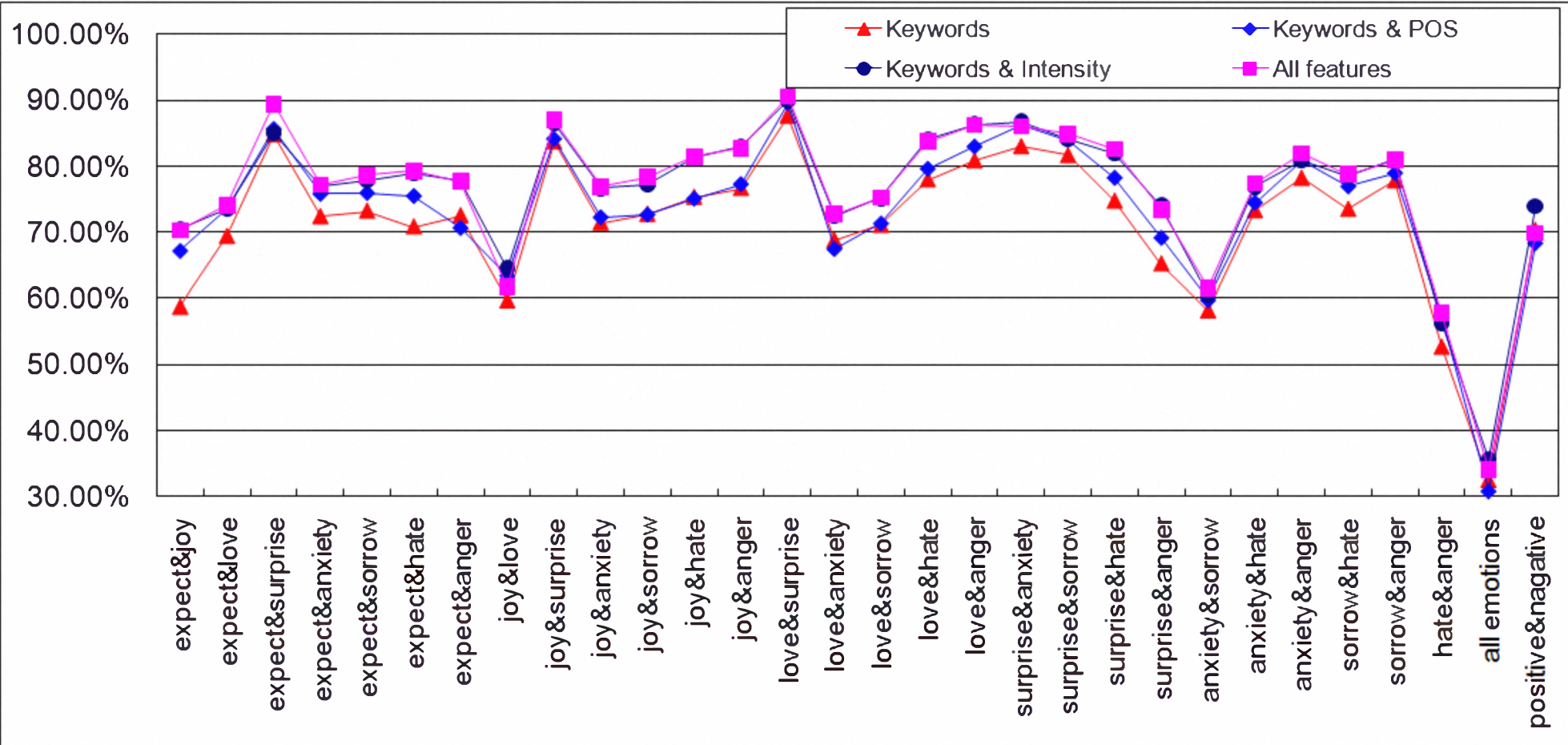 Figure 5: Accuracy trends across different feature combinations; note how adding intensity boosts results.
Critical Analysis & Takeaways
The paper highlights a critical insight for NLP practitioners: Intensity matters more than grammar. Adding POS data sometimes yielded lower results than keywords alone, whereas adding intensity consistently improved accuracy (as seen in Table 5 and 7).
Limitations & Future Directions
- The Negation Problem: The current model ignores negators like "not" or "never," which can flip the meaning of a sentence entirely.
- The Sparsity Problem: Traditional Maxent models suffer when encountering rare words not found in the training corpus.
- Mixed Emotions: Moving toward Multi-label classification is essential, as the authors noted that emotions like {Joy, Love} often appear together in Chinese blogs.
Conclusion
This work provides a foundational framework for fine-grained Chinese sentiment analysis. By proving that emotional intensity is a vital feature for classification, it sets the stage for more sophisticated transformer-based models that currently dominate the field.