
The Hidden Hierarchy: How Your Email Reply Speed Reveals Your Social Status
Measuring the Importance of Users in a Social Network Based on Email Communication Patterns
The paper proposes a novel method for assessing user importance in social networks by analyzing email response delays. By leveraging Barabási's priority queue theory, the researchers developed weighting schemes—Delay Factor, Queue Number, and Queue Factor—to rank 126,224 university employees, successfully correlating fast response times with perceived social importance.
TL;DR
Think your official job title defines your importance? Your inbox says otherwise. This research applies Barabási's priority queue theory to a year's worth of email data to prove a simple intuition: we reply faster to people we perceive as important. By measuring response delays, the authors constructed a social network that reveals the "true" power structure of an organization, independent of formal charts.
Context: Your Inbox is a Priority Queue
In the world of social network analysis (SNA), we usually look at connectivity—who has the most followers or who sends the most messages. However, this paper argues that the rate of procrastination is a much more accurate signal of social hierarchy.
The study is rooted in the "Bursts" theory by Albert-László Barabási, which suggests that human behavior is driven by internal priority lists. When an email arrives, you subconsciously evaluate its importance. If it's from a high-stakes contact, it jumps to the top of your "to-do" list. If not, it sits and rots.
Methodology: Measuring Importance Through "Delay Weighting"
The researchers analyzed over 637,000 emails from an institute involving 126,224 individuals. They moved beyond simple counts and introduced three advanced weighting schemes to quantify "importance":
- Delay Factor (DF): If you reply within 8 hours, the weight is 1 (high importance). Beyond that, the weight decays exponentially.
- Queue Number (QN): This looks at the order of operations. If you reply to Person A's email before Person B's, despite B arriving first, Person A gets a higher "importance vote."
- Queue Factor (QF): This measures how many other messages were "interrupted" or skipped over to answer a specific email.
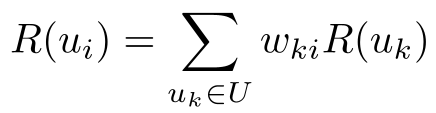
These weights are then aggregated using a recursive formula similar to Google's PageRank, where your importance is determined by the importance of the people who reply to you quickly.
Experiments & Real-World Validation
To see if their "math" matched "reality," the authors compared their results to an a priori administrative ranking (points assigned to Professors, PhDs, etc.).
Key Findings:
- The "Secretary" Effect: Interestingly, the Head of the Institute ranked low, while his secretary ranked at the very top. This is because the director uses a proxy for communication, making the secretary the "functional" hub of the network.
- Stability: All three weighting schemes (DF, QN, QF) produced remarkably similar rankings, with a correlation similarity above 0.85, proving the robustness of using delay as a metric.
- Power Law Distribution: Like most human-driven systems, the number of emails and queue lengths follow a power-law distribution, meaning a few "super-users" handle the vast majority of the communication.
 Above: The Delay Factor ranking shows a clear downward trend, meaning the algorithm successfully grouped high-status individuals at the top.
Critical Insight & Practical Applications
This method is remarkably computationally cheap. Unlike content-based analysis, it doesn't need to "read" your emails (maintaining privacy). It only needs the timestamps of Sent and Received headers.
Potential Applications:
- Anti-Spam 2.0: Emails from people with high "Response Importance" could automatically bypass filters.
- Productivity Tools: Email clients could reorder your inbox based on the global perceived importance of the sender, rather than just chronological order.
- Organizational Health: High-level management can identify "hidden stars"—employees who lack high titles but are central to the institution's actual functioning.
Conclusion
The study concludes that our digital behavior is a mirror of our social reality. By simply looking at how long we let someone wait for a reply, we can map out the intricate web of professional influence and social standing. While it has limitations—like missing "off-line" interactions—it provides a powerful, automated lens into human dynamics.
Next time you delay that reply, remember: you're voting on that person's social rank.