
MediaServ: Balancing Crowdsourcing Utility with Mobile Resource Constraints
MediaServ: Resource optimization in subscription based media crowdsourcing
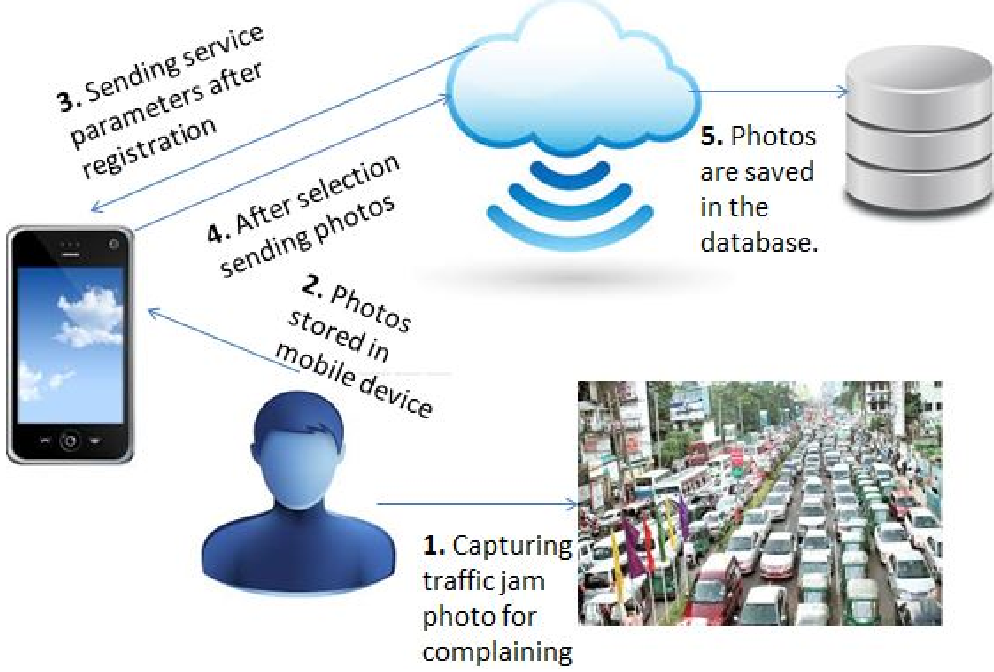
MediaServ is a resource-optimized framework for subscription-based mobile media crowdsourcing. It introduces an evaluation-driven selection mechanism and a constrained optimization model to help mobile users deliver high-quality content (primarily images) to "Campaigners" while minimizing costs like bandwidth and battery.
TL;DR
MediaServ is a system designed to solve the "bandwidth vs. benefit" dilemma in mobile crowdsourcing. By treating media delivery as a variant of the 0/1 Knapsack problem, it allows users to subscribe to campaigns and automatically upload only the most relevant photos based on service priority, metadata matching, and current data budgets.
Context & Positioning
In the landscape of mobile crowdsourcing, we have transitioned from simple text-based "sensing" (like GPS pings) to heavy media-based contributions (photos of road damage, audio clips of noise pollution). MediaServ positions itself as an intermediary optimization layer on the user's device, sitting between the media capture process and the network interface to prevent "bill shock" and battery exhaustion.
The Core Challenge: The Resource-Relevance Gap
Most mobile users rely on metered data. If a user captures 10 photos for a "Green City" campaign, uploading all of them might exhaust their 3G data limit. Furthermore, not all photos are equally useful; a photo taken 5 miles away from the target location or at the wrong time has near-zero utility.
The authors identify two critical variables often ignored:
- Varying Matching Degree: The extent to which a file satisfies a campaigner's specific criteria.
- Service Priority: Not all campaigns are created equal—a police investigation (e.g., bank robbery photos) likely takes precedence over a "Selfie Contest."
Methodology: The Optimization Engine
At the heart of MediaServ is a mathematical model designed to maximize the "Total Value" of delivered content.
1. The Evaluation Function ()
The system uses an evaluation function that returns a value between 0 and 1.
- Time & Date: Checks if the media was captured during the requested peak hours.
- Location: Uses GPS coordinates to calculate proximity to the campaign's focus area.
- Image Features: (Proposed) Using libraries like OpenCV or SemanticMetadata to ensure the content meets specific visual requirements.
2. The Knapsack Formulation
The problem is defined as: Subject to:
Where is the priority, is the file size, and is the user's data budget. This ensures that the system picks the "best" combination of files that fit within the current data "bag."
Implementation & User Experience
The authors developed a prototype mobile application that allows users to:
- Subscribe to Interests: Register for specific campaigns (e.g., Healthcare reports, Traffic monitoring).
- Set Constraints: Define different budgets () for WiFi versus 3G.
- Manual Override: While the system is automatic, users can manually set captions and priorities for specific images before they enter the optimization queue.
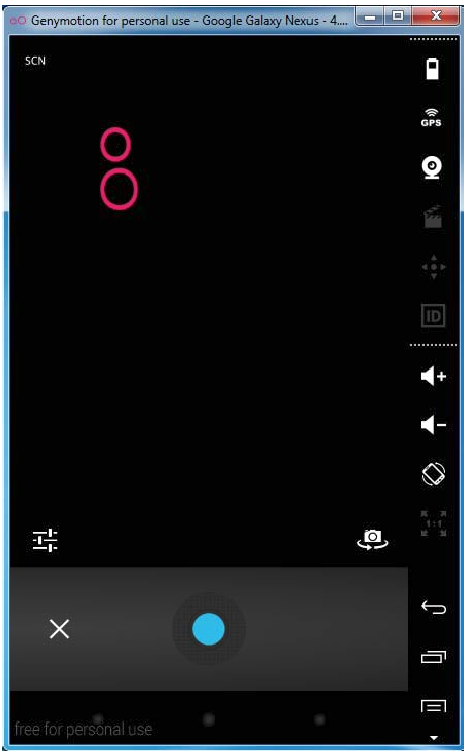 Figure: The MediaServ capture interface and service selection window.
Critical Insight & Future Outlook
While the paper provides a solid mathematical foundation for resource allocation, it acknowledges a few hurdles:
- The NP-Hard Challenge: As a Knapsack problem, the solution becomes complex as the number of photos increases. The authors suggest greedy heuristics for real-time mobile performance.
- Privacy: Future versions need stronger encryption-based retrieval to protect users while they contribute to public safety or environmental monitoring.
Conclusion: MediaServ represents a necessary evolution in participatory sensing. By shifting the "intelligence" to the edge (the smartphone), it ensures that crowdsourcing remains sustainable for the user and high-quality for the campaigner.
Further Reading
- For more on the incentive mechanisms mentioned, see the work on Stackelberg Games in crowdsourcing.
- Compare this with PhotoNet, a similar service focusing on situation awareness in disaster recovery.