
MEDIATE: Creating a Sense of Agency through Multisensory Interaction for Non-Verbal Autism
Achieving Dialogue with Children with Severe Autism in an Adaptive Multisensory Interaction: The "MEDIATE" Project Narcı ´s Pare ´s
The paper introduces "MEDIATE," an adaptive, multisensory physical environment designed for low-functioning children with severe autism. It utilizes real-time visual, aural, and vibrotactile feedback to establish a non-verbal dialogue, achieving specialized SOTA status as a non-invasive, space-based interaction system for children who lack verbal communication.
TL;DR
Building interactive systems for children with severe autism is a "wicked problem" due to the extreme variability of the spectrum. MEDIATE addresses this by creating a hexagonal, sensor-rich physical room that communicates with children through light, sound, and vibration. By focusing on abstract, contingent feedback rather than representational games, the system helps non-verbal children realize that their actions have a direct, controllable impact on the world.
Context: The Struggle for Control
For a child with low-functioning autism, the world is often a chaotic stream of disconnected stimuli. This lack of a "Sense of Agency"—the understanding that I caused that to happen—leads to withdrawal into repetitive motions (flapping, rocking) as a defense mechanism.
Existing assistive tech often fails this demographic because:
- Invasiveness: Head-mounted displays (HMDs) or wired sensors cause sensory overload.
- Physical Complexity: Joysticks and keyboards require fine motor skills many users lack.
- Content Fixation: Realistic images (like a dog) might trigger phobias or obsessive focus, distracting from the goal of interaction.
Methodology: The "Brain" of the Space
MEDIATE turns the environment itself into the interface. The room is equipped with a grid of pressure-sensitive floor tiles, a "Tune Fork" tactile wall, and large projection screens.
1. Architecture of the Interaction
The system's "Brain" consists of two core modules that facilitate a closed-loop dialogue:
- The Signature Analyzer: This module identifies "signatures" in the user’s movement. Using principles from Structural Information Theory, it distinguishes between "noise" and intentional patterns. If a child walks in circles, the system recognizes this as a repetitive trait to be addressed.
- The Decision Maker: A state machine that controls the "mode" of the room. It shifts between five states—Plateau, Regulate, Explore, Tease Primary, and Tease Secondary—to ensure the child stays engaged without falling into obsessive loops.
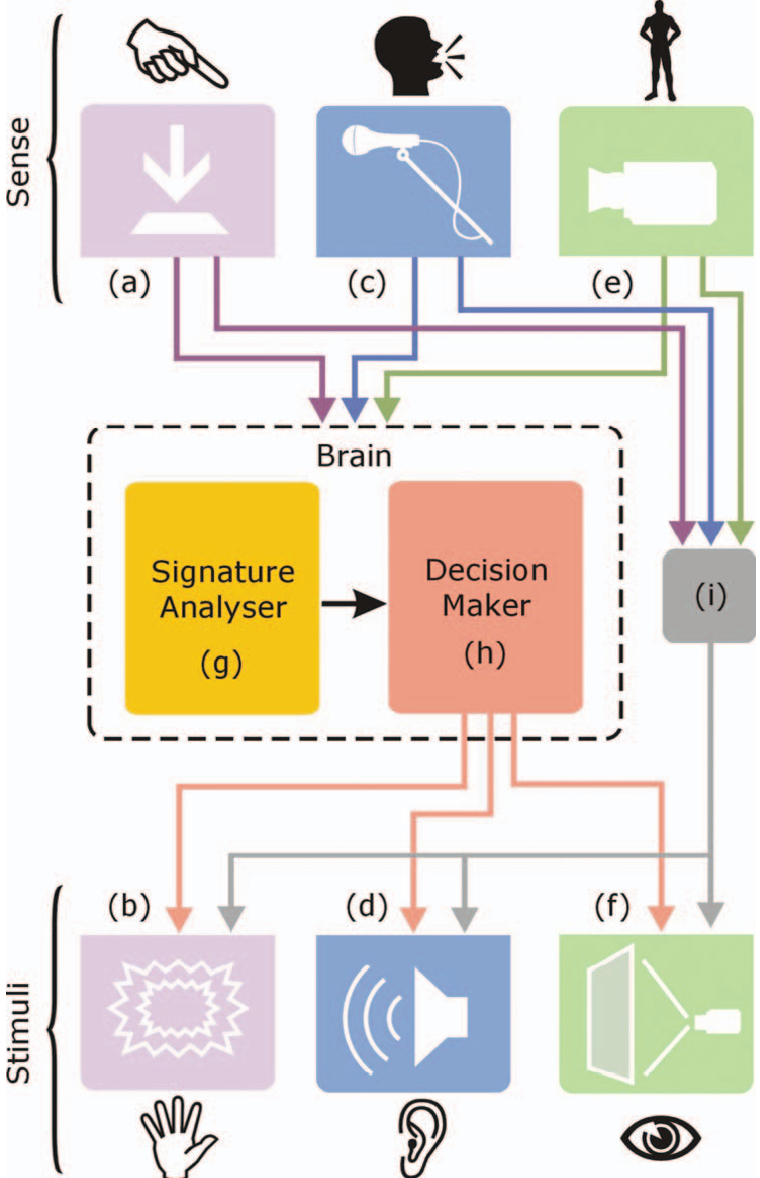 Figure 1: The flow of data from sensors through the Signature Analyzer and Decision Maker to the stimuli modules.
2. The Abstract Choice
Crucially, all stimuli are abstract. Instead of showing a cartoon, the "Impression Wall" might vibrate in direct proportion to how hard a child presses it, or the screen might show a silhouette that mimics their movement. This ensures the child focuses on the logic of the interaction rather than the meaning of the image.
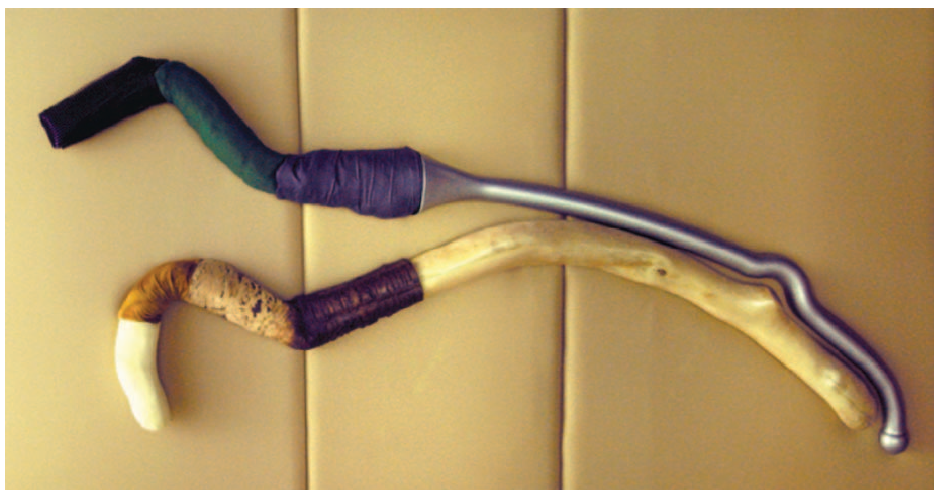 Figure 2: A user generating waves of color through full-body movement.
Experiments and Results
The project conducted over 120 sessions with 90+ children. The results were qualitatively transformative:
- Acceptance: Children with autism usually require strict routines, yet almost all subjects entered the novel MEDIATE space voluntarily.
- Dialogue: Psychologists observed children moving from simple "Imitation" (the room mirrors them) to "Counterpoint" (the room provides a creative, mediated response), indicating a growing sense of agency.
- Parental Insight: Parents noted that for the first time, their children could play independently, free from parental demands or the need for verbal instructions.
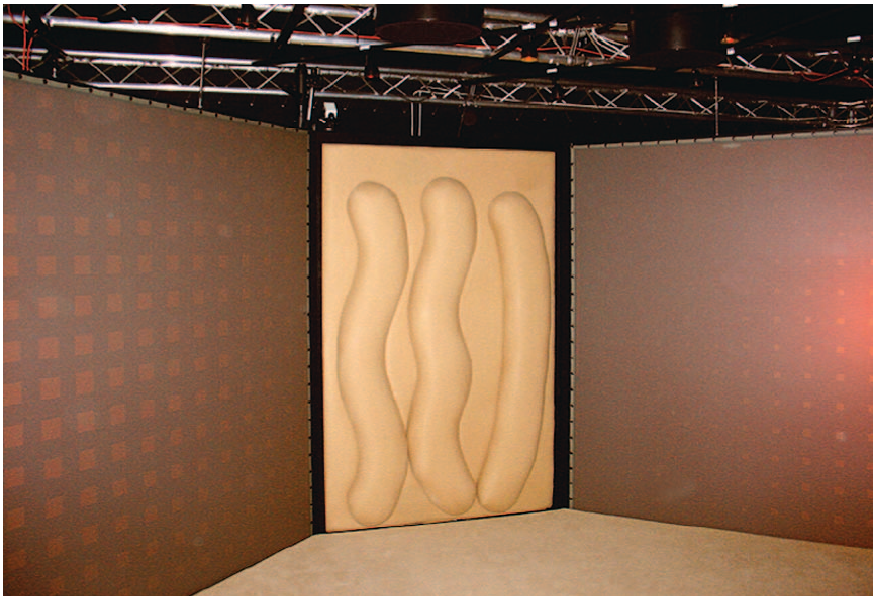 Figure 3: Panoramic view showing the Impression Wall, Tune Fork, and interactive screens.
Critical Insight: Why it Works
The genius of MEDIATE lies in its Inductive Bias. By assuming that repetitive behavior is a signal of "overload" or "boredom," the Decision Maker can dynamically "tease" the child with a stimulus in a new modality (e.g., a sound if they are too focused on a visual). This forces the child to "re-calibrate" and prevents them from getting stuck in a sensory rut.
Limitations & Future Work
While the system is a breakthrough, it currently requires eight interconnected computers and expert technical management. The authors envision a more modular, "plug-and-play" version that could be deployed in schools or care centers without needing a PhD-level technician to operate.
Conclusion (Takeaway)
MEDIATE shifts the focus of assistive technology from "teaching" to "empowering." By creating a space that listens and responds with high contingency, we can allow children with the most severe forms of autism to experience a fundamental human right: the realization that they can influence their environment through their own will.