
Beyond Logic: Mediating Web-Based Decision Support with Emotional Intelligence
Mediating Human Decision Making with Emotional Attitudes in Web Based Decision Support Systems
This paper introduces the Context-Aware Web-based Decision Support (CAWD) model, which integrates emotional attitudes into digital decision-making processes. Using an e-Sales Recruitment and Benchmarking System (e-SRBS) as a case study, it employs Gabor wavelets and neural networks to analyze real-time facial expressions, mediating cognitive responses with affective states to achieve more holistic human profiling.
TL;DR
Modern Web-based Support Systems (WSS) often treat human users as purely rational actors, ignoring the emotional undercurrents that drive actual behavior. This paper introduces the CAWD (Context-Aware Web-based Decision Support) model, which bridges the gap between cognitive responses and affective states. By analyzing real-time facial expressions during recruitment simulations, the system provides a nuanced "Pragmatic Context" that significantly enhances the depth of human profiling.
The Missing Link: Emotional Rationality
Why do traditional recruitment tools frequently fail to predict long-term performance? The authors argue that human decision-making is not guided by cold rules alone but is constantly mediated by Emotional Intelligence (EI).
Current systems suffer from "Pragmatic Blindness":
- Prior Work Limitations: Most recruitment relies on static psychometric tests that don't capture the user's state of mind during the evaluation.
- The Affective Bias: Research shows happy people are more optimistic in decision-making, while those in negative states acquire information differently. Ignoring this leads to a distorted representation of a candidate's true capability.
Methodology: The CAWD Framework
The researchers propose a framework revolving around three contexts: Social, Semantic (sensemaking), and Pragmatic (emotional). The core innovation lies in using the Pragmatic Context to interpret the Semantic Context.
1. The Affect Space Model
The system maps human emotions onto a 3D coordinate system:
- Valence: Pleasure vs. Displeasure
- Arousal: Excitement vs. Sleepiness
- Stance: Confidence vs. Uncertainty
2. Implementation in e-Recruitment
In the e-SRBS (e-Sales Recruitment and Benchmarking System), candidates answer behavioral questions while their facial expressions are monitored.
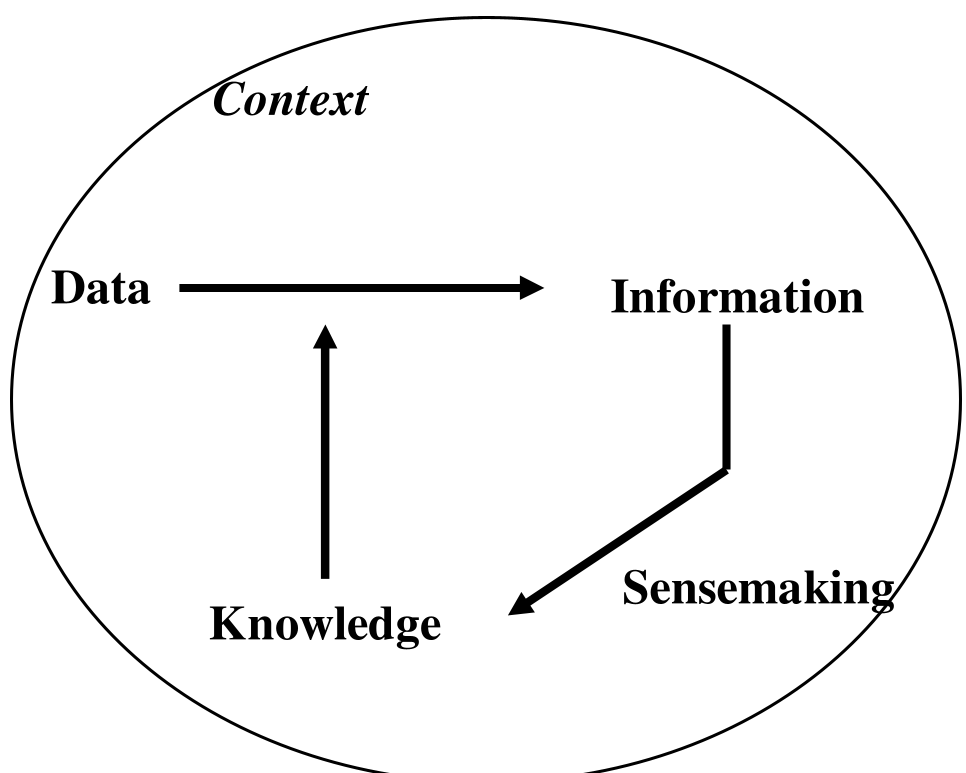 Figure 1: The interplay between context, data, and knowledge via sensemaking.
The system uses Gabor wavelets to create difference images of the face. These images are processed by a neural network to classify the candidate’s emotional state as they respond to specific stress-inducing questions (e.g., questions about failure).
Experimental Insights: Seeing the "Red" in Failure
The study demonstrated that cognitive answers often mask underlying emotional turmoil. For example, a candidate might provide a "correct" cognitive answer regarding how they handle failure, yet the facial analysis might reveal a dominant "Negative Emotional State" (indicated by red heatmaps in the classification output).
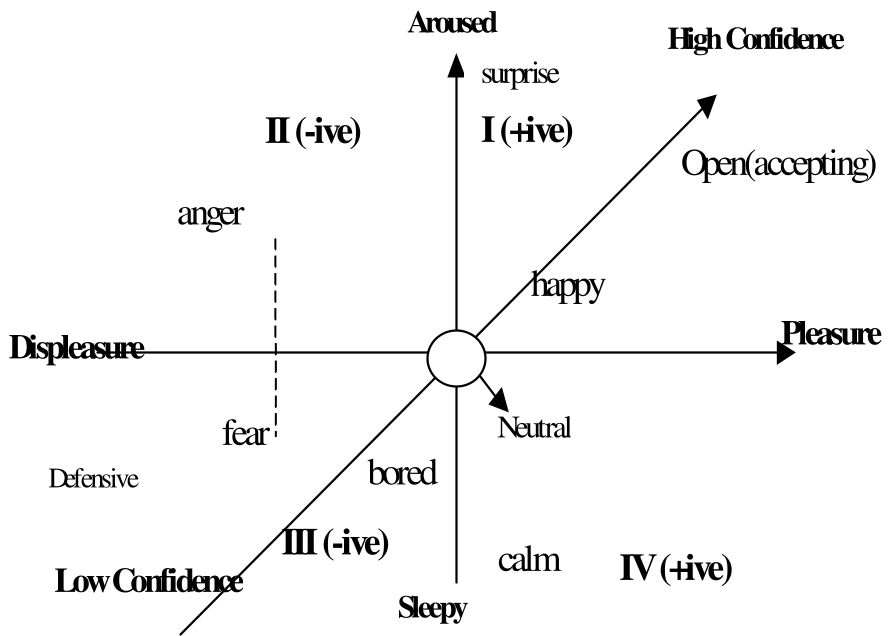 Figure 2: The Affect Space Model used to categorize emotions into quadrants.
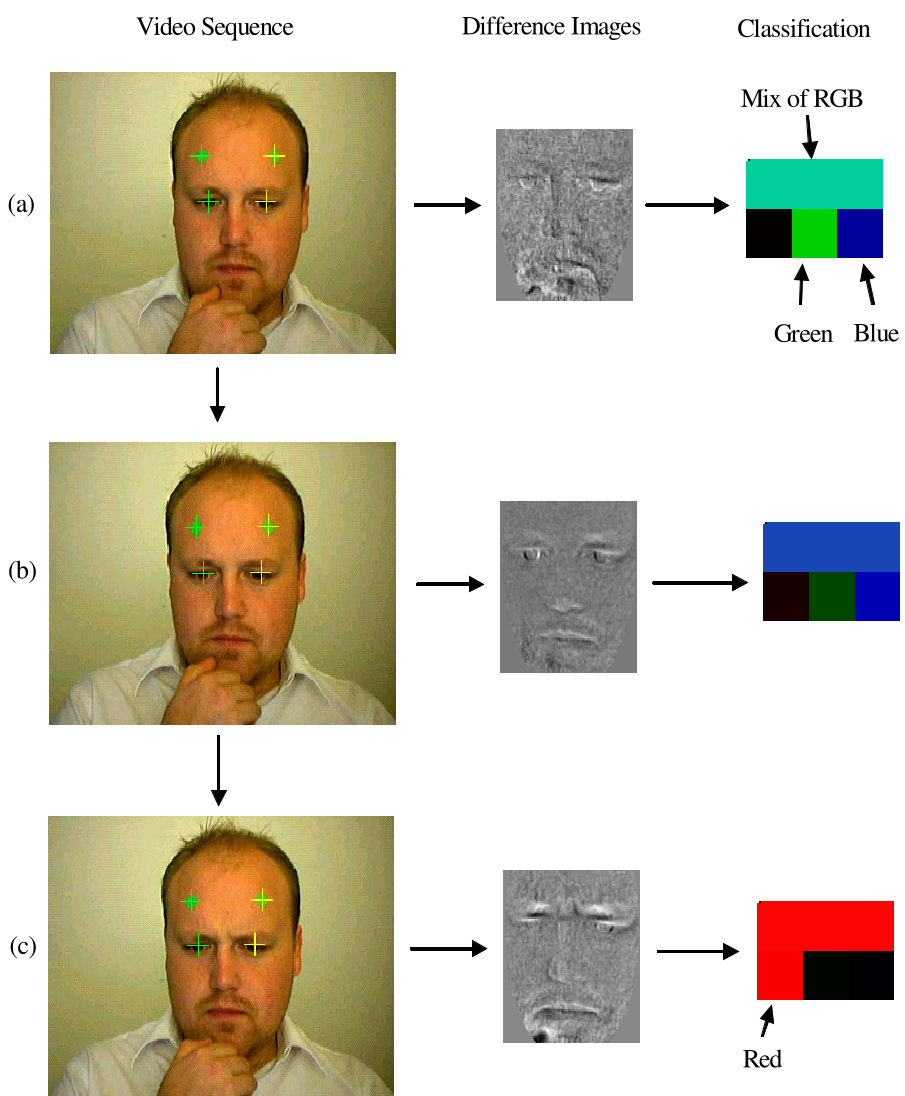 Figure 3: Real-time classification of emotional responses during the questionnaire.
By correlating these thermal-style classification maps with specific behavioral categories (Dominant Hostile, Submissive Warm, etc.), the system provides recruiters with a "Pragmatic Filter" that identifies whether a candidate's stated behavior aligns with their physiological reaction.
Critical Analysis & Future Outlook
Takeaway: This work represents an early and vital step toward "Empathic Systems." It proves that "What's the story here?" (Sensemaking) cannot be answered without considering "How does the user feel about it?" (Emotion).
Limitations:
- The hardware and computational limits of 2006 (Gabor wavelets and early NNs) were restricted compared to today’s Deep Learning architectures.
- Cultural variations in facial expressions were not explicitly addressed in this specific conceptual model.
Future Implications: In the age of Remote Work and AI-driven HR, this model paves the way for more humane and accurate talent management. Beyond recruitment, it has massive potential in Web Personalization (adapting UI to user frustration) and Knowledge Management.