
AI vs. COVID-19: Re-engineering the Healthcare Roadmap through Imaging and Analytics
Medical Image Analysis
This position paper provides a strategic framework for AI in the COVID-19 pandemic, focusing on its role in medical imaging (CT and CXR). It evaluates key AI solutions for detection, patient management, and predictive modeling, highlighting the "Corona Score" for tracking disease progression and the development of large-scale national data infrastructures.
TL;DR
The COVID-19 pandemic acted as a pressure cooker for medical AI, forcing a shift from slow, iterative development to "just-in-time" clinical solutions. This position paper by Greenspan et al. outlines how Deep Learning transitioned from detecting pixel-level abnormalities to serving as a core pillar of national pandemic infrastructure—enabling rapid diagnosis, quantitative monitoring (via the "Corona Score"), and multi-modal predictive modeling.
Motivation: The Sensitivity Gap
In the early days of the pandemic, the clinical community faced a dire paradox: the RT-PCR "gold standard" was frequently unavailable and possessed a sensitivity as low as 61-70%. Thoracic CT, however, demonstrated a sensitivity of up to 98%. The challenge was human-centric—radiologists were overwhelmed by the sheer volume of scans and the nuance required to distinguish COVID-19 from common community-acquired pneumonias. Authors identified that the primary bottleneck wasn't just "detecting" the virus, but quantifying its burden and predicting which patient would crash toward an ICU bed.
Methodology: From Pixels to Predictions
1. The Detection Pipeline
The paper details a hierarchical AI approach. Instead of a single black-box model, successful systems use a modular architecture:
- Lung Segmentation: Isolating the Region of Interest (ROI) to remove irrelevant noise.
- Lesion Detection: Utilizing 2D and 3D CNNs to identify Ground Glass Opacities (GGO) and consolidation.
- Localization: Generating "Heat Maps" to provide interpretability for clinicians.
 Figure: Overview of an automated system for COVID-19 detection utilizing both 2D and 3D analysis.
2. The Corona Score: Quantifying the Invisible
One of the paper’s most significant contributions is the concept of a "biomarker" for disease severity. By calculating the volumetric burden of opacities relative to total lung volume, AI generates a Corona Score. This allows physicians to track a patient’s "trajectory"—identifying whether a treatment is working or if the disease is escalating before oxygen saturation levels drop.
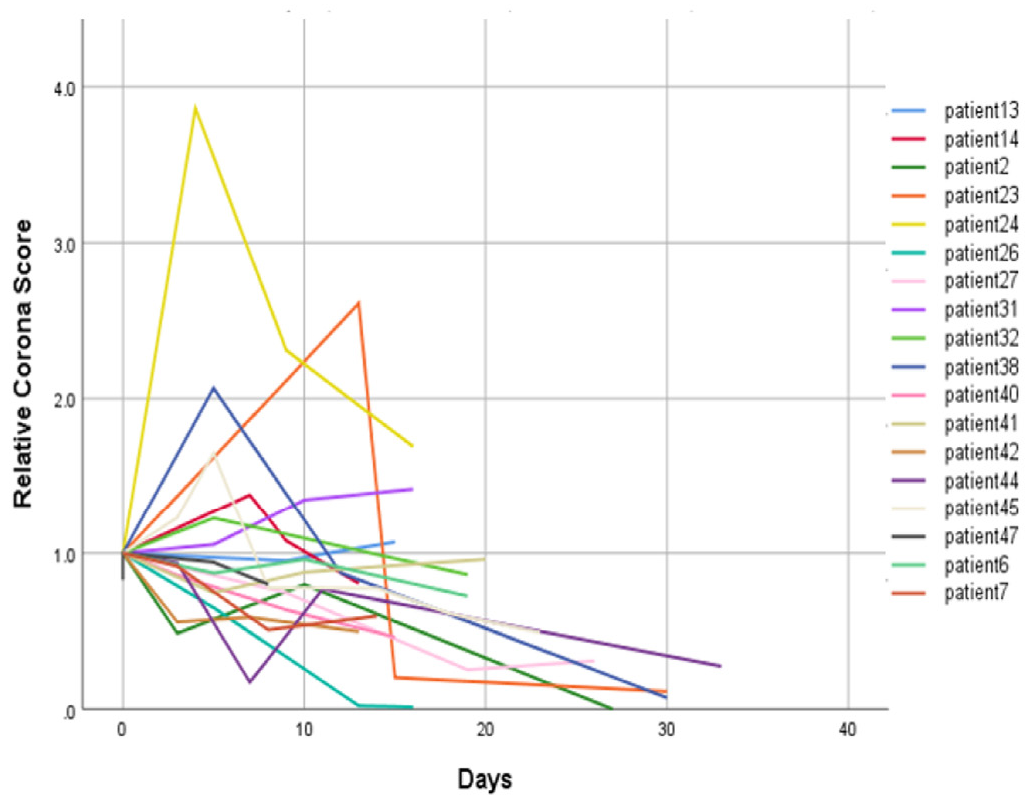 Figure: Tracking patient progression using the Corona Score (Left) and Relative Corona Score (Right).
Experiments & Results: Performance at Scale
The results across various studies cited in the paper are compelling:
- Accuracy: Deep Learning models (e.g., EfficientNet-B5) achieved 96% accuracy in distinguishing COVID-19 from other pneumonias, compared to 85% for human experts.
- Integrative Modeling: In a Danish cohort of 2,866 patients, combining CXR imaging with age, BMI, and comorbidities (Random Forest model) achieved high AUCs for predicting mortality and ventilator needs.
- Web-Based Implementation: The paper demonstrates that these models can be deployed via lightweight JavaScript frameworks (TensorFlow-JS), allowing for "security screening" even in low-resource environments.
Infrastructure: The FAIR Blueprint
The authors argue that the "technological" hurdle is solved, but the "data" hurdle remains. They propose a national-level infrastructure based on FAIR Principles:
- Findable/Accessible: Centralized registries (like Health-RI in the Netherlands).
- Interoperable: Standardizing lab data (LOINC) and imaging (DICOM).
- Reusable: Moving away from unconsented, fragmented data toward coordinated observational studies.
Critical Analysis & Conclusion
Greenspan et al. successfully argue that COVID-19 was the "proving ground" for medical AI. The shift from pure computer vision (pixels) to clinical informatics (integrating EHR) is the true legacy of this era.
Limitations: The paper acknowledges that many models were trained during high-prevalence "surges," leading to potential false-positive issues as the pandemic survives its peak.
Future Outlook: The infrastructure built for COVID-19—the cloud-based deployment, the standardized pipelines, and the multi-national cohorts—will serve as the blueprint for the next "unexpected" disease, proving that AI is no longer a luxury, but a necessity for resilient healthcare.
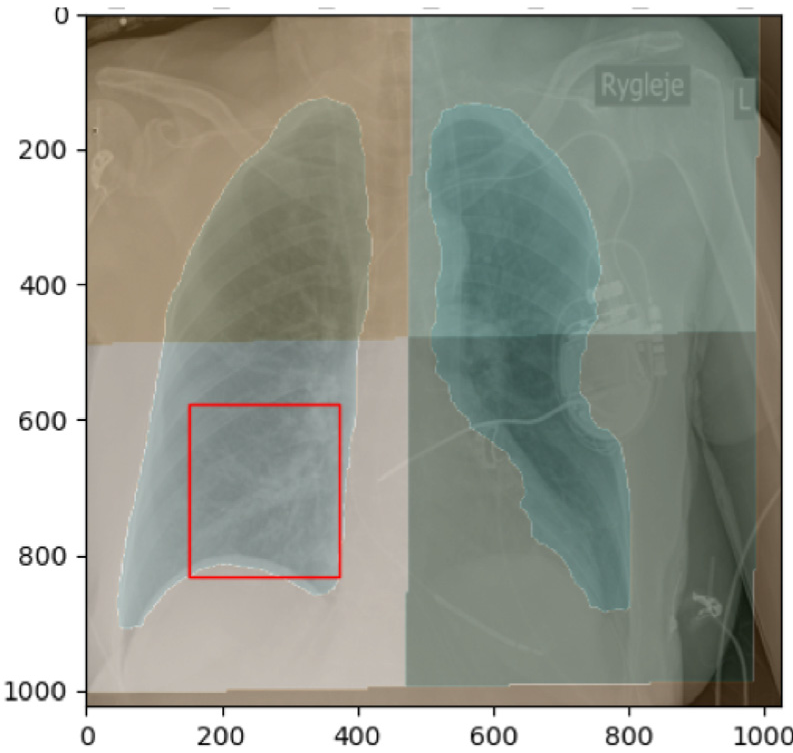 Figure: Automated regional scoring systems provide sensitive detection of peripheral patterns unique to COVID-19.