
MEIO: Gamifying the Green Revolution Through Crowdsourced M-Learning
MEIO: M-learning, social networks and gamification for environmental education
The paper presents MEIO (My Environment is Outstanding), a mobile learning (m-learning) application designed for environmental education. It integrates social networking and gamification via the Android platform to foster awareness, participation, and collective action in urban communities, achieving a SOTA pedagogical design for environmental engagement.
TL;DR
MEIO (My Environment is Outstanding) is an innovative Android-based social network that applies the "Waze model" to environmentalism. By combining m-learning, social collaboration, and gamification, it transforms citizens from passive observers into active environmental stewards who report issues and earn rewards for solving them.
Background Positioning
In the landscape of Environmental Education, there is a persistent "intention-action gap." While many are aware of climate issues, few take action in their local urban centers. MEIO positions itself as a Serious Game that shifts the focus from formal education to social-interactionist learning, where the community becomes both the classroom and the laboratory.
Problem & Motivation: Why Awareness Isn't Enough
Despite legal frameworks like Brazil’s National Solid Waste Policy (PNRS), statistics show that 76% of household waste is still improperly discarded. The authors identify two main hurdles:
- The Illusion of Infinite Resources: A cultural perception that environmental problems are "not my problem."
- Technological Fragmentation: Existing apps are either quizzes or simple maps; they lack the "stickiness" of social competition.
The motivation behind MEIO is to provide a "pedagogical technological tool" that uses the same psychological triggers as addictive navigation and social apps to drive environmental preservation.
Methodology: The Power of Three Pillars
The architecture of MEIO is built on three interconnected pedagogical concepts:
- M-Learning (Mobile Learning): Utilizing GPS and mobile connectivity to allow learning to happen in situ—at the very spot where a fire, water pollution, or illegal dumping is discovered.
- Social Networks: Inspired by the Connectivism theory, MEIO creates a community of knowledge where users validate each other's reports through "likes" and comments.
- Gamification: This is the engine of engagement. Users don't just report problems; they earn points, level up their "Avatar" (which evolves from a tiny seed to an adult tree), and collect badges representing endangered species.
System Architecture & Logic
The developers utilized Extreme Programming (XP), an agile methodology, to ensure the app could adapt to user feedback during its rollout in Recife and Teresina.
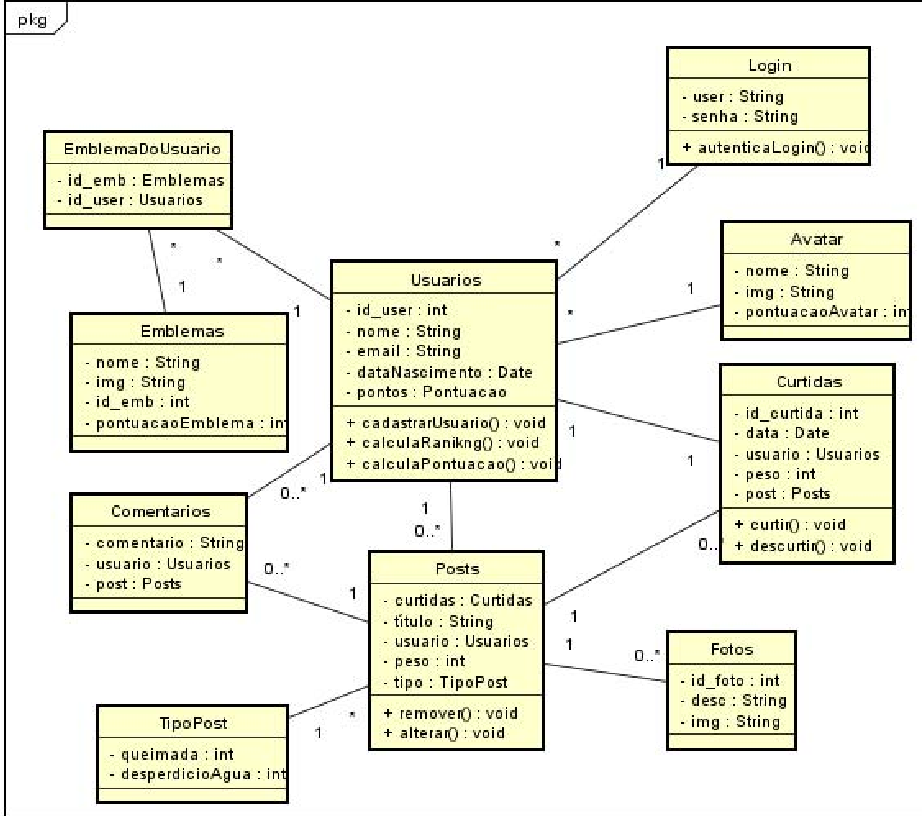 The Class Diagram illustrates the hierarchy of users, points, and the evolution of badges (avatars).
Experiments & Results: Mapping Urban Ecology
The application utilizes the Google Maps API to provide a real-time visualization of environmental "check-ins." Users can post photos of abnormalities, which then appear as interactive markers on the map for all other users to see.
Gamified Feedback Loop
The "Ranking" system is the primary driver of competition. By analyzing the "Status" mechanics, the study shows how public recognition acts as the most significant reward for participants.
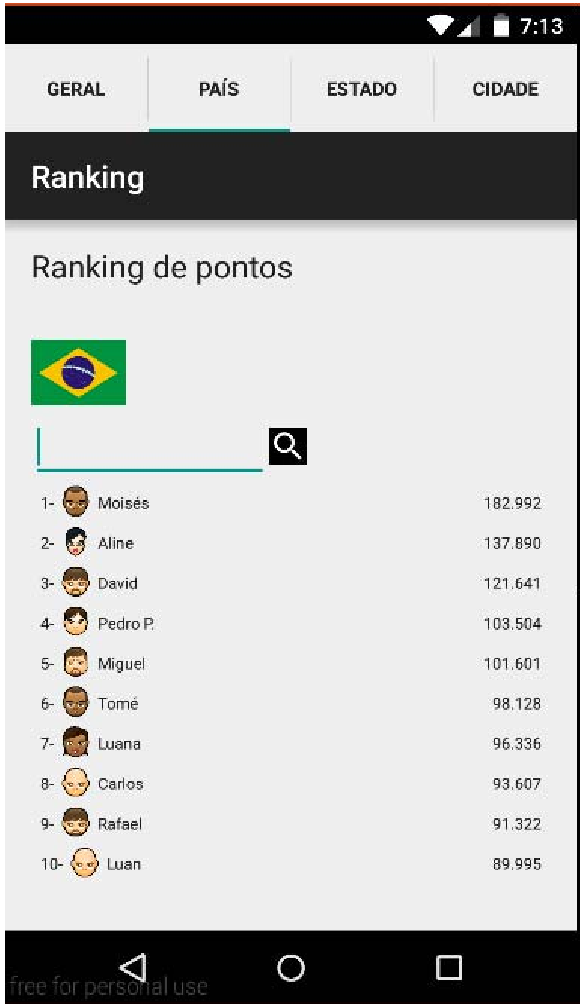 The Ranking UI allows users to see their standing at city, state, and national levels, fostering a "healthy competition" for sustainability.
Critical Analysis & Conclusion
Takeaway
MEIO proves that environmental education doesn't have to be a top-down lecture. By turning the city into a game board, it leverages collaborative learning to create a sense of shared responsibility.
Limitations
As a "short paper," the current work focuses heavily on the design and conceptual diagnostic phases. The long-term retention of users—standard for gamified apps—remains to be tested in the planned large-scale trials in Recife and Teresina.
Future Work
The authors envision a future where the data collected by MEIO users—such as locations of stagnant water (Aedes aegypti breeding grounds) or illegal dumping—is directly monitored by government agencies, turning a social learning tool into a vital component of urban public health and management.