
Sensing Feeling: Designing Memristive Circuits for Robotic Emotional Evolution
Memristive Circuit Design of Emotional Generation and Evolution Based on Skin-Like Sensory Processor
This paper presents a novel memristive circuit designed to simulate the generation and evolution of human-like emotions (Happiness, Anger, Sadness, Fear) based on four skin sensations: pain, cold, warm, and tactile. By utilizing Memristor with Forgetting Effect (MFE) and Memristor Synapse (MS) models, the researchers achieve a hardware-based conversion from sensory stimuli to emotional states that exhibit biological adaptations like sensory processing and emotional habituation.
TL;DR
Researchers have developed a hardware-level "emotional brain" for robots using memristors. Unlike traditional software-driven AI, this circuit mimics the human skin's ability to process pain, temperature, and touch, directly converting these sensations into evolving emotional responses (like happiness or sadness) through the inherent physics of memristive synapses.
Background: Beyond the Digital Facade
In current humanoid robotics, "feeling" is often a simulation—a set of IF-THEN statements processed by a power-hungry CPU. This paper argues for a paradigm shift: Neuromorphic Hardware. By using memristors, which act like biological synapses by "remembering" the amount of current that has flowed through them, we can build circuits that don't just calculate emotions but experience them through state changes.
Problem & Motivation: The CMOS Bottleneck
Why has this been difficult?
- Complexity: Traditional CMOS circuits (using capacitors and op-amps) to mimic neurons are bulky and power-intensive.
- Static Logic: Biological systems are dynamic. We get used to a soft touch (evolution) and forget minor pains (volatility). Coding these behaviors into standard silicon requires immense architectural overhead.
Methodology: The Three Pillars of Affective Hardware
The authors propose a modular approach to bridge the gap between a physical touch and a psychological response.
1. The Memristive Skin-Like Sensory Processor
Using the Memristor with Forgetting Effect (MFE), the circuit mimics four types of receptors (Pacinian, Krause, Ruffini, and Meissner).
- The Intuition: Just as skin forgets a light touch but remembers a heavy blow, the MFE memristor returns to its high-resistance state (ROF) automatically unless the stimulus is intense enough to cause "damage" (permanent state change), requiring a "restoring signal" (analogous to surgery).
2. Emotional Generation & Evolution
This is the core "synaptic" layer. It uses the Memristor Synapse (MS) model.
- Generation: A stimulus from the skin module pulse-widths the MS memristance. As resistance drops, the "emotion" (e.g., Sadness from Pain) strengthens.
- Evolution (Habituation): If the stimulus is repeated, the circuit feedback loop gradually applies negative pulses to the synapses, causing the emotional output to weaken. This mimics the biological adaptability of creatures to their environment.
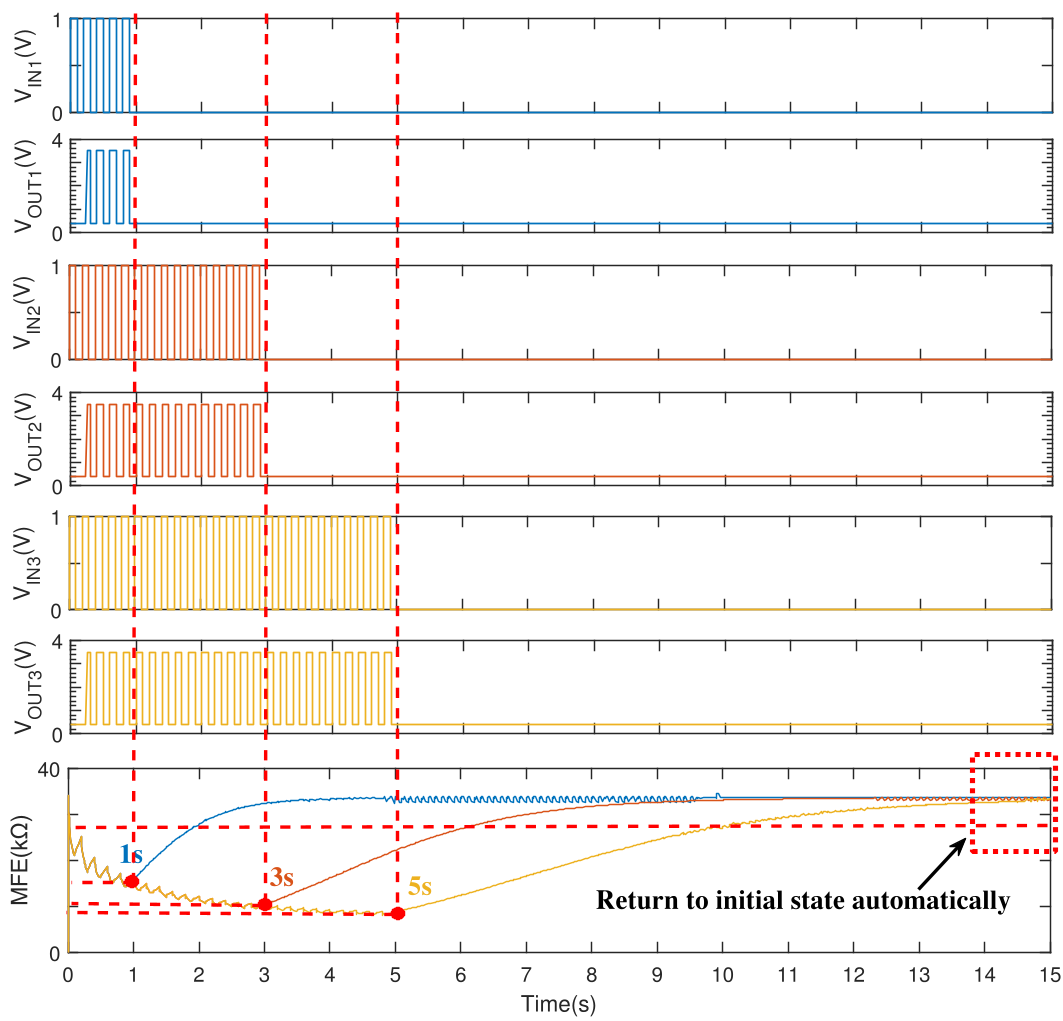 Figure 8: The complete schematic showing the integration of sensory processing, emotional evolution, and expression.
Experiments & Results: Quantitative Advantage
The study compared the memristive processor against a standard Leaky Integrate-and-Fire (LIF) neuron circuit.
| Metric | LIF Neuron (CMOS) | Memristive Processor (This Work) |
|---|---|---|
| MOSFET Count | 16 | 5 |
| Capacitors | 1 | 0 |
| Memristors | 0 | 1 |
By eliminating capacitors, the design significantly reduces the physical footprint on a chip.
Visualizing Evolution
In simulations, the researchers showed that the sensation of "Pain" initially triggers high levels of Sadness (~1.05V output) and Fear (~0.79V). However, after repeated stimulus cycles, these values drop below the 0.2V threshold, effectively "numbing" the robot's emotional response—a perfect hardware analog for biological adaptation.
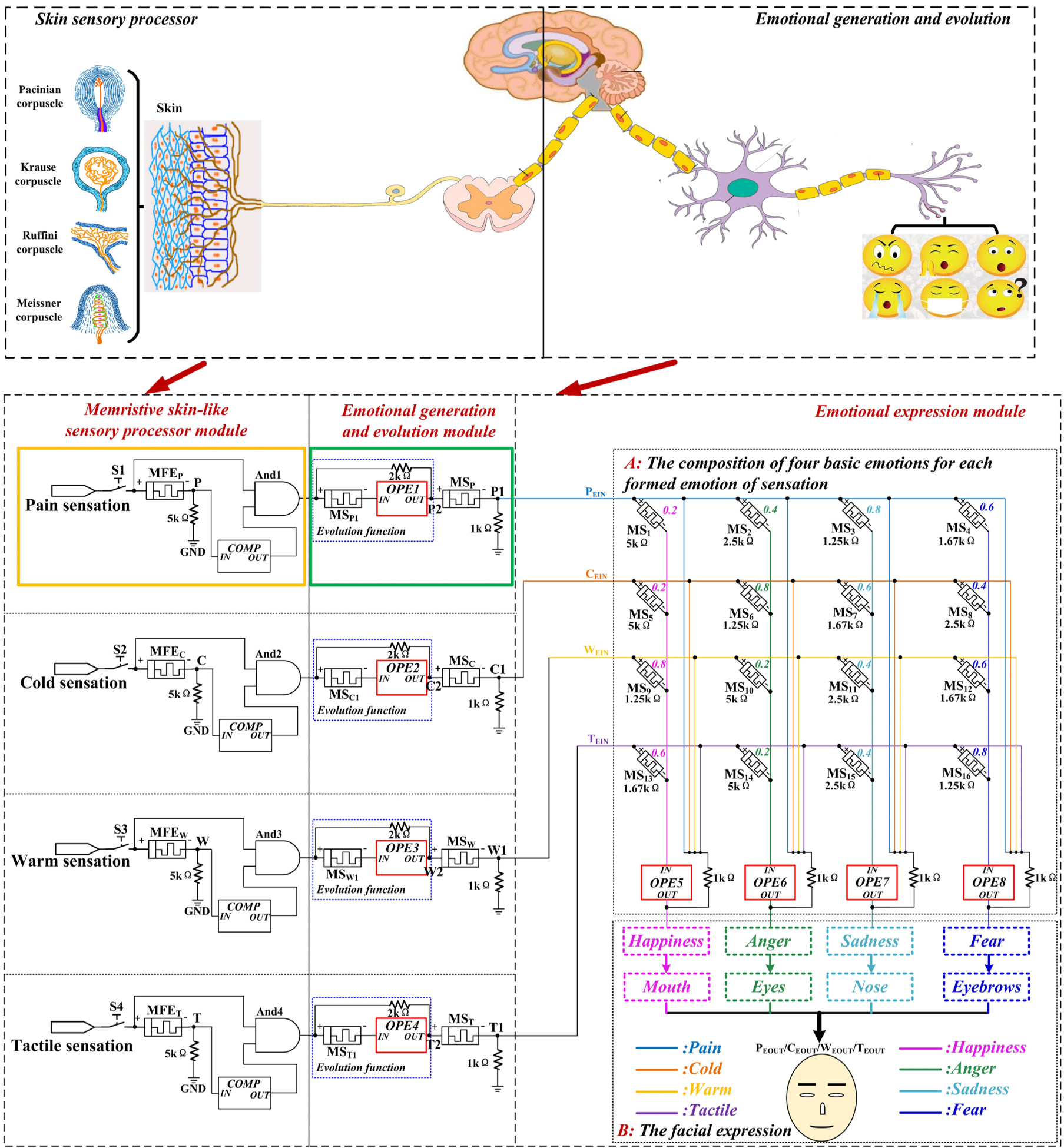 Figure 7 & 10: Input waveforms (top) and the resulting emotional profiles (bottom) showing the distinct "flavors" of emotion generated by different tactile inputs.
Deep Insight & Conclusion
Takeaway
The brilliance of this work lies in using the non-linearity of memristors to do the "heavy lifting" of biological modeling. Instead of writing code to simulate "forgetting," they used a device that naturally forgets.
Limitations
While the circuit handles four basic emotions well, human emotional experience is an N-dimensional spectrum. The current "mapping" (Eq. 8-11) is still hard-coded (fixed MS1-MS16 weights). Future work should focus on unsupervised learning, where these weights self-organize based on environmental interaction rather than preset formulas.
Future Outlook
This paves the way for "biometic sensation-emotion systems" in robots. Imagine a companion robot that doesn't just "detect" a cold room but feels "unhappy" about it, encouraging it to seek warmth—all processed on a tiny, low-power neuromorphic chip.