
MSNP Forwarding: Leveraging Social DNA to Navigate Infrastructure-Free Networks
Message Forwarding Strategies in Device-to-Device Based Mobile Social Networking in Proximity (MSNP)
This paper provides a comprehensive taxonomy and analysis of message forwarding strategies in Device-to-Device (D2D) based Mobile Social Networking in Proximity (MSNP). It categorizes routing methods into location-based and encounter-based approaches (social property and community-based), highlighting how human social behavior can optimize the Store-Carry-Forward (SCF) mechanism in infrastructure-free networks.
TL;DR
Mobile Social Networking in Proximity (MSNP) is redefining how we share data by moving away from centralized servers to direct Peer-to-Peer (P2P) communication. This paper explores how "Store-Carry-Forward" (SCF) strategies use human social behaviors—like our tendency to visit the same coffee shop or hang out with fixed circles—to route data efficiently in networks that lack constant connectivity.
Positioning: This work is a foundational taxonomy and critical review that bridges the gap between traditional ad-hoc networking and Social Network Analysis (SNA).
The Core Dilemma: Mobility as a Resource, Not a Bug
In traditional networking, if a node moves, the link breaks—this is a problem. In MSNP, node movement is the transport mechanism. The challenge is that without a global map of the network, a phone holding a message doesn't know who to hand it to next.
Early methods relied on "Epidemic" flooding (sending data to everyone), which destroys battery life and bandwidth. This paper argues that by understanding Social DNA—the predictable patterns of human movement and interaction—we can make "Heuristic" decisions that reach the destination with minimal copies.
Methodology: The Three Pillars of Forwarding
The paper categorizes the intelligence behind forwarding into three distinct layers of human behavior:
1. Location-Based Strategies (The Physical Layer)
These rely on GPS coordinates and visiting histories. If Node B's trajectory more closely overlaps with the destination's "home base" than Node A's, the message is handed to B.
- Intuition: Physical proximity in the past is a strong predictor of proximity in the future.
2. Social Property Based Strategies (The Interaction Layer)
This shifts from where you are to who you know. It uses metrics like:
- Centrality: How "popular" is a node? High-centrality nodes act as the "super-hubs" of the network.
- Similarity: How many mutual friends do you have with the destination? Common neighbors indicate a higher probability of an upcoming encounter.
3. Community-Based Strategies (The Structural Layer)
Humans naturally cluster. Protocols like SMART or CAOR divide the network into communities. Data moves fast within a community (Intra-community) and uses "bridge" nodes—people who travel between different social circles—for inter-community delivery.
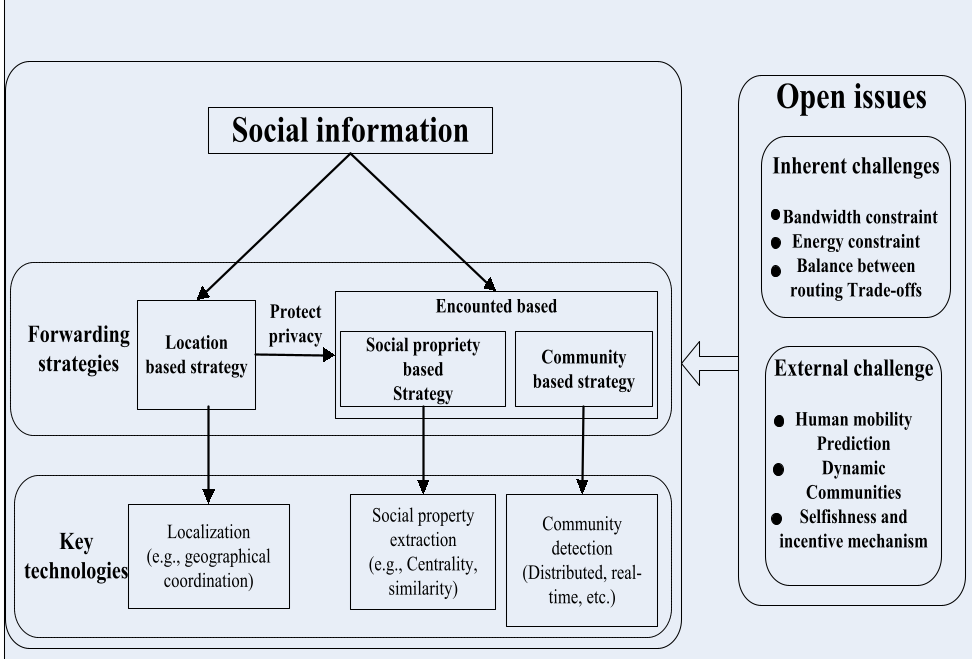 Figure 1: The hierarchical classification of MSNP strategies proposed by the authors.
Mathematical Intuition: The Loc & Soc Schemes
The authors highlight two representative mathematical models for decision-making:
- The Loc Scheme: Uses a matrix cross-referencing the time spent at specific locations () with the physical distance between those locations (). The relay selection follows a "greedy" logic: .
- The Soc Scheme: Uses a time-decaying convolution to emphasize recent encounters. Translation: Your value as a relay () depends on your social similarity to the destination () and your overall rank in the network (), but older information is given less weight.
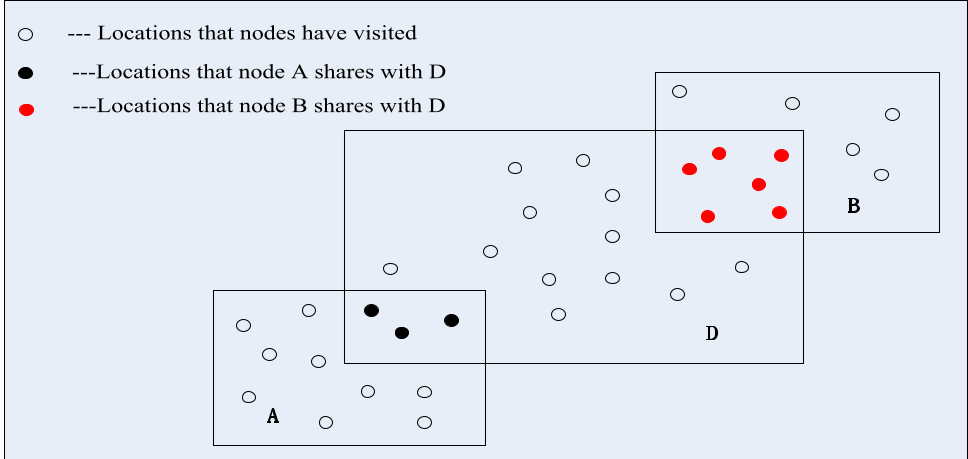 Figure 2: Visualizing how shared visiting locations increase the probability of a successful handoff.
Deep Insights: Privacy vs. Performance
A key takeaway from the paper is the "Privacy-Efficiency Paradox."
- Location-based routing is highly accurate but exposes sensitive user trajectories.
- Encounter-based routing (Social properties) achieved similar performance in tests without needing precise GPS data.
Conclusion: Future MSNP designs should favor social metrics over raw location data to maintain user trust while maintaining high delivery rates.
Critical Analysis & Open Challenges
Despite the progress, MSNP faces three "Hard Problems":
- Node Selfishness: Why should I use my battery to carry your data? The paper suggests "Incentive Mechanisms" (economic or reputation-based) are essential.
- Bandwidth Constraints: During a brief encounter (e.g., passing someone on a sidewalk), there may only be seconds to transfer files. Priority-based queuing is mandatory.
- Dynamic Evolution: Social communities aren't static. People change jobs, graduate, or move, requiring algorithms that can detect "community drift" in real-time.
Final Vision: This research transforms our smartphones from mere endpoints into active, intelligent participants in a living, breathing social fabric of data.