
Rooted Collaboration: Metrics-Based Profiling of University Research Engagement with Africa
Metrics-based profiling of university research engagement with Africa: research management, gender, and internationalization perspective
This paper presents a comprehensive bibliometric and social network analysis (SNA) of Michigan State University's (MSU) research engagement with Africa from 2006 to 2015. Utilizing the Scopus database and metrics such as Field-Weighted Citation Impact (FWCI), the study demonstrates a significant shift toward international collaboration and gender inclusivity in STEM-related and social science research.
TL;DR
This study provides a 10-year quantitative analysis (2006–2015) of Michigan State University’s (MSU) research footprint in Africa. By moving beyond qualitative anecdotes, the authors use bibliometrics and Social Network Analysis (SNA) to prove that international partnerships and gender diversity aren't just ethical goals—they are drivers of superior academic impact (averaging 152% above the world norm).
The "Parachute" Problem and the Motivation for Metrics
For decades, U.S.-Africa research was criticized for being uni-directional—a form of "scientific colonialism" or "parachute research" where Western scientists collected data in Africa and published findings with little credit to local partners.
The authors argue that to move toward a "rooted" research model, universities must measure their engagement. The core motivation was to transform university internationalization from a vague "marketing" term into a data-driven strategy. They chose MSU as a case study due to its land-grant history and extensive ties to the continent.
Methodology: The Science of Scientometrics
The researchers analyzed 2,341 publications using the Scopus database. They focused on four key vectors:
- Productivity: Volume of output across disciplines.
- Influence: Measured through Field-Weighted Citation Impact (FWCI), which normalizes for field-specific citation behaviors.
- Partnerships: Distinguishing between domestic (U.S.-only) and international (U.S.-Africa-Global) collaborations.
- Gender Inclusion: Using name-matching algorithms to track the participation of women.
The Global Network Structure
Using Social Network Analysis (SNA), the study mapped nodes (countries/institutions) and ties (collaborations). Metrics like Betweenness Centrality (BC) were used to identify which institutions acted as "bridges" for knowledge flow.
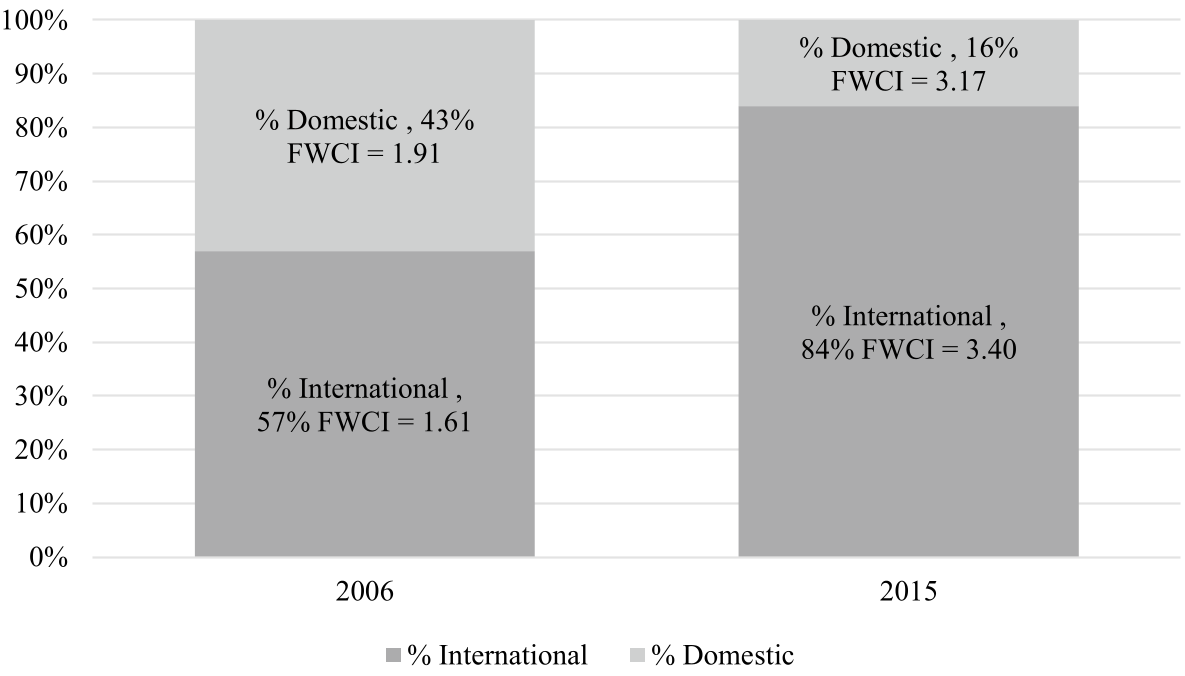 Figure: The scientific network of country collaborators. While the U.S. remains central, the density of ties with African nations like South Africa, Kenya, and Malawi has grown significantly.
Key Results: Quality Over Quantity
The findings debunk the idea that focusing on Africa-related research isolates a university. Instead, it seems to boost global standing:
- Impact Explosion: MSU’s work on Africa is highly influential. An FWCI of 2.52 means their papers are cited 152% more often than the world average for similar topics.
- The Power of International Teams: Papers involving international partners had significantly higher FWCI (3.18 in 2015) compared to domestic-only collaborations (1.84).
- The Gender Shift: Women are closing the gap. Female participation grew at a 13% CAGR, suggesting that Africa-focused research may be more inclusive than other international domains.
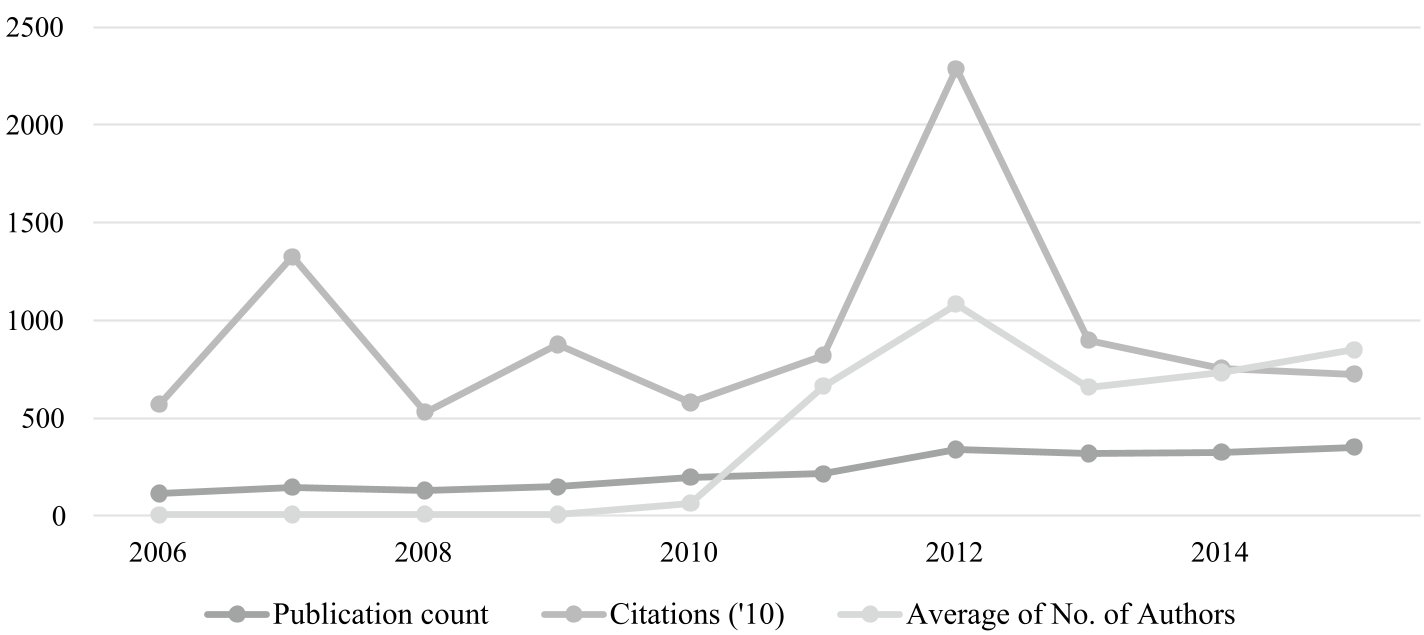 Figure: Growth in scholarly output and citation impact over the ten-year period.
Deep Insight: Moving Toward Equitable Partners
Wait, there is a catch. Despite the growth, the study found that MSU still collaborates more frequently with other non-African countries (like the UK or Canada) on African topics than with African scholars themselves.
However, the Degree Centrality of institutions like the University of Malawi and the Kenya Medical Research Institute (KEMRI) is rising. This indicates a transition from a vertical "donor-recipient" model to a horizontal "co-creation" model.
Critical Analysis & Future Outlook
Takeaway: This paper is a blueprint for Research Management. It proves that internationalization metrics can provide the accountability needed to justify public funding and institutional investment.
Limitations:
- The data ends in 2015; more recent shifts in AI and global health (post-COVID) are not captured.
- Bibliometrics can be "lagging indicators," as citations take years to accumulate.
Conclusion: For universities to move beyond "parachute research," they must adopt MSU’s approach: establishing alliances (like the AAP) that prioritize reciprocity. The future of research isn't just global—it's equitable.