
mHealth4Afrika: Architecting a Digital Lifeline for Rural Primary Care
mHealth4Afrika Beta v1 Validation in Rural and Deep Rural Clinics in Ethiopia, Kenya, Malawi and South Africa
The paper presents the validation of mHealth4Afrika Beta v1, an open-source, multi-lingual mHealth platform designed for primary maternal and child healthcare in rural Ethiopia, Kenya, Malawi, and South Africa. It integrates Electronic Medical Records (EMR) with CE-approved medical sensors to automate data capture and clinical decision support in resource-constrained environments.
TL;DR
mHealth4Afrika is a collaborative initiative that has developed an open-source, sensor-integrated platform to replace cumbersome paper registries in rural Africa. By validating Beta v1 across four countries, the project proves that integrated Electronic Health Records (EHR) combined with point-of-care sensors can significantly improve diagnostic accuracy for maternal and child health while reducing the administrative burden on clinical staff.
Background: The "Paper-Registry" Bottleneck
In the rural clinics of Ethiopia, Kenya, Malawi, and South Africa, the default for patient data is still ink and paper. This creates a triad of critical failures:
- Inefficiency: Nurses spend nearly 25% of their monthly work time manually summing up indicators for district reports.
- Information Asymmetry: A patient’s history is scattered across different "program books" (HIV, TB, Antenatal Care), making holistic diagnosis nearly impossible.
- Delayed Intervention: Without objective vital signs from sensors, early symptoms of pre-eclampsia or gestational diabetes often go unnoticed until they become fatal.
Methodology: The Power of Co-Design
Rather than imposing a "top-down" Western solution, mHealth4Afrika utilizes Design Science Research (DSR). This involves iterative feedback loops where actual nurses in "deep rural" clinics test the UI/UX.
Technical Architecture
The platform isn't just a database; it’s an ecosystem.
- The Interface: Optimized for touch-screen tablets, recognizing that many rural workers find keyboards intimidating but adapt quickly to touch.
- Sensor Integration: A custom Android application acts as a bridge. It fetches patient data via an API, connects to Bluetooth-enabled medical sensors (e.g., Pulse Oximeters), and syncs the readings using the HL7 FHIR protocol. This ensures that the data is not just stored, but is interoperable with global health standards.
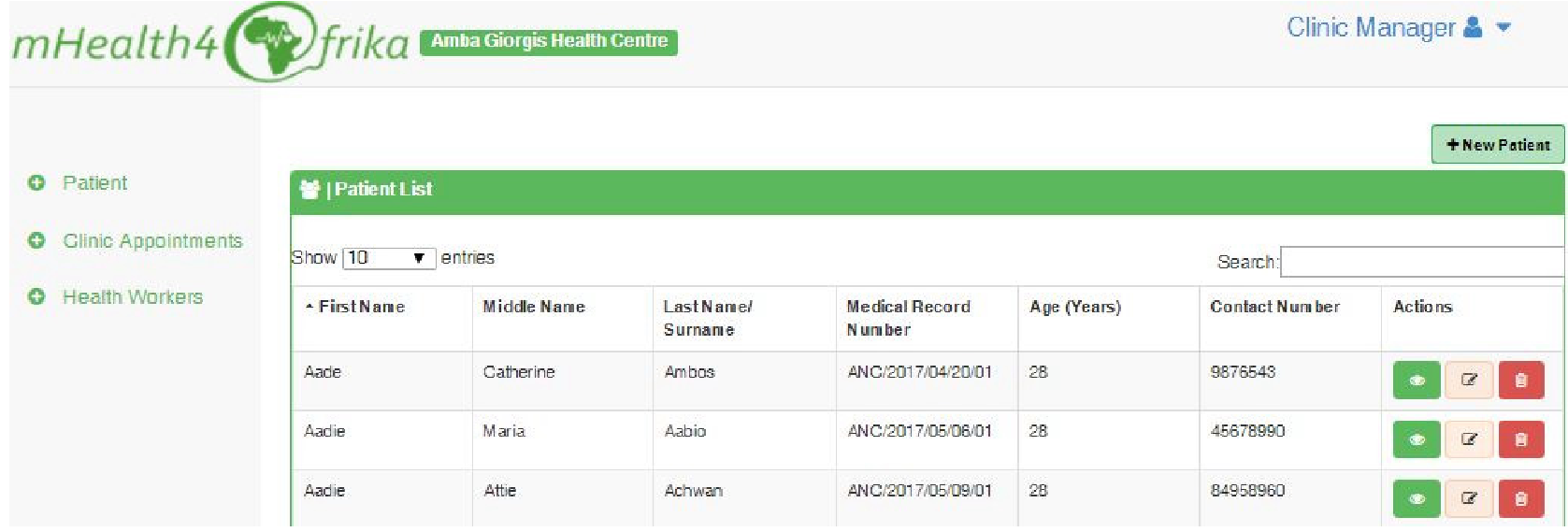 Figure 1: The intuitive search interface designed to handle low-connectivity environments.
Key Insights from Beta v1 Validation
The validation conducted in late 2017 with 36 participants revealed several "ground truths":
- Visualizations Matter: Nurses found the longitudinal graphs of vital signs (blood pressure/weight) to be the most valuable feature, as it allowed them to see "trends" rather than just single data points.
- The "Register Once, Enroll Many" Requirement: A major pivot after Beta v1 was the realization that the platform must support multiple simultaneous programs. A mother isn't just an "ANC case"; she may also require TB screening or Family Planning. The architecture was subsequently updated to a Patient-Centric Dashboard.
- Digital Literacy as Infrastructure: You cannot deploy mHealth without training. The project found that "typing confidence" was the biggest barrier to real-time data capture during consultations.
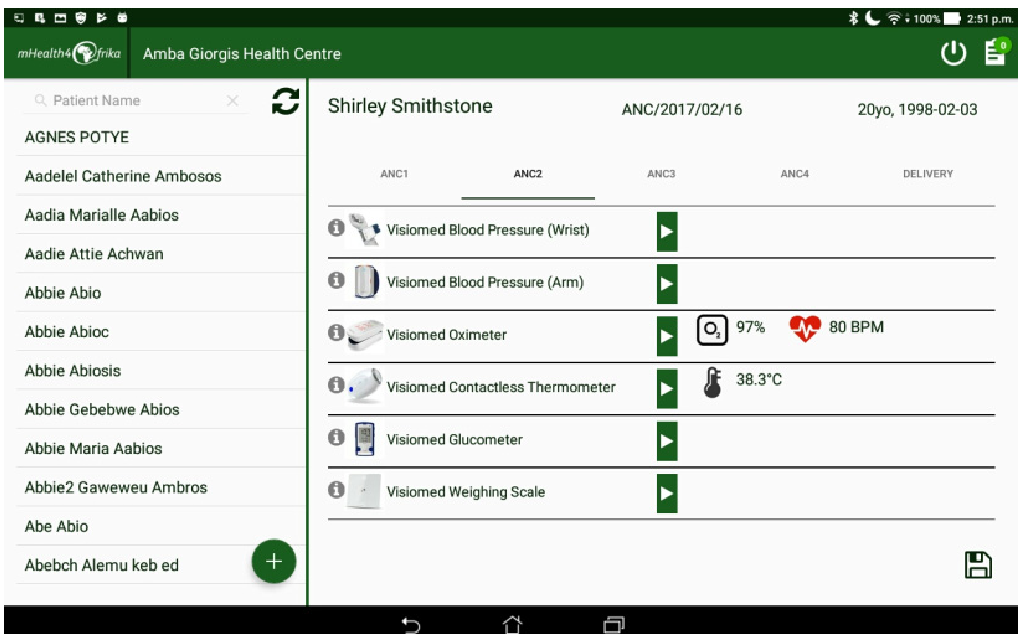 Figure 2: The custom sensor application bridging medical hardware with digital records.
Results & Strategic Impact
The Beta v1 validation confirmed that the system is intuitive and comprehensive.
- Functionality: Users successfully managed appointments, registered new patients, and captured sensor data with minimal prompting.
- Scale: The platform supports a superset of indicators required by both the WHO and national ministries, ensuring that the "Automatic Monthly Reporting" feature actually works, potentially giving nurses back 5 days of work per month.
Critical Analysis & Future Outlook
Limitations: The study acknowledges that 36 participants is a small sample for the diverse African landscape. Furthermore, stable internet access remains a phantom in deep rural areas, requiring the platform to prioritize robust offline-first synchronization.
Conclusion: mHealth4Afrika demonstrates that the barrier to digital health in Africa isn't a lack of desire from workers, but a lack of integrated infrastructure. By merging EMR, sensors, and automated reporting into one tool, the project sets a blueprint for achieving Sustainable Development Goal 3 (Good Health and Well-being) via localized, open-source innovation.