
Unified Social Exchange: Breaking the Silos with Heterogeneous Middleware
Middleware for Information Exchange in Heterogeneous Social Network
The paper introduces a RESTful middleware designed to unify information exchange across heterogeneous social networks like Facebook, Twitter, and LinkedIn. It provides a standardized API and a graph-based user association module to simplify the development of cross-platform social applications.
TL;DR
The modern social media landscape is a fragmented archipelago of proprietary APIs. This paper presents a RESTful Middleware that acts as a universal bridge between Facebook, Twitter, and LinkedIn. By abstracting complex API calls into a single, homogeneous interface and utilizing a Neo4j graph engine for user identity linking, the authors enable developers to build cross-platform social applications with significantly less overhead.
The "Walled Garden" Problem
Despite the ubiquity of social networks, they remain isolated "walled gardens." Developers wishing to build apps that interact with multiple platforms face several critical issues:
- Development Latency: Implementing unique wrappers for every proprietary API is tedious and time-consuming.
- Identity Fragmentation: Users exist as separate nodes on different platforms, making it nearly impossible to form a complete social graph.
- Portability Hurdles: Code written for one network is rarely reusable for another, leading to high maintenance debt.
The authors argue that the current state of "API standards" (like the rejected JSR 357) has failed to provide a robust, production-ready solution for the rapid evolution of social media features.
Methodology: The Four-Tier Architecture
The proposed middleware sits between the new "Integrated Social Network" and the existing "Heterogeneous Social Networks." It follows a strict four-layer model to ensure modularity and scalability.
1. The Homogeneous API
Using the Tonic framework, the researchers created a REST specification that maps common actions (e.g., public, friends, comment) to specific platform calls. Whether you are posting to a Facebook Wall or tweeting, the client application sends the same standardized JSON request.
2. Identity Mapping via Neo4j
A standout feature is the User Association Module. Most existing tools (like Nimble or OpenSocial) fail to link the same physical person across different platforms. This middleware uses a graph structure to:
- Create a root node for the local user.
- Link external tokens (FB, TT, LI) to that node.
- Aggregate friends from all sources into a unified graph.
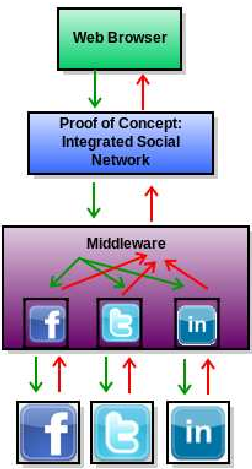 Figure 2: The four-tier architecture showing the middleware as the integration engine.
3. Internal Operation & Dynamic Loading
The system uses a Dynamic Resource Load module. Because social networks constantly add features, this module allows the middleware to incorporate new resources at runtime without restarting the core service, effectively "future-proofing" the implementation.
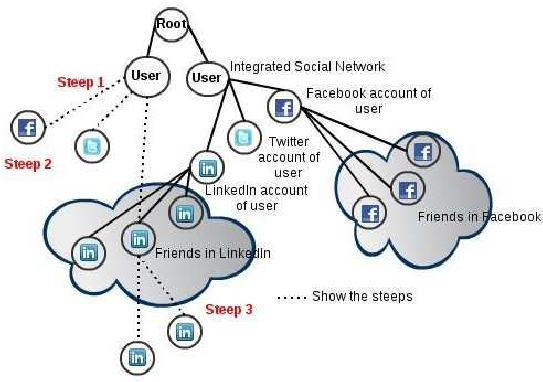 Figure 3: The internal process of request parsing and JSON conversion.
Experiments and Results
The authors validated the design by building a prototype social network in Ruby.
- Functional Coverage: The middleware integrated 80% of standard social functions including profile retrieval, wall posting, and friend list management.
- Unified Execution: A single REST request (as seen in Figure 5) was shown to trigger simultaneous actions across three different platforms, returning a parsed, unified JSON response.
- Competitive Advantage: Compared to Google's OpenSocial (which lacks generation mechanisms) and JSR 357 (which failed due to limited scope), this middleware provides a more comprehensive set of "action" capabilities, such as joining groups or marking jobs.
 Figure 5: Example of a REST request parameters for cross-platform posting.
Critical Insight & Conclusion
This work demonstrates that the primary bottleneck in social media innovation isn't a lack of features, but a lack of interoperability. By treating social networks as commodity data sources through a middleware layer, developers can focus on user experience rather than API documentation.
Future Outlook
The authors identify scalability and intelligent classification as the next frontiers. Transitioning to a distributed environment will solve the latency issues inherent in sequential API calls, while AI algorithms could help users discover content across their various social spheres based on cross-platform behavioral analysis.
Takeaway: If you are building a modern social application, stop writing wrappers. Look towards a middleware strategy that unifies identity and action behind a single REST interface.