
Bridging the Silos: Migrating Social Business Processes to SOA
Migrating social business process to SOA
The paper proposes a reengineering approach to migrate "Social Business Processes" from monolithic Enterprise Social Networking (ESN) tools into a Service-Oriented Architecture (SOA). By extracting "social-web services" (e.g., user profiles, surveys), organizations can integrate human-centric social data with legacy systems like ERP and CRM to enhance business agility.
TL;DR
Social interactions are the lifeblood of modern business, yet they are often "locked" inside monolithic Enterprise Social Networking (ESN) tools. This paper presents a systematic approach to extract these interactions as social-web services using Service-Oriented Architecture (SOA), allowing legacy systems like CRM and ERP to "speak" to social data for the first time.
Context & Motivation: The "Social" Dead End
In the current corporate landscape, Business Processes (BPs) are no longer purely mechanical; they are social. Employees vote, collaborate, and share expertise on platforms like Yammer or internal ESNs. However, these platforms act as silos.
The Core Pain Point: Most ESN data is unstructured and trapped within proprietary interfaces. If a CRM system needs to know which employee has the best "skills" (based on their social profile) to handle a specific customer complaint, it usually can't access that data automatically. The authors argue that this lack of integration leads to lost revenue and slowed decision-making.
Methodology: The Reengineering Blueprint
The authors propose a 6-step reengineering workflow to transform a monolithic ESN into a suite of agile services.
1. Meet-in-the-Middle Mapping
Rather than a total top-down redesign, the paper suggests a meet-in-the-middle approach. This balances business requirements (what the organization needs) with existing IT assets (what the ESN currently provides), reducing implementation risk.
2. Service Component Architecture (SCA)
To make social data reusable, the system breaks ESN tools into separate units:
- Entity Services: E.g., User usage statistics or profile data.
- Partner Services: E.g., Email or portal integration.
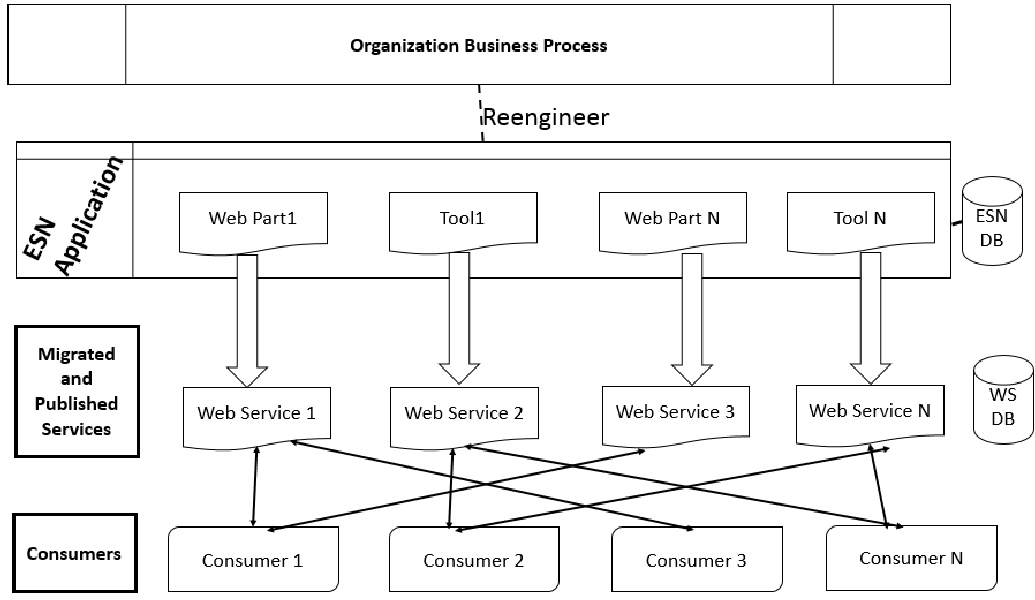 Figure 1: The systematic stages of ESN-to-SOA migration.
3. RESTful Migration
The extracted services are published using REST (Representational State Transfer). This choice is strategic: REST works over standard HTTP, making it easy to pass through corporate firewalls and compatible with virtually any platform (Windows, Linux, Mobile).
Case Study: Smarter Resource Allocation
The paper validates the theory via a government organization (GO) use case. By extracting "User Profiles" from the ESN as a service, the organization’s CRM can automatically query employee skills.
The Resulting Workflow:
- A customer submits a ticket via CRM.
- CRM invokes the ESN User-Profile Service.
- The system matches the ticket's technical requirements with an employee's social-endorsed skills.
- Support is assigned instantly, or the customer is notified of support limitations.
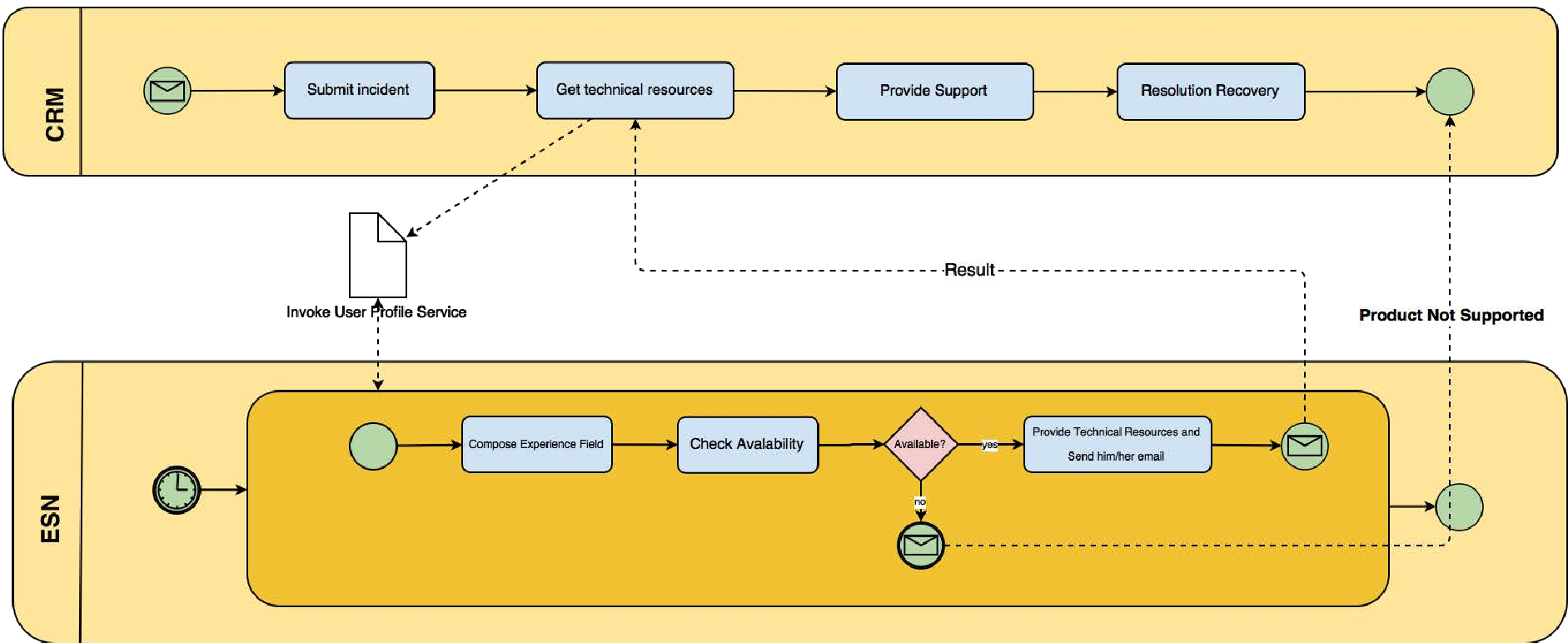 Figure 2: BPMN diagram showcasing the synergy between CRM and extracted ESN services.
Critical Analysis & Future Outlook
The primary contribution of this work is the formalization of the Social-Web Service—a synergy between social computing and service-oriented computing.
Takeaways:
- Agility via Decoupling: By treating ESN features as loosely coupled services, companies can upgrade their social tools without breaking their core business workflows.
- Legacy Longevity: This approach saves costs by extending the life of legacy ERP/CRM systems through new data injections.
Limitations: While the "meet-in-the-middle" approach is practical, the paper acknowledges that extracting services from non-open source (proprietary) ESNs remains a significant challenge, often requiring complex reverse engineering of databases.
Future Work: The authors intend to test this against cloud-based environments (Azure/AWS), which is the logical next step as more enterprises move away from on-premises social software to SaaS models.