
Fuzzy-ADLD: Bridging the Gap Between Big Data and Human Intuition in Smart Buildings
Mining Building Energy Management System Data Using Fuzzy Anomaly Detection and Linguistic Descriptions
The paper introduces Fuzzy-ADLD, a novel framework for Building Energy Management Systems (BEMS) that combines automated anomaly detection via modified Nearest Neighbor Clustering (NNC) with a linguistic description engine. It transforms complex high-dimensional sensor data into actionable, natural language insights to enhance the state-awareness of building managers.
TL;DR
Building Energy Management Systems (BEMS) are data-rich but "insight-poor." This paper presents Fuzzy-ADLD, a framework that not only detects HVAC anomalies using an online fuzzy clustering algorithm but also translates these technical deviations into natural language reports. Compared to traditional systems, it catches "invisible" faults (like open windows or stuck sensors) hours faster—or identifies them when traditional alarms fail entirely.
The "Threshold" Fallacy: Why Current BEMS Fail
Most modern buildings rely on simple alarm-based systems: if the temperature exceeds 80°F or drops below 60°F, trigger an alert. However, energy inefficiency often hides in the relationships between data points.
For instance, a zone temperature of 72°F might look "normal" to a threshold alarm, but if the chiller is running at maximum capacity to maintain that temperature while the outside air is 50°F, there is a massive underlying anomaly (e.g., an open window or a reheat coil failure). Identifying these interdependencies manually across thousands of sensors is a daunting, often impossible task for building managers.
Methodology: From Clusters to Human Language
The authors solve this using a two-stage Computational Intelligence (CI) pipeline:
1. Modeling Normalcy via Online Clustering
Instead of pre-defining rules, the system uses a Modified Nearest Neighbor Clustering (NNC) algorithm. It processes data in a single pass (vital for large-scale BEMS) and builds a multidimensional model of "Normal Behavior."
- The Math Insight: Each cluster tracks not just a center, but the upper and lower bounds of every attribute (Zone Temp, Fan Load, etc.).
- Fuzzy Rule Extraction: These clusters are converted into Non-symmetrical Gaussian fuzzy membership functions. This allows the system to calculate a "Confidence of Normalcy" ().
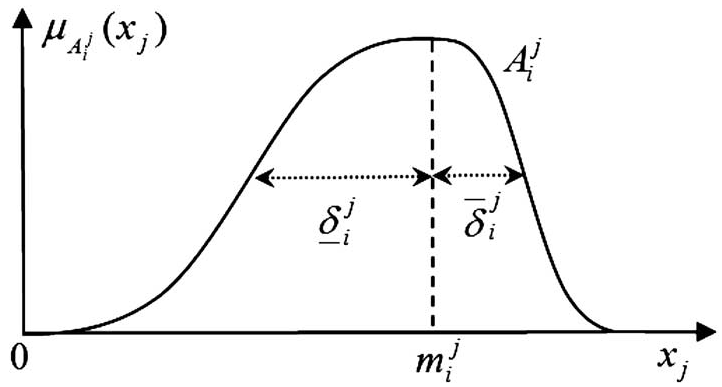 Figure 1: The transition from data clusters to fuzzy membership functions used for anomaly classification.
2. Linguistic Summarization (The "Explainable" Part)
When an anomaly is detected, the system doesn't just bark an error code. It identifies which sensor contributed most to the anomaly by ranking the fuzzy firing strengths. It then maps these to linguistic labels (e.g., "Very Low," "High") to generate a compact rule:
"IF Zone Temperature is Very Low AND Mixed Air Temperature is Low THEN Anomaly Confidence is Significant."
Experimental Results: Catching the Invisible
The authors tested the system against a traditional BEMS in six real-world scenarios, ranging from sensor drift to physical changes like opening a window or using a space heater.
| Case Type | Detection Improvement | Reliability |
|---|---|---|
| Sensor Faults | Detected ~6 hours faster | Caught "stuck" sensors that stayed within bounds. |
| Physical Changes | Detected 1+ hour faster | Identified open windows traditional alarms missed. |
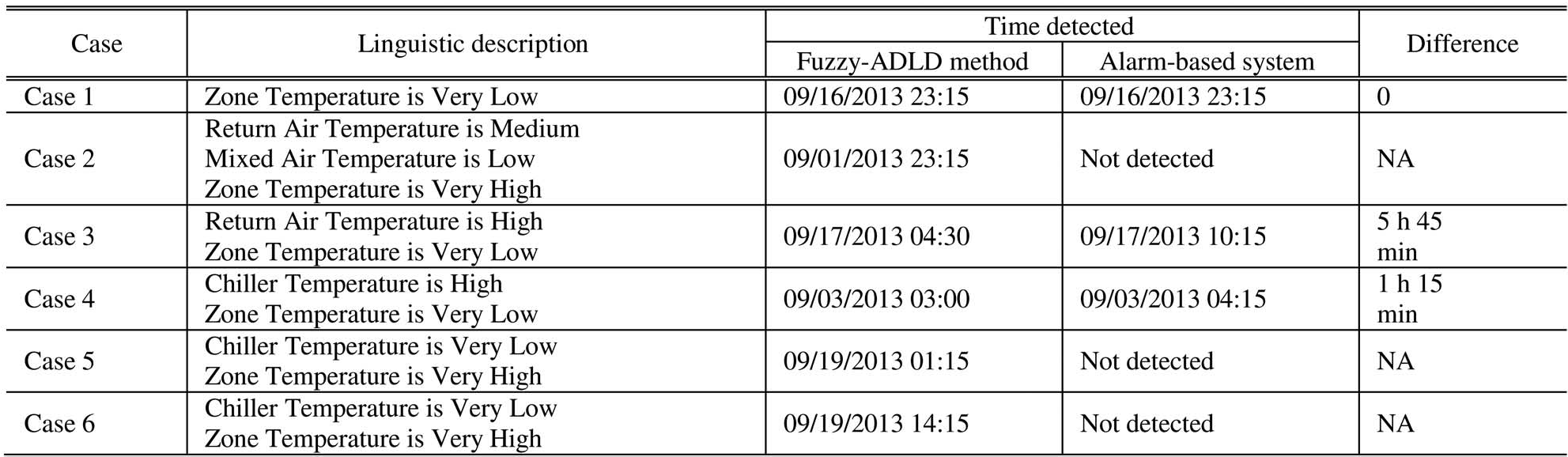 Table 1: Performance comparison showing Fuzzy-ADLD detecting cases where traditional systems were "blind".
Critical Analysis & Professional Insight
The brilliance of Fuzzy-ADLD lies in its Inductive Bias. By assuming that "Normal" is a cluster in a high-dimensional space, it effectively handles the high variance of building data (caused by weather and occupancy) without needing a perfect physical model of the building.
Key Takeaways for the Industry:
- State-Awareness > Raw Data: Visualization counts. The GUI implemented (Building -> Floor -> Zone) combined with text summaries reduces the cognitive load on operators.
- Interactive Learning: The system allows managers to "white-list" anomalies, updating the fuzzy clusters incrementally. This solves the "False Positive" fatigue common in AI monitoring.
- Limitations: The system relies heavily on a clean "Normal" training set. If the building was running inefficiently during the training period, that inefficiency is baked into the model as "Normal."
Future Outlook
This paper sets a precedent for Human-in-the-loop AI for critical infrastructure. Future iterations could likely move from simply describing the anomaly to diagnosing the root cause (e.g., "Sensor 04 is likely failing") by training on historical fault signatures. This is a massive step toward the "Self-Healing Building."