
Mining Digital Library Evaluation Patterns: An Ontological Clustering Approach
Mining Digital Library Evaluation Patterns Using a Domain Ontology
The paper presents a data mining framework to identify research patterns in Digital Library (DL) evaluation by semantically annotating literature using the Digital Library Evaluation Ontology (DiLEO). Utilizing K-Means clustering on a decade of ECDL conference papers (2001-2010), the authors successfully mapped 11 distinct evaluation profiles, demonstrating a systematic way to profile research trends.
TL;DR
This research bridges the gap between raw scientific publishing and structured knowledge discovery. By applying K-Means clustering to papers semantically annotated with the Digital Library Evaluation Ontology (DiLEO), the authors uncovered 11 distinct "DNA profiles" of how researchers evaluate digital libraries. The result is a roadmap of existing practices and a blueprint for future evaluation designs.
Problem & Motivation: The Fragmentation of Evaluation
Digital Library (DL) evaluation is notoriously messy. It sits at the intersection of information science, computer science, and social sciences. Historically, researchers have struggled with:
- Terminology Mismatch: Different fields use different names for the same evaluation metrics.
- Methodological Silos: Knowledge about which methods (e.g., laboratory studies vs. field studies) serve specific goals (e.g., effectiveness vs. service quality) remains scattered across thousands of PDFs.
The authors' insight was that we don't just need more data; we need a Knowledge Organization System to semantically link goals to methods.
Methodology: From Semantics to Feature Vectors
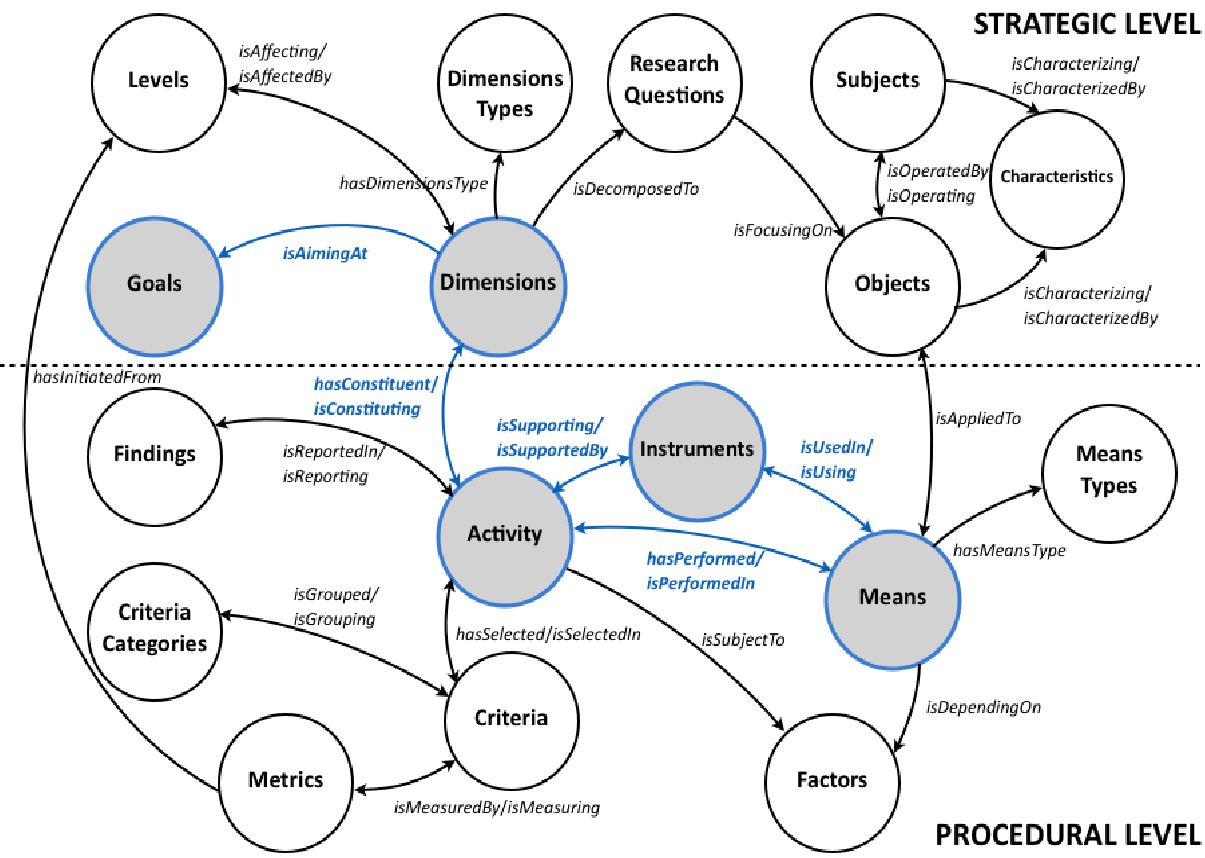
The core of this work lies in the Digital Library Evaluation Ontology (DiLEO). It organizes the domain into two layers:
- Strategic Layer: The "Why" and "What" (Goals, Dimensions, Objects).
- Procedural Layer: The "How" (Activities, Means, Instruments).
The Pipeline
The researchers extracted 119 relevant papers from the ECDL conference (2001-2010) and performed a rigorous manual annotation process.
Instead of typical word-frequency vectors, they created Semantic Vectors where each feature corresponds to a DiLEO subclass. They tested two weighting schemes:
- Binary: Does the paper mention this concept? (1 or 0)
- Weighted tf-idf: How central is this concept to the paper's specific evaluation design?
To ensure the clusters were meaningful, they introduced a Frequency Increase (FI) measure, which highlights features that appear significantly more often in a specific cluster than in the general dataset.
Experiments & Results: Mapping the Research Landscape
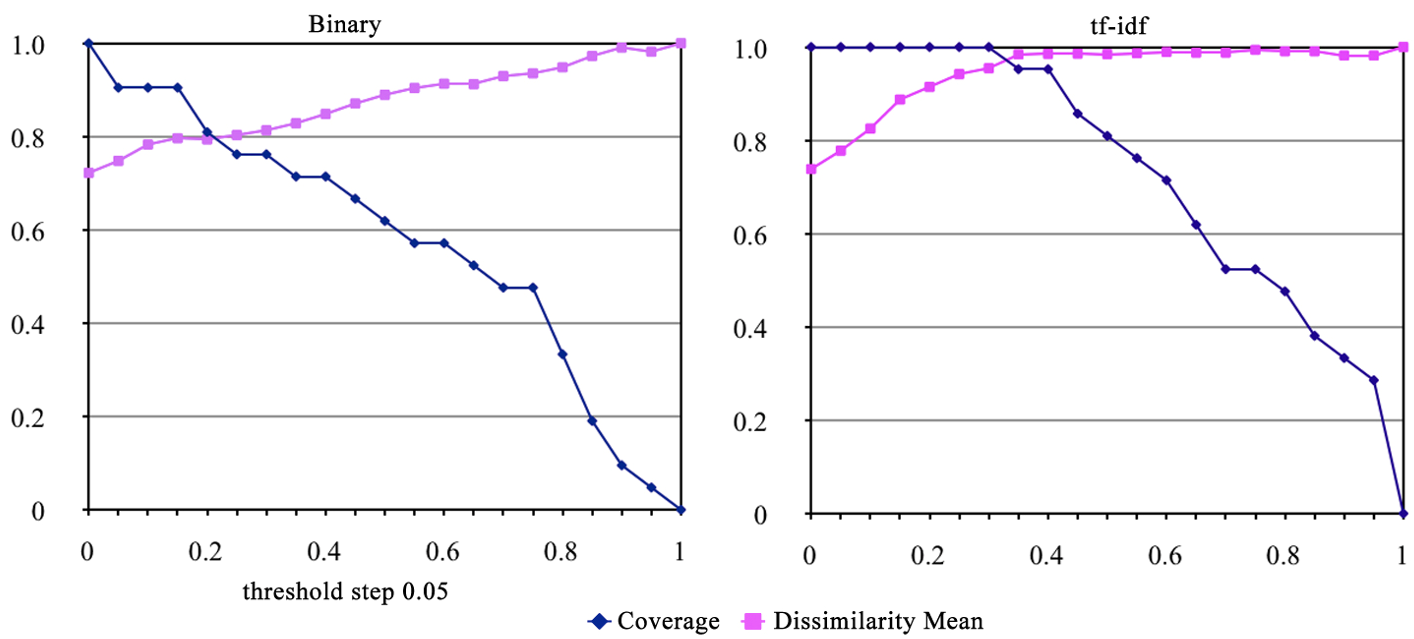
The tf-idf representation proved far superior, allowing for a high degree of cluster distinctiveness.
Key Discovered Patterns
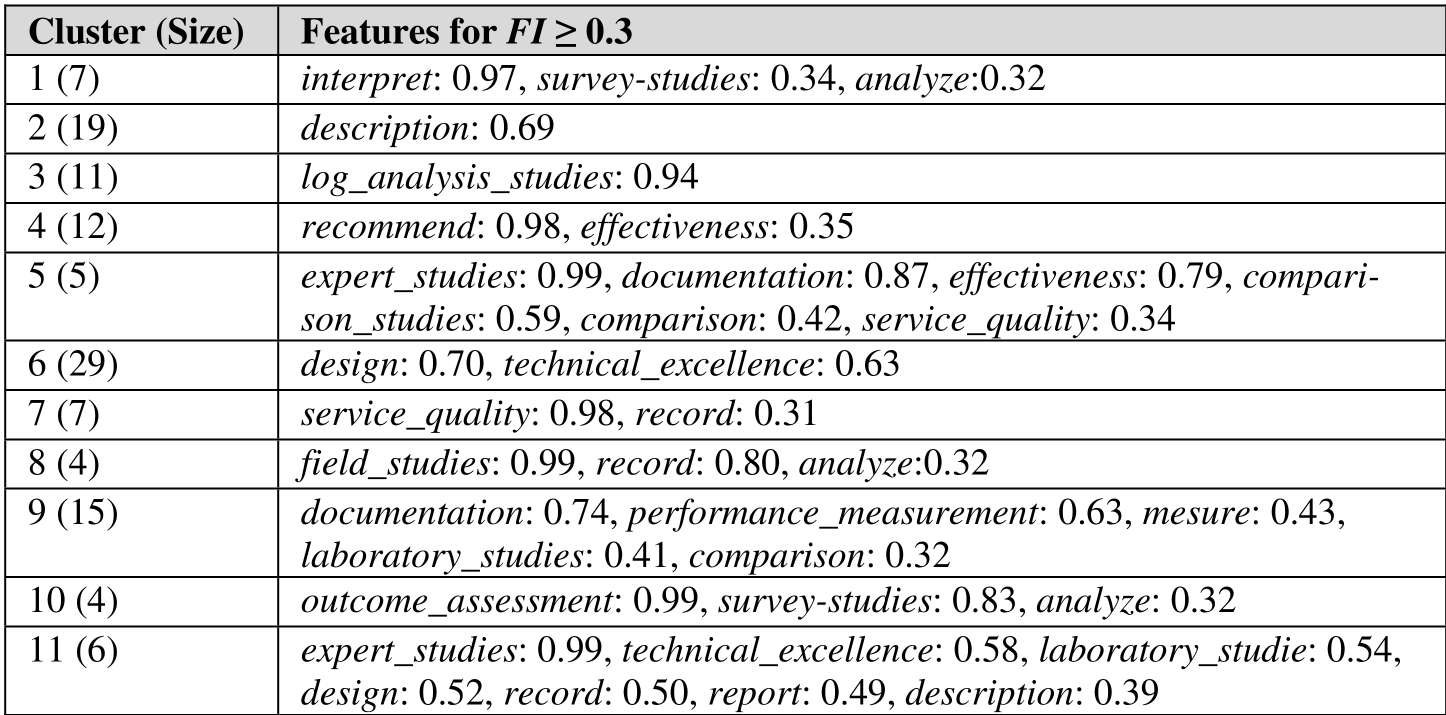
The 11 clusters revealed fascinating "standard operating procedures" in the DL world:
- Cluster 3 (Log Analysis): A highly specific operational cluster focused purely on system logs.
- Cluster 9 (Performance-Laboratory): A pattern linking "Documentation" goals with "Measurement" activities in "Laboratory settings."
- Cluster 11 (Expert-Driven Design): A sophisticated pattern where "Technical Excellence" is pursued through "Expert Studies" and "Recording" activities to improve system "Design."
Critical Analysis & Conclusion
Takeaways
This paper proves that domain ontologies like DiLEO are not just passive indexes—they are active tools for Research Profiling. By clustering semantic instances, we can see the "paths" that successful researchers take.
Limitations
- Manual Labor: The annotation process required three experts and multiple cross-checks. This does not scale easily to the current era of LLMs and massive arXiv daily updates.
- Temporal Constraint: The data stops at 2010. The rise of AI-driven digital libraries (e.g., vector databases, LLM-based search) would likely necessitate new subclasses within DiLEO.
Future Outlook
The path forward involves Automating Semantic Annotation. If we can use LLMs to accurately map papers to DiLEO subclasses, we could generate these "Research Trend Maps" in real-time, helping PhD students and policy-makers identify "white spaces" in scientific literature instantaneously.