
Mining for Computing Jobs: A Data-Driven Taxonomy of the IT Profession
12460_Mining for Computing Jobs.
This paper presents a Web content data mining application that extracted and analyzed over 240,000 unique IT job descriptions from major search engines. Using hierarchical and k-means cluster analysis, the authors distilled 20 distinct job definitions and five major career classifications, providing a statistically grounded map of the computing profession's skill requirements.
TL;DR
Researchers at Southern Illinois University have leveraged large-scale Web data mining to move past the "vague job title" era. By analyzing nearly 250,000 job advertisements using k-means clustering, they identified 20 core job definitions and 5 macro-categories that define the modern computing landscape. Their findings reveal a growing divide between technical development and business analysis, with high market demand shifting toward Security and IT Management.
Background: The "Title-Skill Gap"
In the IT world, a title like "Software Engineer" can mean anything from writing embedded C++ to designing high-level Web logic. The authors argue that this inconsistency creates friction for recruiters, educators, and job seekers alike. Existing frameworks like the US Department of Labor's O*NET often fail to capture the fast-paced reality of the tech stack—sometimes listing "circuit board knowledge" for a Database Administrator while missing Oracle or SQL.
Methodology: High-Dimensional Skill Clustering
The research team developed a robust pipeline to turn unstructured job ads into structured insights:
- Extraction: Daily scraping of Monster.com, HotJobs.com, and SimplyHired.com.
- Parsing: Identification of 239 skill terms (e.g., .NET, AJAX, Leadership).
- Refinement: Filtering out "headhunter spam" and low-frequency skills (appearing in <2% of ads).
- Clustering: Utilizing k-means cluster analysis to group ads that share high similarities in required skill sets.
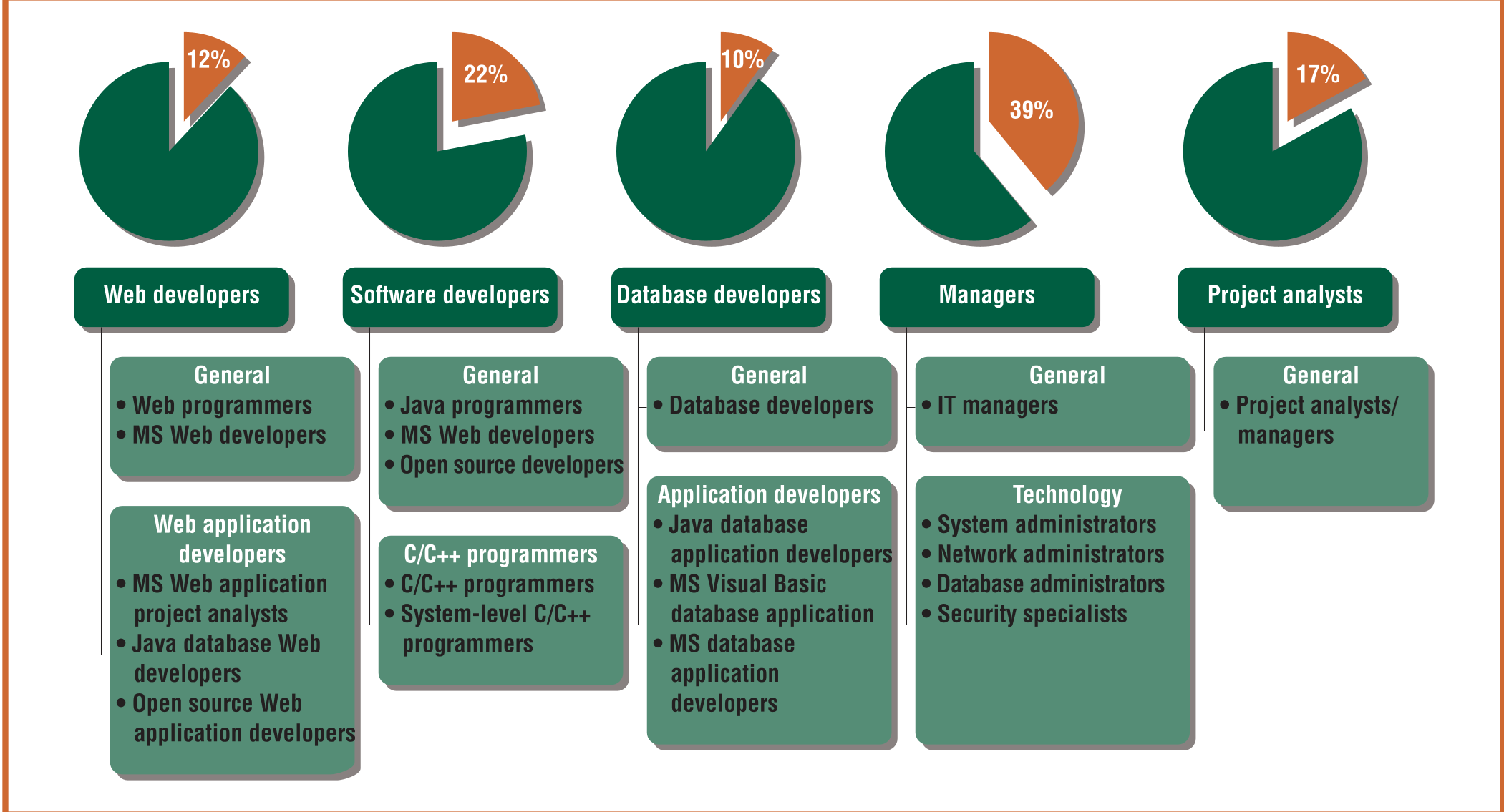 Figure 1: The taxonomy tree showing the 5 major groups and their underlying job clusters.
The "The Big Five" Career Paths
The analysis distilled the complex IT market into five logical groups:
- Web Developers: A diverse niche where Java and Open Source dominate (collectively 40% of the market), while Microsoft technologies occupy about a third.
- Software Developers: Traditional, non-web development focused on C/C++, Java, or C#.
- Database Developers: A SQL-heavy cluster where Oracle remains a primary dominant force (91% frequency in some clusters).
- Managers: This largest group (12.7% for IT Managers) emphasizes leadership, strategy, and business skills over pure coding.
- Analysts: A group focused strictly on project management, budgeting, and planning.
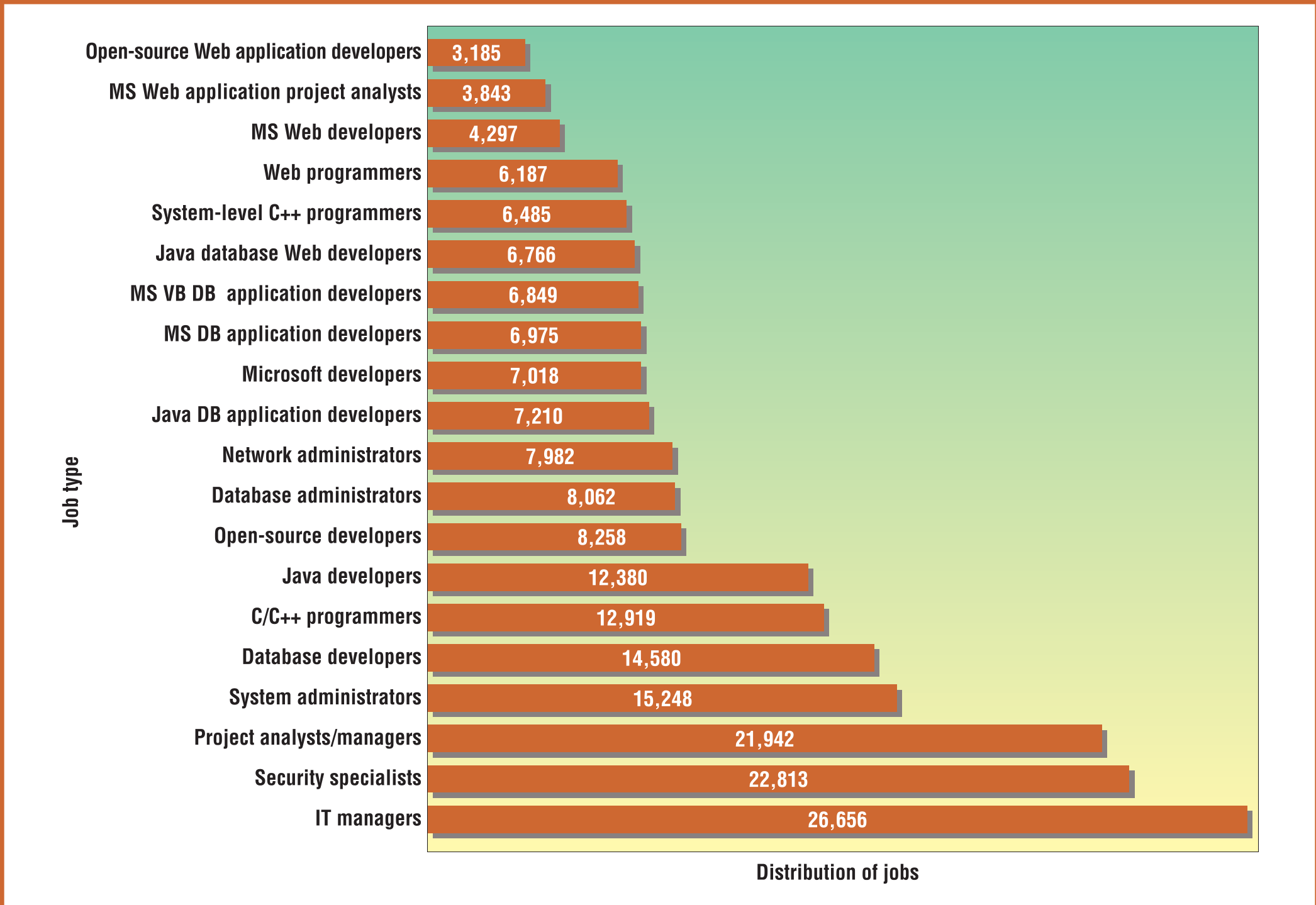 Figure 2: Distribution of job ads across the identified 20 job types.
Critical Insight: The "Great Decoupling"
Perhaps the most significant finding is the shifting role of the Programmer/Analyst. Historically, one person did both. The data now suggests a split:
- Technical Devs are becoming more specialized and "pure" in their tech stack.
- Project Analysts are becoming more business-oriented.
The authors suggest this is a strategic move by organizations to make technical roles more modular, potentially making them easier to outsource (Offshoring), while keeping the domain-heavy "Analyst" roles in-house.
Deep Insight & Conclusion
This paper serves as a rigorous baseline for any professional looking to audit their own value. If you are a Database Administrator without Oracle skills, or a Web Developer solely focused on Microsoft technologies, you are operating in a smaller sub-segment of the market than you might realize.
Limitations: The study is a snapshot of the US market. As the industry moves toward "Cloud-Native" and "AI-Integrated" roles, the 2008-era clusters (where Perl and VB still had significant footprints) will inevitably evolve. However, the methodology of using clustering to define job roles remains a GOLD standard for labor market analysis.
Future Outlook: For the next generation of researchers, the challenge lies in tracking these clusters dynamically over time to detect the emergence of new technologies (like LLMs or Blockchain) before they even receive formal job titles.