
Uncovering the Invisible: Mining Implicit Social Networks via Context-Aware Tech
Mining Implicit Social Network with Context-Aware Technologies
This paper introduces a framework for mining "Implicit Social Networks"—social ties inferred from behavior rather than explicitly stated. It adapts latent distance and influence models using context-aware technologies (like RFID) and proposes a multi-paradigm matrix to weight relationships across different social contexts.
TL;DR
While we often define social networks by who we "follow" or "friend," the most influential ties are often hidden. This paper proposes a methodology to mine Implicit Social Networks—relationships inferred from physical proximity and shared activities. By utilizing context-aware technologies like RFID and a novel "Paradigm Matrix," the authors provide a mathematical foundation to turn raw movement data into actionable social insights.
The "Missing Link" in Social Analysis
Standard Social Network Analysis (SNA) is built on explicit data. In a corporate or retail setting, this data is often incomplete or performative. The authors argue that a "gap" exists: the implicit ties—the people you actually spend time with at a museum or a store—carry more weight for business intelligence than a digital list of contacts.
The challenge? Implicit ties are "noisy." Two people standing together once isn't a relationship; it's a random event. The goal is to separate these coincidences from true social bonds.
Methodology: From Proximity to Probability
The authors move beyond static models by introducing time-accumulation and paradigm weighting.
1. The Reverse Latent Distance Model
Traditional latent distance models assume a relationship exists and find the individuals' positions in social space. This paper flips the script: it observes the "distance" () in physical or virtual space over time () to calculate the probability () of a social tie.
eq j} P (y _ {i, j} | z _ {i}, z _ {j}, x _ {i, j}, heta) | _ {t} d t$$ This integral ensures that only **persistent** proximity results in a high probability of a social tie, effectively filtering out "one-off" encounters. 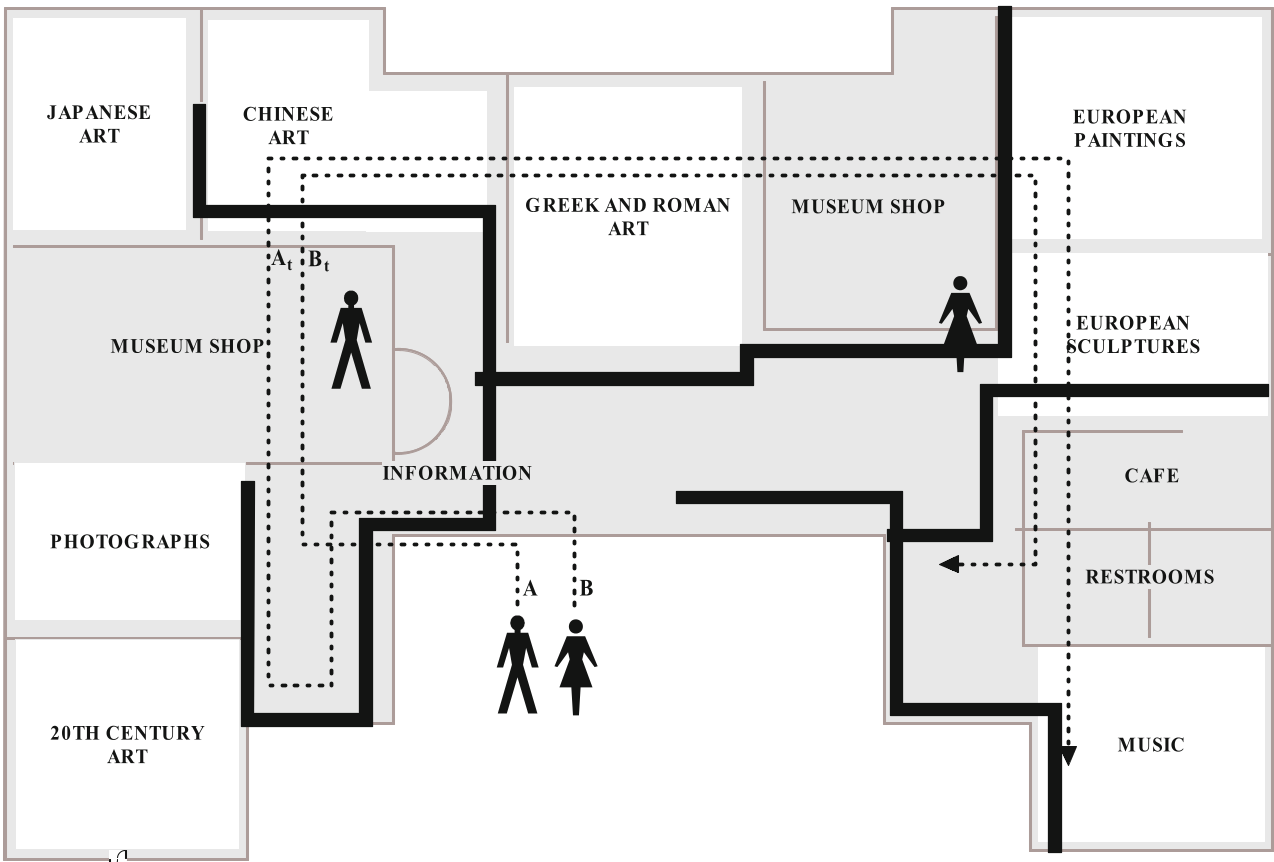 *Figure 1: Extracting ties from physical movement patterns—observed "co-occurrence" leads to implicit network discovery.* ### 2. The Paradigm Matrix One of the paper's most innovative contributions is the **Paradigm Matrix** $|\lambda|_{n imes m}$. This recognizes that a tie in one context (e.g., two people shopping together) doesn't necessarily translate to another context (e.g., a professional collaboration). * **Personal Paradigm**: High weight for weekend retail interactions. * **Professional Paradigm**: Low weight for those same interactions, but high weight for weekday office proximity. ## Practical Applications: Beyond the Screen The authors use an RFID-equipped museum/retailer as a primary example. By tracking "cyber-footprints" and physical paths, businesses can: * **Optimized Marketing**: Identify "hidden" groups that influence each other's purchasing decisions even if they aren't connected on social media. * **Organizational Design**: Understand how different teams truly interact (or don't) regardless of the formal org chart. 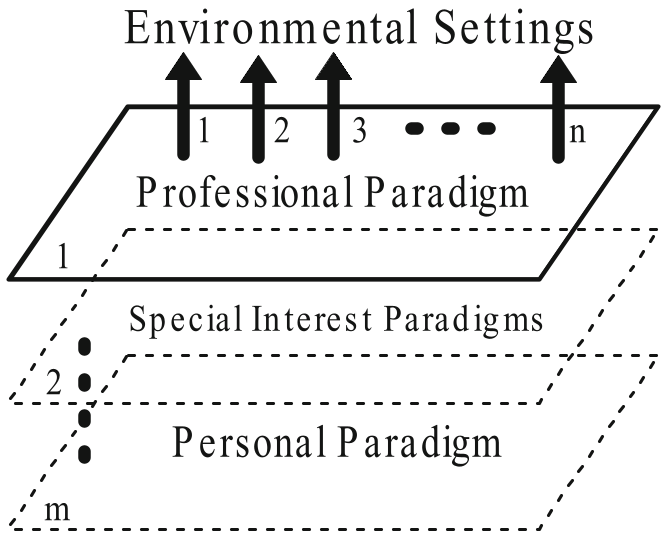 *Figure 2: Distinguishing between Personal and Professional paradigms in social network rendering.* ## Critical Insight & Future Outlook This "research-in-progress" paper lays the groundwork for what we now see in sophisticated modern "Digital Twins" of organizations. The core takeaway is that **Social Correlation** matters only when it is significant after accumulation. **Limitations**: The paper is light on empirical validation (due to its "work-in-progress" status at the time) and requires significant privacy safeguards when deployed in real-world RFID environments. **Future Work**: The next frontier involves integrating these implicit models into recommendation engines that proactively suggest collaborations or products based on "who you are with" rather than just "who you say you know."