
Mining User Patterns: Decoding Human Mobility in the Age of LBSNs
Mining user patterns for location prediction in mobile social networks
This paper presents a supervised learning framework for location prediction in Location-Based Social Networks (LBSNs) using Foursquare check-in data. By extracting multidimensional features—spatial, temporal, and user similarity—the authors train classifiers to predict future user movements with notable accuracy.
TL;DR
Predicting where a user will go next isn't just about their last location; it's about the intersection of their habits, the time of day, and their similarity to others. This paper leverages Foursquare check-in data to build a supervised learning model that integrates spatial, temporal, and user similarity features, achieving an impressive 78.90% prediction accuracy.
Background & Motivation: Beyond the Coordinate
In the ecosystem of Location-Based Social Networks (LBSNs), a "check-in" is more than a GPS coordinate—it is a digital footprint of human intent. While early mobility models relied heavily on Markov Chains or simple spatial proximity, they often missed the "social" and "temporal" nuances. Why does a user visit a coffee shop at 8 AM but a park at 4 PM? Why do users with similar interests frequent the same types of venues even if they aren't friends?
The authors recognize that existing methods struggle with data sparsity (most users rarely check in) and the multi-modality of human movement.
Methodology: The Triple-Threat Feature Set
The core innovation lies in the construction of a feature vector that captures three vital dimensions:
- Spatial Features: Analyzing the frequency and distribution of visited venues.
- Temporal Features: Recognizing periodic routines (e.g., weekday vs. weekend patterns).
- User Similarity: This is the "secret sauce." The authors use:
- Cosine Similarity: Measuring how similar users' movement vectors are.
- Jaccard Similarity: Comparing the sets of unique venues visited by different users.
Model Architecture
By filtering the dataset for active users (those with more than 10 check-ins), the authors created a robust training set.
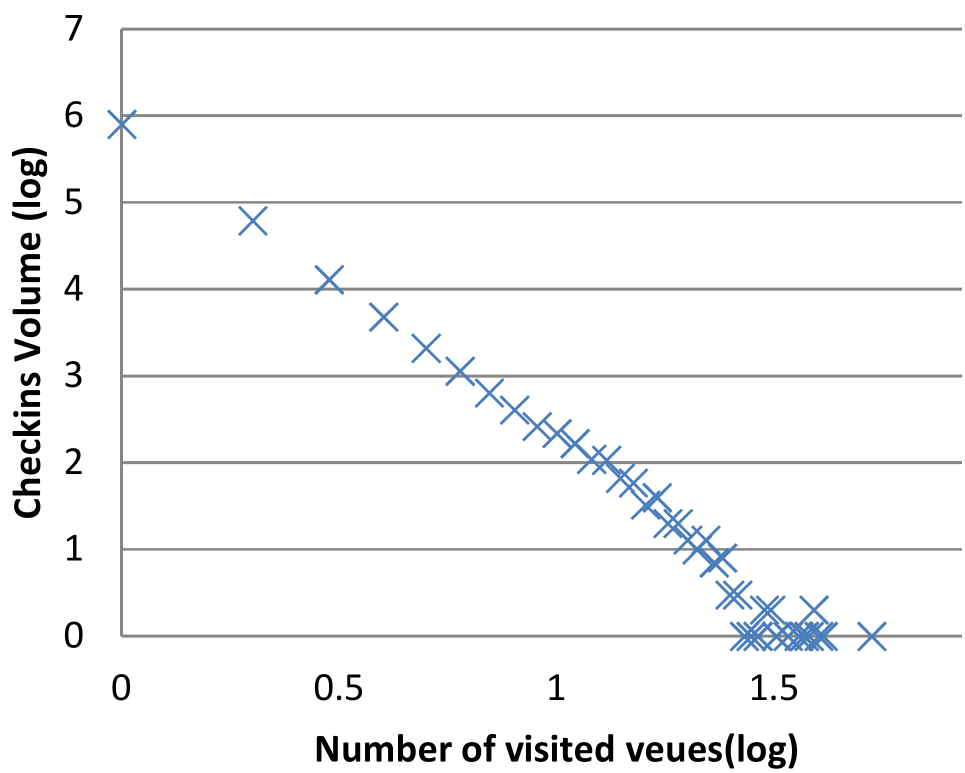 Figure 1: The workflow from raw Foursquare data to feature extraction and classification.
Experiments and Breakthroughs
The researchers tested their approach across three distinct time-windowed datasets (Set A, B, and C). They found that as the complexity of the feature set increased, so did the classifier's performance.
Key Results:
- Data Filtration works: By focusing on the 1.52% of "active" users, the model avoids the "noise" of one-time check-ins.
- Top Accuracy: The system reached an accuracy of 78.90%, proving that supervised learning can effectively map the non-linear relationships in mobility data.
 Table 1: Characteristics of the datasets used for training and validation.
Critical Insight & Future Outlook
While the paper demonstrates a strong jump in accuracy compared to baseline spatial models, it also highlights a persistent challenge in the field: Data Sparsity. Even in a massive Foursquare dataset, only a fraction of users provide enough data for a supervised model to "learn" their life.
The Takeaway: Future research should look toward transfer learning, where patterns learned from active users can be used to predict the movements of "cold-start" or infrequent users. Additionally, integrating the semantics of a location (e.g., "why" people go to a "Gym" vs a "Bar") could further refine the 21% error margin remaining in current models.
Conclusion
This work serves as a foundational bridge between simple data mining and intelligent context-aware applications. By proving that social similarity is a strong proxy for physical movement, it paves the way for smarter city sensing and highly personalized location-based advertising.