
Beyond the Contact List: Mining Mobile Social Networks with Bayesian Probabilistic Models
Mining and Visualizing Mobile Social Network Based on Bayesian Probabilistic Model
The paper introduces a Bayesian Probabilistic Model for mining and visualizing Mobile Social Networks (MSN) by analyzing raw smartphone logs. It employs a Bayesian Network (BN) to infer social contexts such as closeness, relationship types, and related activities, transitioning mobile social services from passive platforms to proactive relationship management tools.
TL;DR
Researchers have developed a system that uses Bayesian Networks to transform messy mobile logs—calls, GPS, and Bluetooth—into a structured "Mobile Social Network" (MSN). By inferring closeness and relationship types through probabilistic reasoning, the system can automatically visualize social structures and recommend "estranged" friends you might want to call, moving the phonebook from a static list to a dynamic social assistant.
The "Ubiquitous" Opportunity and Its Challenges
While we carry smartphones 24/7, our digital social interfaces often remain stuck in the early 2000s—static lists of names and numbers. The authors argue that the "ubiquity" of mobile phones provides a goldmine of context that web-based platforms lack.
However, extracting meaning from this data is notoriously difficult. Human behavior is inconsistent, and sensor data (like GPS) is often inaccurate. Prior works relied on rigid "if-then" rules that failed to account for this uncertainty. This paper pivots toward a probabilistic approach, treating social relationships not as hard truths, but as distributions of likelihood.
Methodology: The Bayesian Architecture
The core of the system is a Bayesian Network (BN) designed with 19 variables. The model takes inputs like call frequency, time of day (personal time vs. work hours), and spatial data (Home, Work, Others) to output three high-level contexts:
- Closeness: How intimate is the bond?
- Related Activity: Are they working, eating, or playing together?
- Relationship: Is the callee family, a lover, a colleague, or a friend?
Handling the "Continuous" Problem
One technical hurdle in BNs is that they typically require discrete states. The authors innovated here by:
- Fuzzy Membership: Instead of a hard cutoff for "recent calls," they use fuzzy values to represent the strength of confidence.
- Virtual Nodes: They attached binary "Yes/No" virtual nodes to parent nodes to update beliefs based on statistical observations (e.g., if you call someone at 11 PM 80% of the time, the model shifts its weights accordingly).
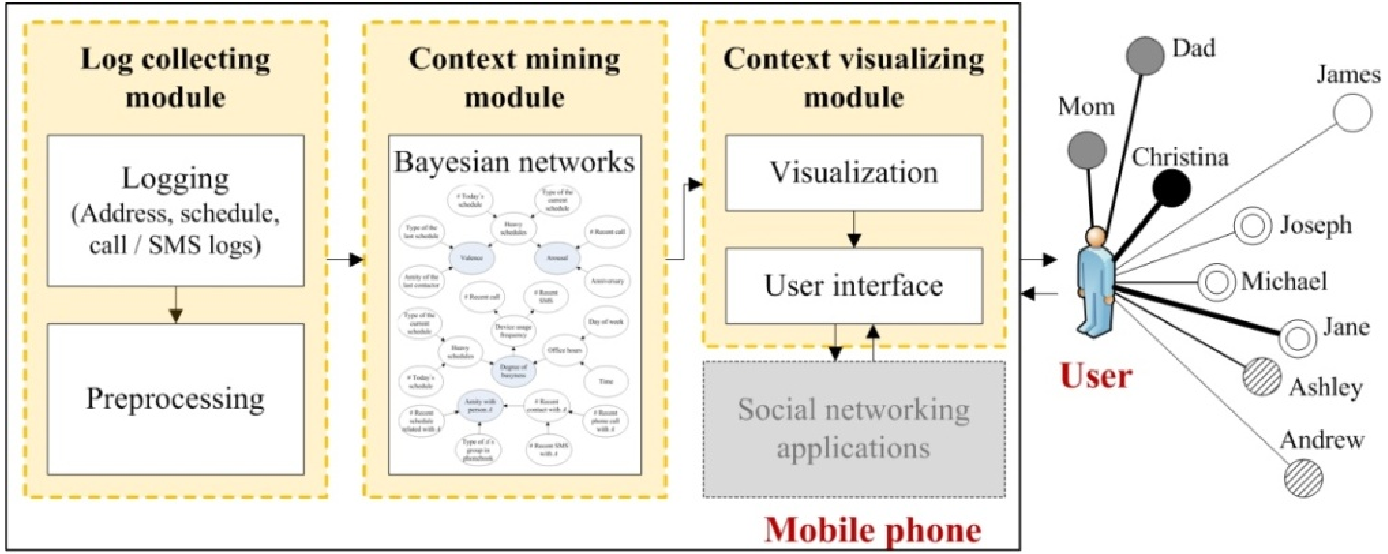 Figure 1: Overview of the MSN Mining and Visualizing system.
Visualizing Social Gravity
The mapping of data to a visual interface is where the "Social" in MSN comes to life. The system generates a graph where:
- Node Color: Represents relationship type.
- Edge Color/Gray Level: Indicates closeness.
- Edge Length: Reflects the time since the last contact (longer edges mean you're drifting apart).
 Figure 2: (a) The Network-style visualization of social ties; (d) Recommendation interface based on temporal context.
SOTA Comparison and Accuracy
In a month-long trial with university students, the model achieved 60-70% accuracy in predicting relationship labels. While this might seem lower than modern deep learning benchmarks, it's a significant feat given the sparsity of the data (no text content was analyzed, only metadata). The confusion often occurred between "friend" and "lover"—a distinction that is notoriously difficult even for humans to quantify based solely on call frequency!
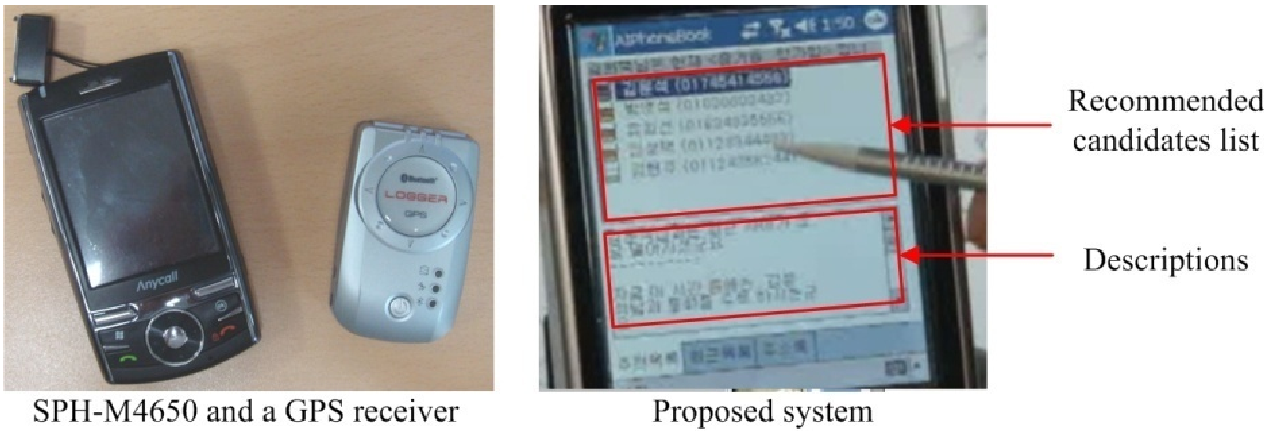 Figure 3: Bayesian Network snapshots for two different contacts, showing how family vs. friend relationships are inferred through different evidence paths.
Critical Insight & Future Outlook
The true value of this work lies in its Interpretability. Unlike a "black-box" neural network, the BN allows us to see why the system thinks a callee is a colleague (e.g., "Contacted at Work during Daytime").
Limitations: The study faced challenges with student data—specifically, the ambiguity of the "colleague" role in an academic setting. Future work plans to integrate Bluetooth "encounter" data to map physical proximity, which would add a crucial layer to the social graph: who do you actually spend time with, vs. who do you just talk to?
Conclusion
This paper serves as a foundational blueprint for context-aware mobile interfaces. By mathematically modeling the "uncertainty" of human interaction, the authors transition the smartphone from a communication pipe into a tool that understands the nuances of human connection.