
Mobile Crowdsourcing: Balancing Peer Responses and Battery Life in Opportunistic Networks
Mobile crowdsourcing in peer-to-peer opportunistic networks: Energy usage and response analysis
This paper investigates mobile crowdsourcing in peer-to-peer opportunistic networks (Delay Tolerant Networks), focusing on task propagation efficiency and energy usage. The authors introduce the LogicCrowd framework to evaluate how wait times, task sizes, and network topologies—modeled via Epidemic routing—impact response rates and mobile battery longevity.
TL;DR
In a world without constant 5G/Wi-Fi, can we still "crowdsource" information? This paper explores mobile crowdsourcing in Opportunistic Networks—where devices trade data only when they physically pass each other. It provides a mathematical framework to predict how many answers you'll get and how much battery you'll burn waiting for them.
The "Disconnected" Challenge
Most crowdsourcing (like Uber or Waze) assumes a central server. But what if you’re in a disaster zone or a crowded stadium where the grid is down? You have to rely on Delay Tolerant Networks (DTNs).
The problem is twofold:
- Unpredictability: How long should the "Task Originator" wait (TTL) before giving up?
- Energy Cost: Forwarding tasks for others (acting as a "Mediator") drains battery. Without a model to estimate this, users won't participate.
Methodology: The Math of Gossip
The authors use an Epidemic Routing approach, effectively "infecting" nearby nodes with a task.
1. Propagation Control
To prevent a task from circulating forever, they introduce two "Live" parameters:
- Time-to-Live (τ): A countdown timer. Once it hits zero, the task stops moving.
- Power-to-Live (ξ): An energy budget. If a node's battery is too low, it refuses to forward the task.
2. The Architecture of Response
The paper compares two communication modes:
- Point-to-Point (e.g., Bluetooth): One-to-one connection. The authors discovered that the response growth follows a d-step Fibonacci sequence.
- Point-to-Multipoint (e.g., Wi-Fi Direct): One-to-many. This allows for exponential growth of task reach.
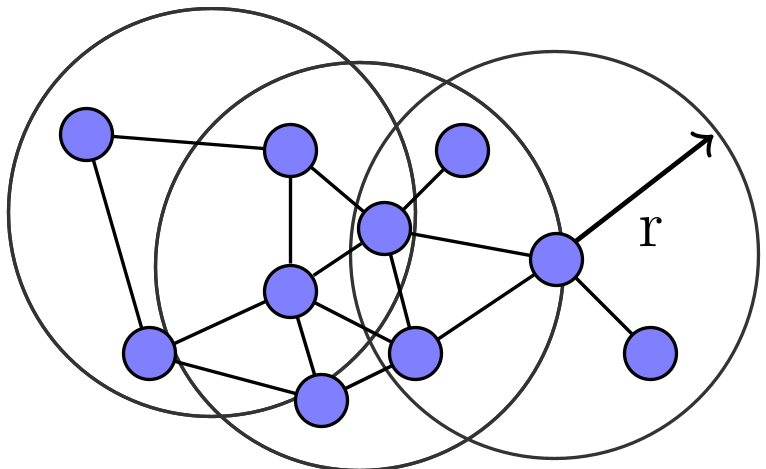 Figure 1: Task propagation from Source through Mediators to Terminal nodes.
Experimental Insights: Why Efficiency Matters
Using the LogicCrowd simulator in Netlogo with 30,000 nodes, the researchers identified several critical "laws" for mobile crowdsourcing:
- The Cost of Task Size: Larger tasks (e.g., sending an image vs. a text query) drastically reduce the number of responses. More transmission time means fewer opportunities to "catch" a passing node.
- The Mediator's Burden: Nodes acting as relays (Mediators) consume significantly more energy than those who just answer (Terminals).
- Display is the Killer: Running the app in the "Foreground" (screen on) consumes nearly 7x more energy than "Background" processing.
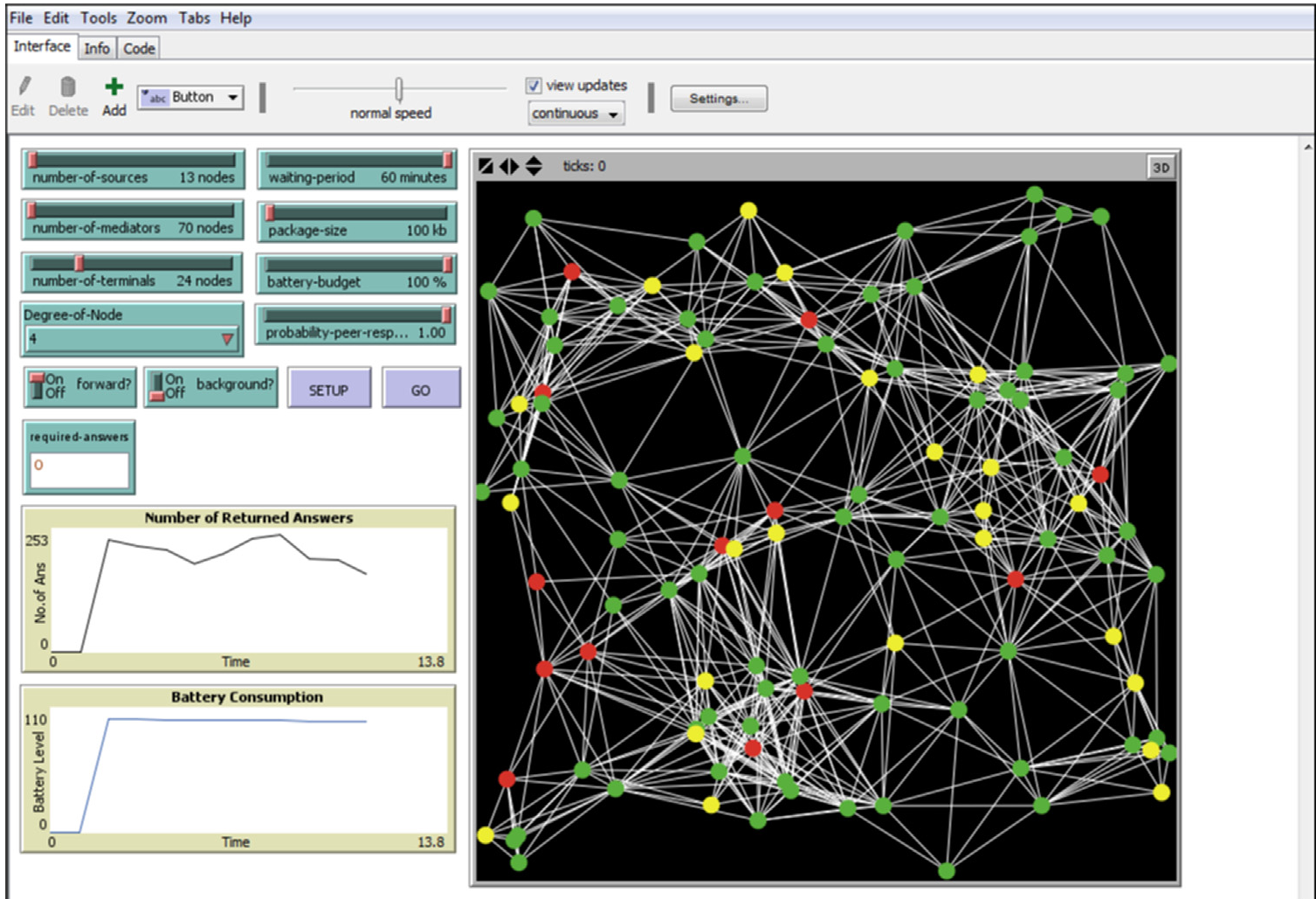 Figure 2: Analysis of response counts vs. wait time across different node degrees.
Critical Insight: The "Upper Bound" Gap
One of the paper’s most interesting findings is that while theoretical models (Fibonacci-based) suggest massive growth, real-world random networks are far less efficient. In simulations, the response rate was roughly 5x lower than the theoretical maximum. This is due to node redundancy: devices often encounter others who have already seen the task, wasting connection time.
Conclusion & Future Work
This research provides the first real "User Manual" for P2P crowdsourcing. It tells a user: “If you want 1,000 responses for a 1MB task, use Wi-Fi Direct and wait 30 minutes in the background.”
Limitations: The study assumes nodes are willing to cooperate. In the real world, "selfish" nodes might refuse to forward tasks to save their own battery. Future research must integrate incentive mechanisms (like digital tokens) to reward Mediators for their energy sacrifice.