
Establishing a Blueprint for Mobile Crowdsourcing: Structures, Systems, and Scenarios
Architecture of Mobile Crowdsourcing Systems
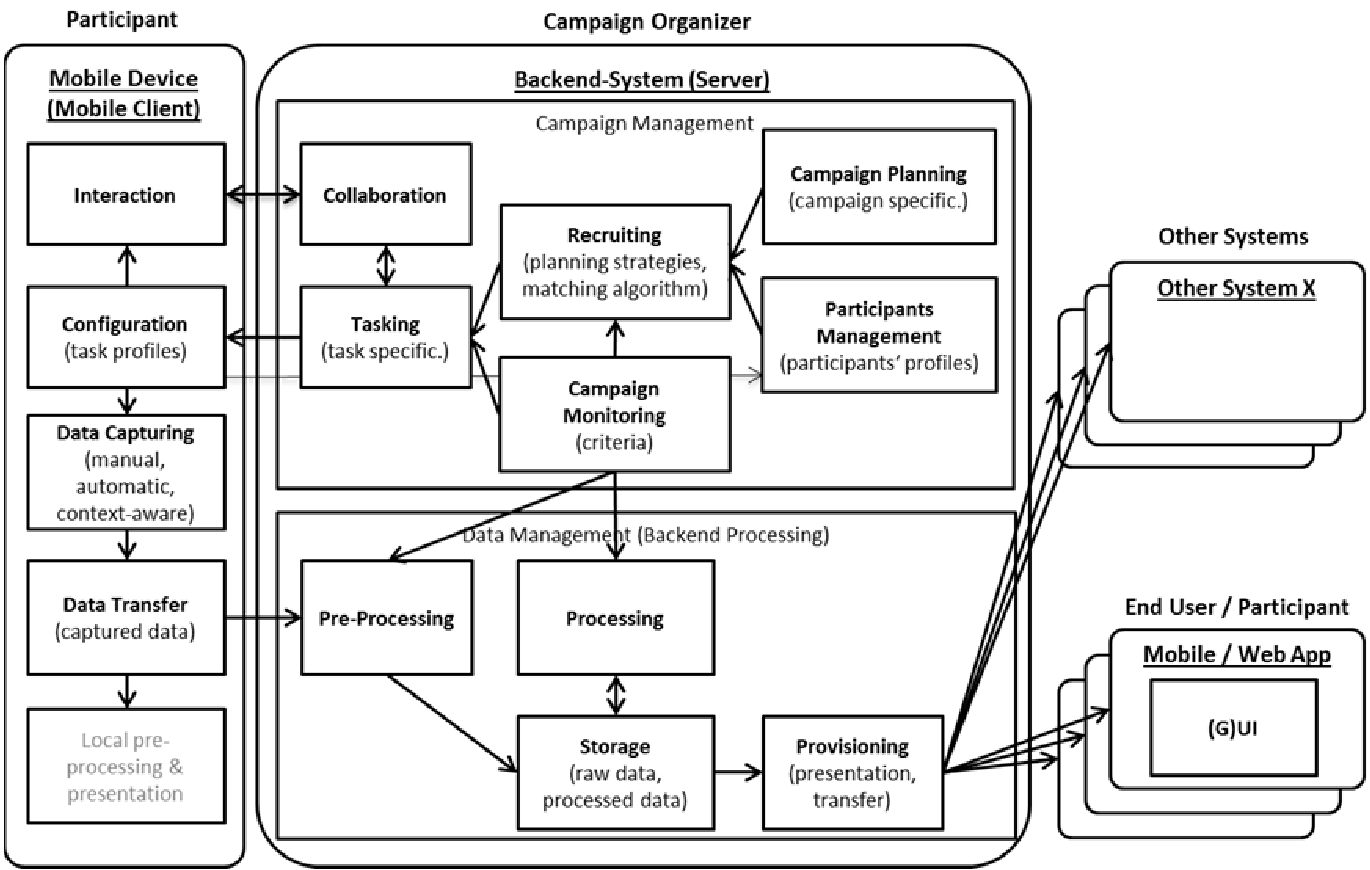
This paper proposes a comprehensive general architecture and a classification scheme for Mobile Crowdsourcing (MCS) systems. It systematically organizes functional components such as campaign management, data processing, and mobile client interaction, validated through real-world disaster management applications like "Flood Risk" and "Emergency Help."
TL;DR
Mobile Crowdsourcing (MCS) has evolved from a niche data-gathering tool to a critical infrastructure for disaster management and urban sensing. In this paper, Fuchs-Kittowski and Faust move beyond ad-hoc implementations to propose a standardized general architecture and a multidimensional classification scheme. By decoupling campaign orchestration from data processing, the authors provide a rigorous framework for developing scalable, cost-effective collaborative systems.
Background: Beyond the "Ad-Hoc" Era
Traditionally, MCS systems were developed as "silos"—one-off apps for specific tasks like noise mapping or traffic tracking. This made the development of new applications expensive and technically risky. The authors argue that for MCS to reach industrial maturity, we must stop building from scratch and start building from a reference architecture that accounts for both the silicon (sensors/servers) and the soul (human participants/motivation).
Methodology: High-Level Taxonomy
The paper introduces a classification scheme that characterizes MCS apps across five dimensions:
- Device: From manual input to embedded and external sensors.
- Data: Dynamics of capturing (automatic vs. manual), spatiality, and transmission latency.
- Participation: Recruitment strategies, admission criteria (role vs. location), and assessment.
- Involvement: Active vs. passive participation and its impact on user retention.
- Campaign: Temporal and spatial boundaries of the crowdsourcing effort.
The Core: A General System Architecture
The proposed architecture is divided into two primary runtime environments: the Mobile Device (Client) and the Backend System (Server).
1. Campaign Management: The Brain
Unlike simple data repositories, a true MCS backend must manage the "Life of a Task." This includes:
- Recruiting: Matching participant profiles (expertise, reputation) with campaign needs.
- Tasking: Pushing specific requirements (e.g., "Take a 2MP photo at this GPS coord") to the right user.
- Monitoring: Real-time evaluation of data density and quality to trigger adaptive sampling.
2. Data Management: The Factory
This layer handles the heavy lifting of raw data.
- Pre-processing: Using image/audio analysis to turn raw pixels into actionable metrics (e.g., identifying a bird species from a sound clip).
- Storage & Provisioning: Ensuring long-term data integrity and providing APIs for external stakeholders.
Real-World Validation: Disaster Recovery
The authors showcase the architecture's versatility through two distinct use cases:
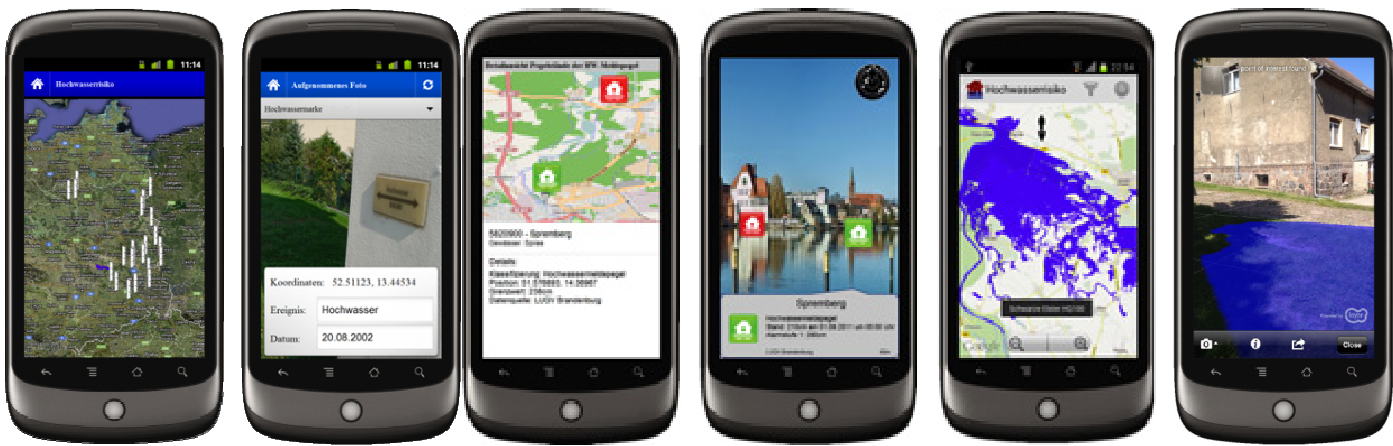
- The Flood Risk App: This focuses on Environment-centric data. It uses a "Bring Your Own Device" philosophy where volunteers verify water levels. Here, the "Pre-processing" component is vital, as operators must compare photos with manual entries to ensure the data is reliable enough for official flood forecasting.
- The Emergency Help App: A People-centric application that facilitates real-time coordination. Its "Recruitment" and "Tasking" components are the stars, dynamically matching disabled individuals with nearby helpers during a crisis.
Critical Insight: The "People" Factor
The paper’s most profound insight is that MCS technical success is inextricably linked to human trust. The architecture specifically includes a "Collaboration" and "Interaction" component. By allowing feedback loops between the organizer and the participant, the system maintains high data quality and participant motivation—a move from a "black box" data dump to a "glass box" community.
Conclusion & Future Horizons
While the architecture provides a robust roadmap, the authors acknowledge remaining hurdles:
- Privacy: Centralized archives remain a target for exploitation.
- Scalability: Moving from small-scale pilots to city-wide deployments remains computationally and organizationally intensive.
- Incentivization: Moving beyond "volunteer" models to sustainable incentive structures.
This paper stands as a seminal "blueprint" for any software architect looking to harness the power of the crowd without reinventing the wheel.