
Optimized Content Delivery in Mobile Social Networks: A Socially-Aware CCN Approach
Delivering mobile social content with selective agent and relay nodes in content centric networks
This paper proposes a cooperative content delivery scheme for Mobile Social Networks (MSNs) using a Content Centric Network (CCN) architecture. It introduces a selective mechanism for choosing agent nodes to manage interest packets and relay nodes for data transmission, achieving significantly lower latency compared to conventional epidemic and direct delivery methods.
TL;DR
The paper introduces a novel architecture for Content Centric Mobile Social Networks. By strategically selecting "Agent Nodes" to aggregate requests and "Relay Nodes" based on encounter probabilities, the researchers have developed a method to slash data delivery latency and increase the successful delivery ratio compared to traditional opportunistic routing protocols.
Problem & Motivation: The "Where" vs. The "What"
Current Mobile Social Networks (MSNs) are hindered by a legacy host-to-host mindset. In a world where devices are constantly moving and connections are intermittent, finding a specific host is hard. Content Centric Networking (CCN) shifts the focus to what content is needed.
However, simply moving to CCN isn't enough. In a dense social environment, the sheer volume of "Interest Packets" can overwhelm the network. Furthermore, in a sparse environment, how do you decide which user is the best "delivery person" for a piece of data? The authors identify that without a selection mechanism for agents and relays, the efficiency gains of CCN are lost to overhead and delay.
Methodology: The Three Pillars of Efficiency
The researchers proposed a structured workflow for content retrieval and delivery:
1. Selective Agent Nodes
Instead of every node broadcasting interests, each community elects an Agent Node. The selection isn't random; it uses a weighted formula considering:
- Social Degree: How many "friends" (contacts) the node has.
- Capacity: Available storage to buffer content.
- Mobility: The node's ability to bridge gaps.
2. Priority-Based Interest Management
Agents don't just forward everything. They calculate a Demand Degree () for each content type. This prevents the "packet storm" by prioritizing content that is historically popular or currently in high demand within the community.
 Above: The architecture of a CCN-based Mobile Social Network involving interest and data packet exchange.
3. Opportunistic Relay Selection
Once the data is retrieved from the CCN core, it must reach the specific requester. The agent selects Relay Nodes based on the frequency of communication (). If Node A meets the destination Node B more often than Node C does, Node A is chosen as the carrier.
Experiments & Results: Proving the Social Advantage
The study compared their proposal against two baselines: Direct Deliver (limited reach) and Epidemic (high overhead).
- Latency Reduction: In communities with high "Emergency Degrees," the delay was significantly lower, proving the effectiveness of the priority scheduling.
- Agent Impact: As shown in the figures below, the presence of an agent keeps the network stable. Without an agent, the delay "explodes" as the number of content items increases.
- Delivery Success: The "Socially-Aware" scheme maintained a superior Successful Delivery Ratio (SDR) because it made informed decisions about which relay to trust, rather than spraying packets randomly like the Epidemic approach.
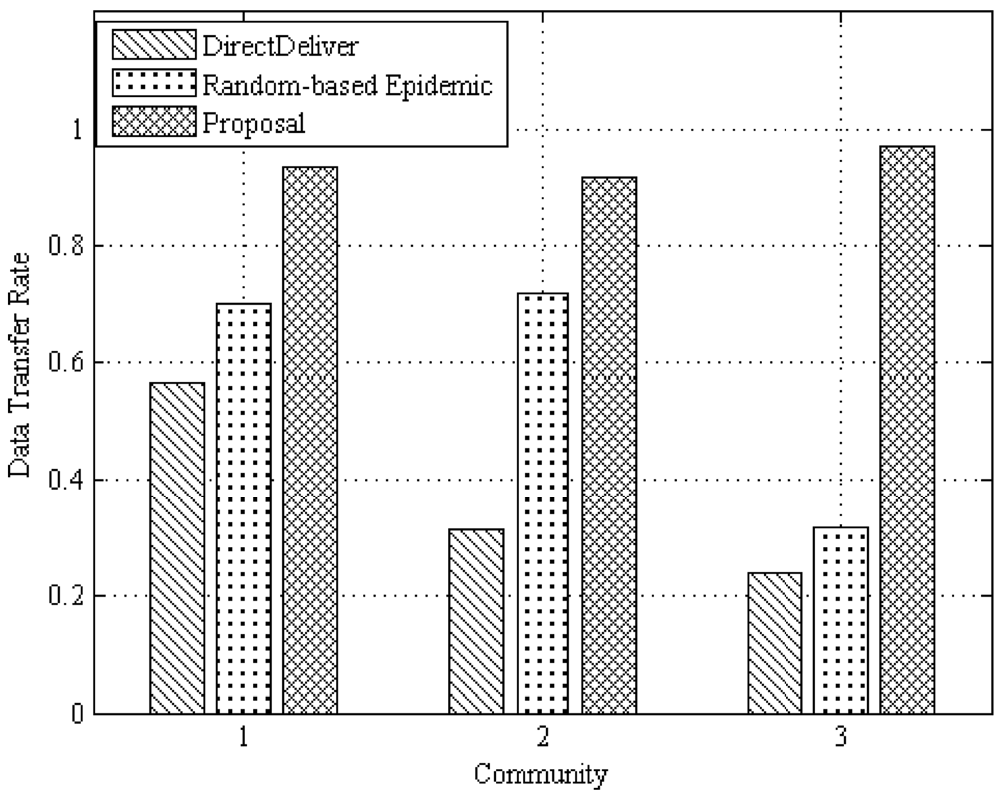 Fig 5: Average delay remains controlled with an agent node even as content variety increases.
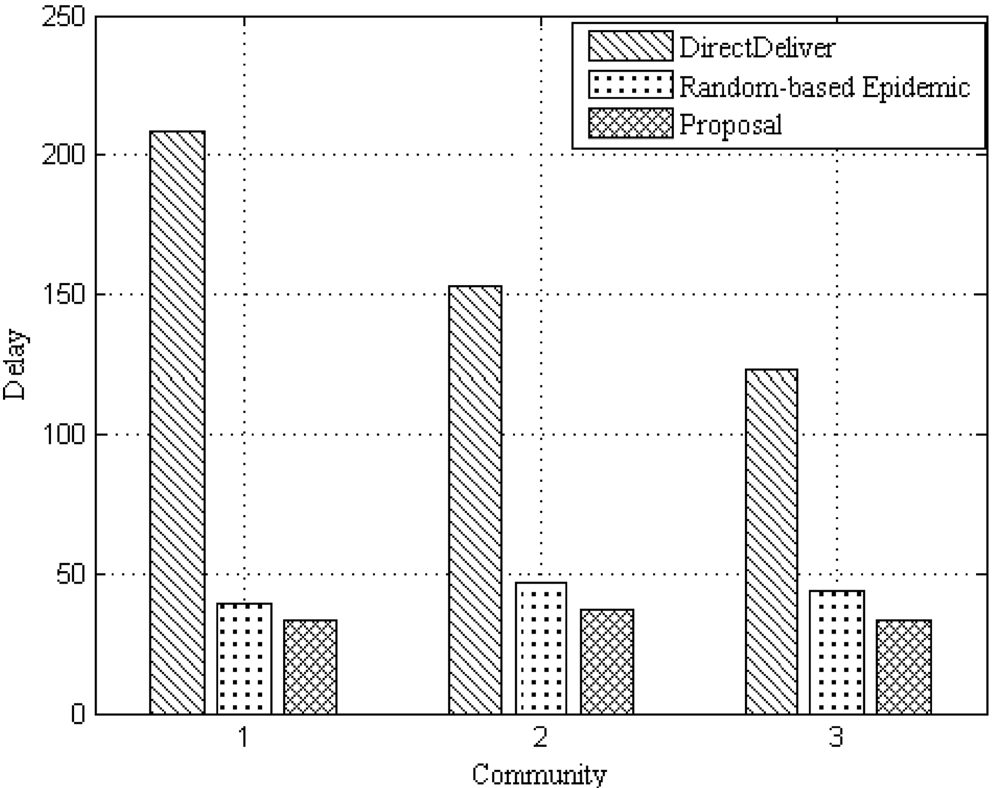 Fig 6: The proposed scheme consistently achieves lower latency than Direct Deliver and Epidemic routing.
Critical Analysis & Conclusion
Takeaway
The core insight of this paper is that social structure is a routing asset. By recognizing that nodes are not just points in space but members of social communities with predictable encounter patterns, the authors successfully optimized the CCN architecture for mobile environments.
Limitations & Future Work
While effective, the model assumes nodes are "honest" and willing to help. In real-world MSNs, node selfishness (users refusing to use their battery/storage for others) is a major hurdle. The authors mention future work will delve deeper into information spreading models, which could potentially include incentive mechanisms to combat selfishness.