
Mobile Social Networking: The New Frontier of Information Grounds
Mobile Social Networking: An Information Grounds Perspective
This paper explores the utility of mobile social networking as a digital "Information Ground" through a 16-month study of the "Slam" system. By applying Karen Fisher's Information Grounds framework, the authors demonstrate how mobile-based group messaging facilitates rapid information exchange, social coordination, and heightened awareness among existing social circles.
TL;DR
Is your group chat just for memes, or is it a vital information ecosystem? This research analyzes Slam, a mobile social networking service, through the lens of Information Grounds theory. The study finds that mobile devices transform social interaction from a physical byproduct into a ubiquitous, highly functional "always-on" information hub that prioritizes strengthening existing ties over forging new ones.
Context: Beyond the Desktop
While early 2000s social networking was dominated by web-based profiles, this paper identifies a shift toward mobile-centric, group-based messaging. The authors position this not just as a communication tool, but as a spatial metaphor: an "Information Ground." Traditionally, these were physical places like gyms or bus stops where info sharing was a byproduct of being there. Mobile tech removes the physical "place" requirement, creating a floating layer of information that follows the user.
Problem & Motivation: The Gap in Info Behavior
The researchers identified a critical gap: Information Science (IS) traditionalists often focused on purposeful searching (like a library). However, real life is messy and incidental.
- Lack of Theory: We didn't have a solid framework to explain how mobile social apps change our information "ecosystem."
- Physicality Bias: Previous theory assumed you had to be in the same room to experience an Information Ground.
- Functional vs. Incidental: Does mobile messaging help us learn things by accident, or is it too efficient for "serendipity"?
Methodology: Testing the Seven Propositions
The study followed 19 users over an average of 16 months, analyzing their actual database logs and survey responses. They tested the "Slam" system against the Seven Propositions of Information Grounds.
Key Mechanism: The Slam Infrastructure
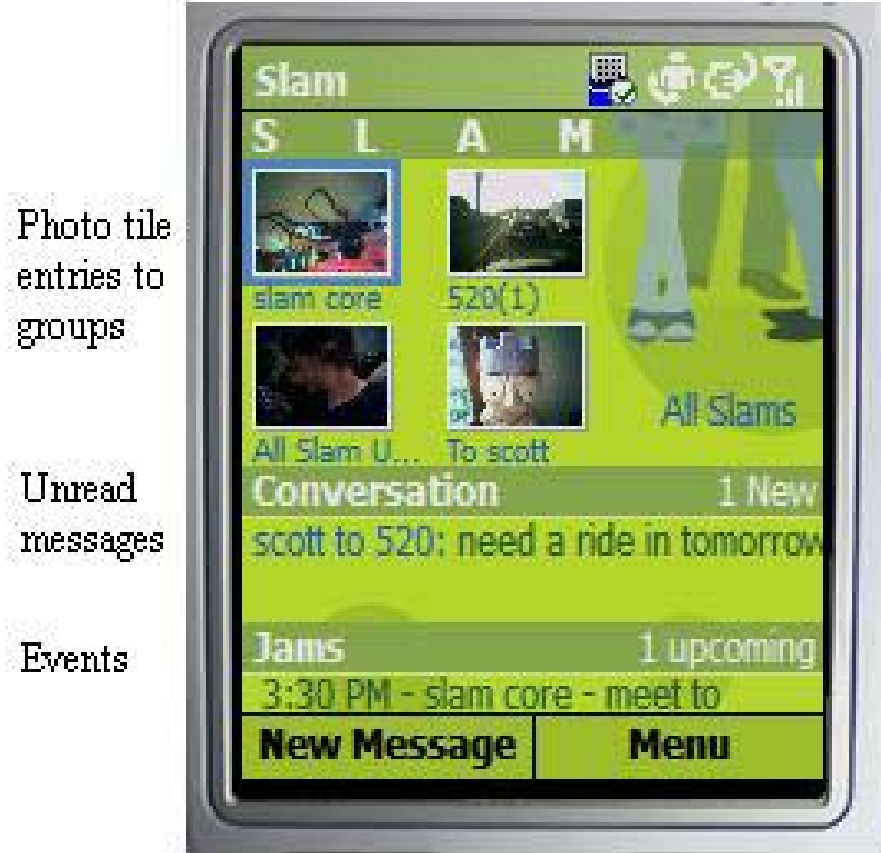 The Slam home screen provided a streamlined entry point for group-wide text and photo messaging, bridging the gap between SMS simplicity and social network structure.
Insights & Qualitative Results
The data showed that mobile info sharing is highly immediate.
- Time Sensitivity: 100% of users checked it in the evening, but usage was remarkably consistent throughout the day.
- Multitasking: 100% of participants used the app while socializing in person, and 63% used it while driving (a stark reminder of its "always-on" nature).
- The Death of Lurking: In contrast to many online forums where 1% of users do 90% of the work, Slam saw high participation across the board. The "chosen" nature of the group created a sense of obligation and relevance.
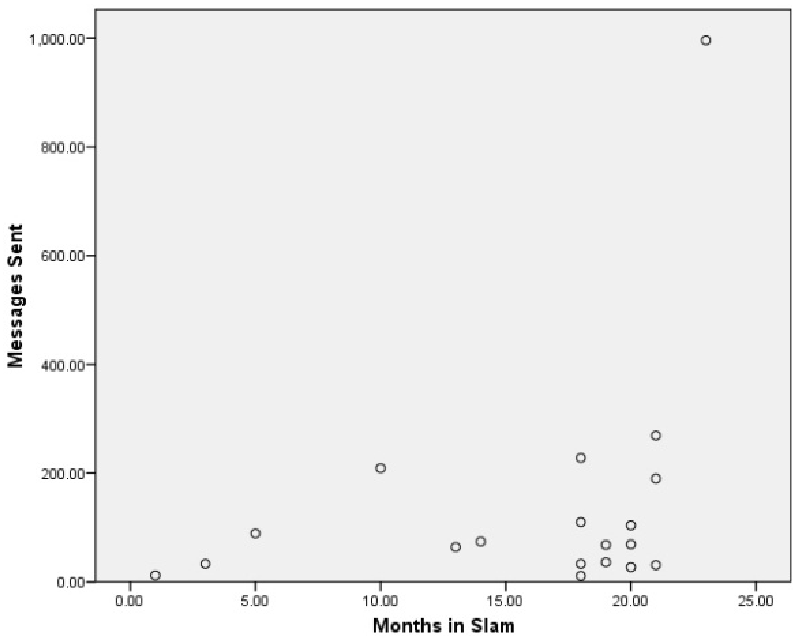 Table showing that coordinating get-togethers and information exchange are the primary drivers of usage, far outweighing simple "banter."
Critical Analysis: Extending the Theory
The authors propose a significant update to Information Grounds theory.
- Information Capital: A new concept combining a person’s total number of info grounds, social capital, and information literacy.
- The Primer Effect: Mobile apps aren't replacing face-to-face interaction; they act as a catalyst. They provide light, "low-stakes" info (where are you? what are you doing?) that sets the stage for deep information sharing in person later.
- Functional Shift: Unlike physical grounds where info is a "byproduct" of social interaction, in mobile apps, the info is the primary goal, and the social connection is the byproduct.
Conclusion & Future Outlook
This paper proves that our mobile devices have become the "Third Place" of the 21st century. While it notes limitations—like the confusion of digital identities (aliases vs. real names)—it highlights a future where spatial awareness and functional coordination are the core of social tech.
For developers and researchers, the takeaway is clear: the future of mobile networking isn't about "finding new friends"; it's about providing the high-speed information infrastructure that makes our existing friendships more efficient and aware.
Takeaways for the Industry:
- Identity Matters: Even in close groups, handle/alias confusion is a friction point.
- Function over Flare: Users value coordination (location/timing) over generic social features.
- The Hub Role: Identifying "hubs" (heavy users) is critical for understanding information flow in any network.