
Streamlining Social Integration: A Model-Driven Approach to Web 2.0 Applications
Model-Driven Development of Social Network Enabled Applications with WebML and Social Primitives
This paper introduces an extension of the WebML notation to support the Model-Driven Development (MDD) of social-network enabled applications. It provides a library of "Social Units" and reusable design patterns that abstract complex API interactions with platforms like Facebook, Twitter, and LinkedIn, enabling automated code generation via the WebRatio tool.
TL;DR
Integrating social media features into enterprise web applications is traditionally a manual, API-heavy nightmare. This paper presents a breakthrough using Model-Driven Development (MDD), extending the WebML language with specialized "Social Units." By abstracting social interactions into visual components, developers can build complex social apps—like real-time Twitter listeners or crowdsourced search tools—through high-level modeling and automated code generation.
The "API Integration" Bottleneck
In the modern enterprise landscape, "social" isn't just about Facebook; it’s about brand management, viral marketing, and internal workforce collaboration (B2E). However, developers face two major obstacles:
- Heterogeneity: Every platform (Twitter, LinkedIn, Facebook) has its own authentication flow (OAuth) and API structure.
- Rigidity: Out-of-the-box enterprise tools like Salesforce Chatter offer fixed features that can't be customized to unique business processes.
The authors argue that manual coding is too slow and error-prone, while general-purpose modeling tools lack the "Social Primitives" needed to represent these interactions naturally.
Methodology: High-Level Social Primitives
The core innovation lies in extending WebML (a DSL for web applications) with a dedicated library of units that wrap social logic.
1. The Three Tiers of Social Units
- Cross-Platform Units: Generic behaviors like "Social Login" or "Social Search" that work across multiple networks simultaneously.
- Platform-Specific Units: Deep-dives into a single API, such as Facebook’s "Invite to Event" or Twitter’s "Tweet" action.
- Collaboration Units: Extending beyond social networks to tools like Google Docs, Calendar, and Doodle for enterprise utility.
2. Standardized Design Patterns
Instead of reinventing the wheel, the authors identified 10 recurring patterns (e.g., Post, Comment, Like/Vote, People Search). These patterns act as blueprints, showing exactly how to link the new units to create functional hypertexts.
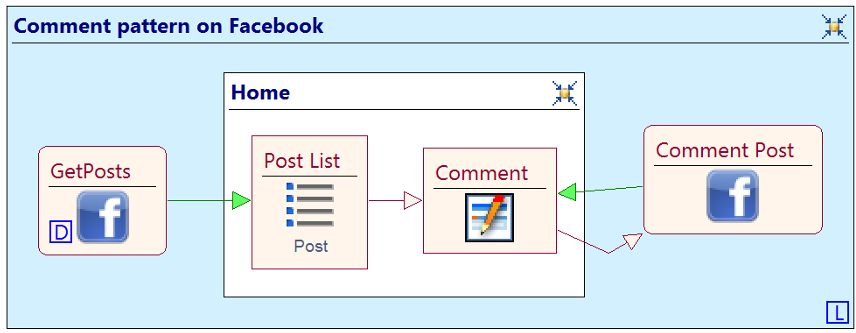 Figure 1: The Social Login pattern using Oauth-enabled modeling units.
Experiments: From Models to Real Applications
The authors moved beyond theory by implementing these units in WebRatio, a model-driven tool that generates standard Java code. They showcased five application scenarios:
- Twitter Keyword Search: A simple search interface modeled entirely with visual units.
- Meeting Setup: A sophisticated workflow where a user selects LinkedIn contacts, creates a Doodle poll for dates, and sends invitations—all orchestrated via the WebML model.
- CrowdSearcher: An advanced application that posts structured queries across different social networks to get human-sourced answers.
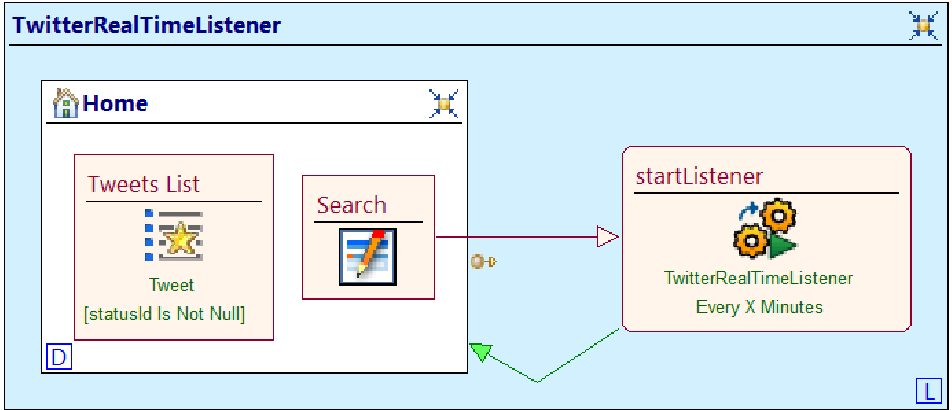 Figure 2: A complex multi-platform workflow for event management.
Critical Insight: Why This Matters
The true value of this work is the separation of concerns. Specifically:
- The Modeler focuses on the user experience and the business process (Who invites whom? When is the poll closed?).
- The Social Units handle the technical debt (How do I refresh an OAuth token? What is the JSON structure for a Twitter DM?).
By treating "Social" as a first-class modeling citizen, the authors have paved the way for "Social BPM"—where social interaction is not just an add-on, but a core part of the business workflow.
Conclusion and Future Outlook
While the paper focuses on the then-dominant platforms (Facebook, Twitter, LinkedIn), the methodology is timeless. As we move toward decentralized social networks (Web3) and AI-driven social agents, the need to abstract complex interactions into reusable, model-driven patterns remains critical. Future work involves further refining these units to create even more generic "cross-social" primitives that can handle semantic differences between platforms automatically.
Takeaway: If you are building enterprise software, don't hard-code your social integrations. Model them.