
The Social Fabric of Financial Collapse: Analyzing Dubai Financial Market as a Network
Modeling, Analysis, and Characterization of Dubai Financial Market as a Social Network
The paper applies social network analysis (SNA) to the Dubai Financial Market (DFM) by constructing two distinct networks: a "Personnel Network" (shared board members) and a "Families Network" (board members from the same family). Using cyclic entropy and non-cyclic graph parameters, the authors reveal that DFM exhibits Small-World and Scale-Free characteristics, explaining its extreme vulnerability during the 2008 financial crisis.
TL;DR
Why did the Dubai Financial Market (DFM) collapse so dramatically in 2008? This paper argues the answer lies not in the balance sheets, but in the boardroom social network. By modeling companies as nodes and shared board members or family ties as edges, the researchers discovered a highly connected, "Small-World" and "Scale-Free" structure. These topologies, while efficient for communication, act as a perfect conduit for financial contagion.
Background: Beyond the Numbers
Stock markets are usually analyzed through the lens of transaction volumes and price-to-earnings ratios. However, this study shifts the focus to SNA (Social Network Analysis). In the context of the MENA region, especially the UAE, corporate governance is often defined by close-knit relationships. The authors hypothesize that these connections create a "biased market" that lacks the resilience of a truly random or decentralized network.
Methodology: The Architecture of Influence
The researchers constructed two specialized networks:
- Personnel Network: Linked if a single individual serves on the board of both companies.
- Families Network: Linked if board members from two companies belong to the same family.
To analyze these, they moved beyond simple "Degree Centrality" (how many connections a node has) and employed Cyclic Entropy. This measures the "order" or "rigidity" of a system based on cycles—the probability that information (or financial distress) sent out will return to the sender.
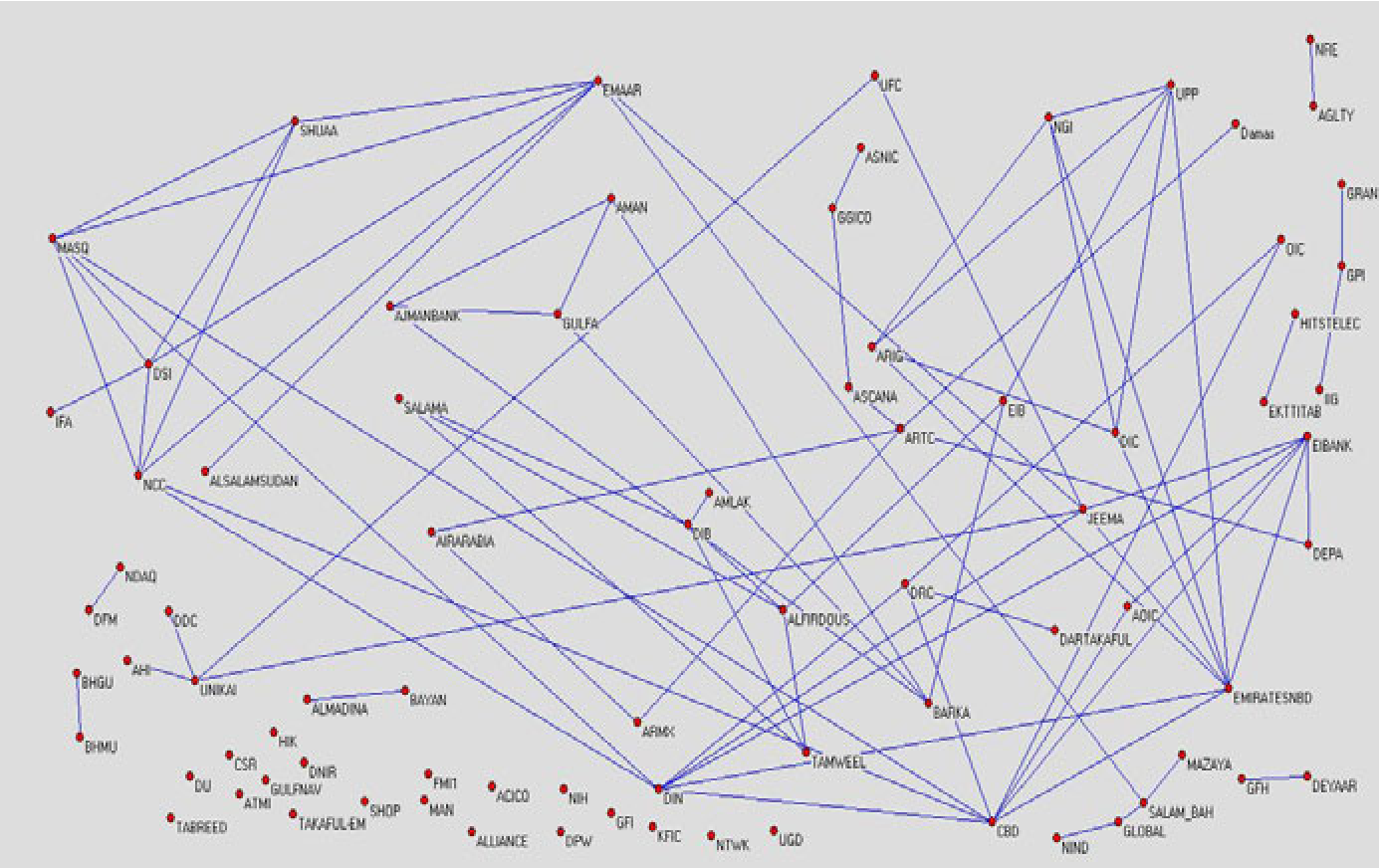 Fig 1: Personnel Network highlighting the interconnectivity of listed companies.
Key Insights: Small-World vs. Scale-Free
The experimental results, summarized below, reveal a startling level of centralization:
| Feature | Personnel Network | Families Network |
|---|---|---|
| Network Type | Small-World | Scale-Free |
| Avg. Degree | 2.125 | 7.2 |
| Avg. Clustering Coefficient | 0.2574 | 0.4017 |
| Cyclic Entropy | 2.186 | 2.645 |
The Families Network is nearly 3.5x more connected than the Personnel Network. The "Scale-Free" designation for family ties implies a "rich-get-richer" topology where a few "hub" families control the vast majority of the market. While this enables rapid decision-making, it creates a massive single point of failure.
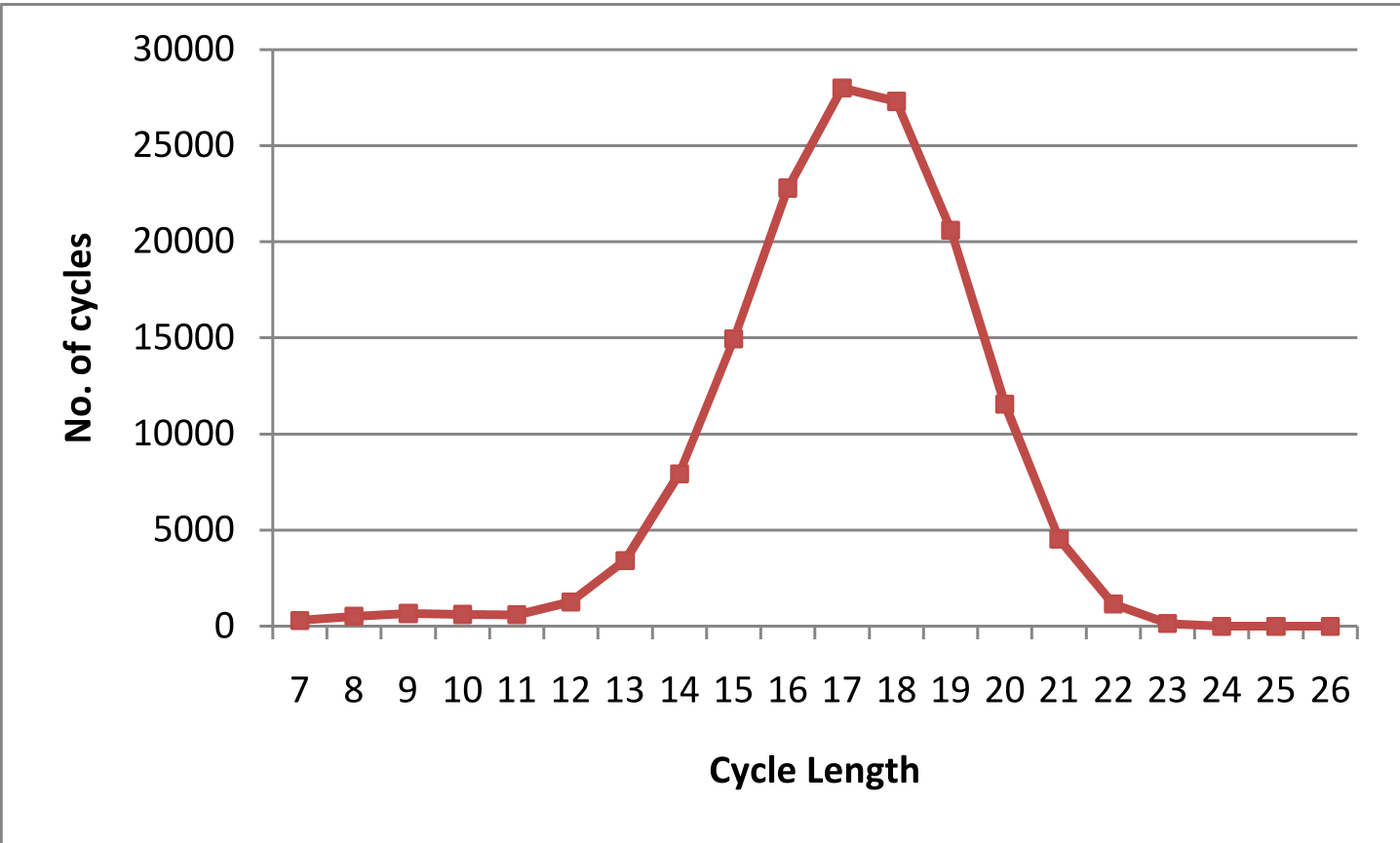 Fig 2: Distribution of cycles in the Personnel Network, following a Gaussian-like fit used to characterize network types.
Why It Matters: The Domino Effect
The paper concludes that the 2008 collapse wasn't just a byproduct of global trends; it was exacerbated by the lack of corporate governance.
- Contagion Path: If one company in a family-controlled hub fails, the distress spreads instantly to all connected "spokes" through shared board members.
- Rigidity: The high entropy of the Families Network (2.645) suggests a rigid, inflexible structure that cannot adapt when the environment changes suddenly.
Critical Analysis & Future Outlook
While the paper provides a ground-breaking structural explanation for market fragility, it treats all edges (links) as equal. A vital future step—as the authors suggest—is to weigh these edges. Is a connection via a Chairman more dangerous than a connection via a regular Director?
Furthermore, this study serves as a warning for emerging markets: high "Small-World" connectivity is a double-edged sword. It facilitates trust during growth but ensures total devastation during a crisis.
Takeaway
For financial analysts and regulators, the message is clear: Network topology is destiny. Monitoring the "Social Linkage" of boards is as essential for market stability as monitoring capital requirements.