
Beyond Connectivity: How Habitual Privacy Reshapes the Social Fabric
Modeling and analyzing privacy-awareness social behavior network
This paper introduces a "Privacy-driven Model" for social networks, proposing the novel concept of "Habitual Privacy" derived from information theory. By integrating individual activity rates with privacy sensitivity, the model accurately simulates the complex evolution and structure of social networks under privacy concerns.
TL;DR
Social networks are usually modeled as growth engines where "the rich get richer." This paper challenges that by introducing Habitual Privacy—a mathematical framework that treats privacy not as a static setting, but as a dynamic behavior driving network evolution. By merging Shannon’s information theory with behavioral psychology, the authors demonstrate that as privacy awareness grows, the traditional scale-free nature of networks begins to dissolve.
Context: The Missing Link in Network Growth
For decades, network science has relied on "Preferential Attachment" or "Activity-Driven" models to explain how platforms like Facebook or Twitter grow. However, these models often ignore a crucial human element: Fear. As users become more aware of privacy leaks, their willingness to connect changes. The researchers at Jilin University identify a gap where previous works failed to quantify privacy from the user's subjective viewpoint, leading to inaccurate predictions of long-term network topology.
Methodology: Quantifying the "Habit" of Privacy
The core innovation lies in the definition of Habitual Privacy (). The authors argue that privacy exposure is inversely related to the uncertainty of an event.
- The Information Theory Lens: Using a variation of Shannon Information, they define privacy quantity based on the probability of interaction and a sensitivity coefficient ().
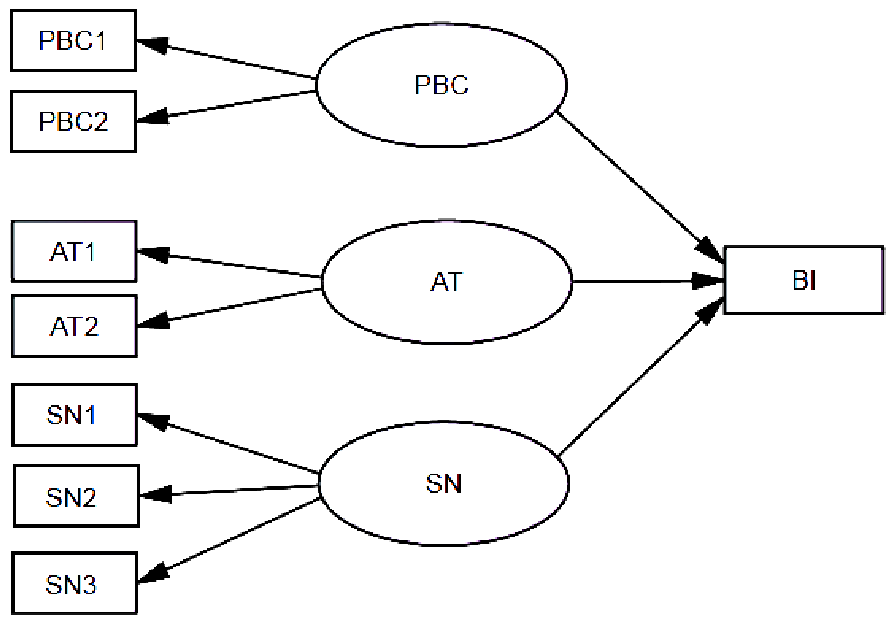
- Psychological Grounding: The sensitivity is not arbitrary; it is derived from the Theory of Planned Behavior (TPB), accounting for attitudes, social norms, and perceived control.
- The Dual-Drive Engine: A connection only happens if the "Value Function" () is positive, balancing the joy of interaction against the "pain of loss" (privacy exposure), which the authors note is psychologically ~2.25 times stronger than the joy of gain.
Experiments: Real World vs. Simulation
The authors validated their model against the Facebook New Orleans dataset. They categorized the evolution into three stages, comparing real-world node growth and degree distribution against their simulation.
Key Finding: The Death of the "Hub"
In traditional networks, a few "super-nodes" (hubs) have massive numbers of connections (Power-law distribution). However, as the privacy driving force strengthens (lowering and increasing ):
- The Scale-free characteristic weakens.
- The network shifts toward a Poisson distribution, where connections are more evenly (and cautiously) distributed.
- The "Matthew Effect" (rich-get-richer) is suppressed because high-degree nodes eventually reach a "dissatisfaction threshold" due to excessive exposure.
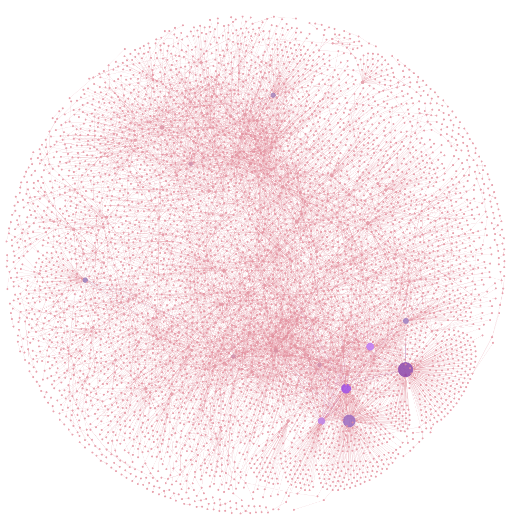 Fig: Comparison between real network growth (a) and privacy-driven simulations (c).
Critical Analysis & Conclusion
While the paper successfully quantifies a previously "abstract" concept, it relies heavily on parameters () that must be tuned to specific network types. However, the insight is profound: Privacy awareness acts as a regulatory brake on network centralization.
Takeaway: For developers and researchers building the next generation of social platforms or decentralized networks, this model proves that "privacy by design" isn't just a legal requirement—it is a structural necessity that dictates how your network will ultimately look and function.
Limitations: The model assumes a global sensitivity distribution derived from survey data, which might vary significantly across different cultures or age groups. Future work could benefit from applying this to Vehicular Sensing or IoT networks where privacy costs are even more fluctuates.