
Decoding Player Motivation: Why Personality is the Lens, Not the Driver
Modeling Motivation in a Social Network Game Using Player-Centric Traits and Personality Traits
This study investigates how personality traits (Five-Factor Model) and player-centric traits (BrainHex) moderate the relationship between need satisfaction and player motivation in a social network game. Utilizing data from 3,486 players of "Pot Farm," the researchers built moderated regression models to predict enjoyment and effort.
TL;DR
Is a player’s personality enough to predict if they’ll enjoy your game? Not exactly. This research argues that personality and player traits act as moderators—they change how the satisfaction of psychological needs (like competence or social connection) translates into actual enjoyment and effort. By analyzing data from over 3,400 players of the social game Pot Farm, the authors prove that understanding "who" the player is allows us to predict not just their feelings, but their specific in-game behaviors.
The Problem: The Inconsistency of "Universal" Player Experience
Game designers often design for a "representative player," but human motivation is notoriously fickle. Prior work on the Five-Factor Model (FFM) in gaming has been a mixed bag—sometimes personality predicts enjoyment, sometimes it doesn't.
The authors identified a crucial gap: most researchers look for a direct link between a trait (e.g., Extroversion) and an outcome (e.g., Enjoyment). Instead, this paper suggests that personality determines the weight we give to different experiences. For some, winning is everything; for others, the social bond of a "neighbor visit" is what keeps them logging in.
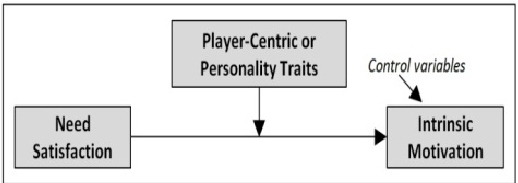
Methodology: The Moderation Framework
The researchers combined three pillars of data:
- Psychological Needs (PENS): Competence, Autonomy, Relatedness, Presence, and Intuitive Control.
- User Traits: FFM (Personality) and BrainHex (Game-specific types like Achiever, Seeker, etc.).
- In-Game Telemetry: Logs of actual actions like completing quests, social claims, and daily logins.
By using Moderated Multiple Regression, they didn't just ask "Does the player feel competent?" but rather "If the player is a 'Mastermind' type, how much does feeling competent increase their enjoyment compared to a 'Survivor' type?"
Core Insights: It’s All About the Interactions
The study yielded several "Aha!" moments for game balancing and personalization:
1. The "Achiever" Social Paradox
One of the most striking findings was regarding Relatedness. Conventionally, social network games assume everyone wants to be social. However, the data showed that Relatedness only predicted enjoyment for High Achievers.
- The Logic: Achievers are goal-oriented. They view social interactions (like "social claims") as a tool for progression. When those social needs are met, their enjoyment spikes.
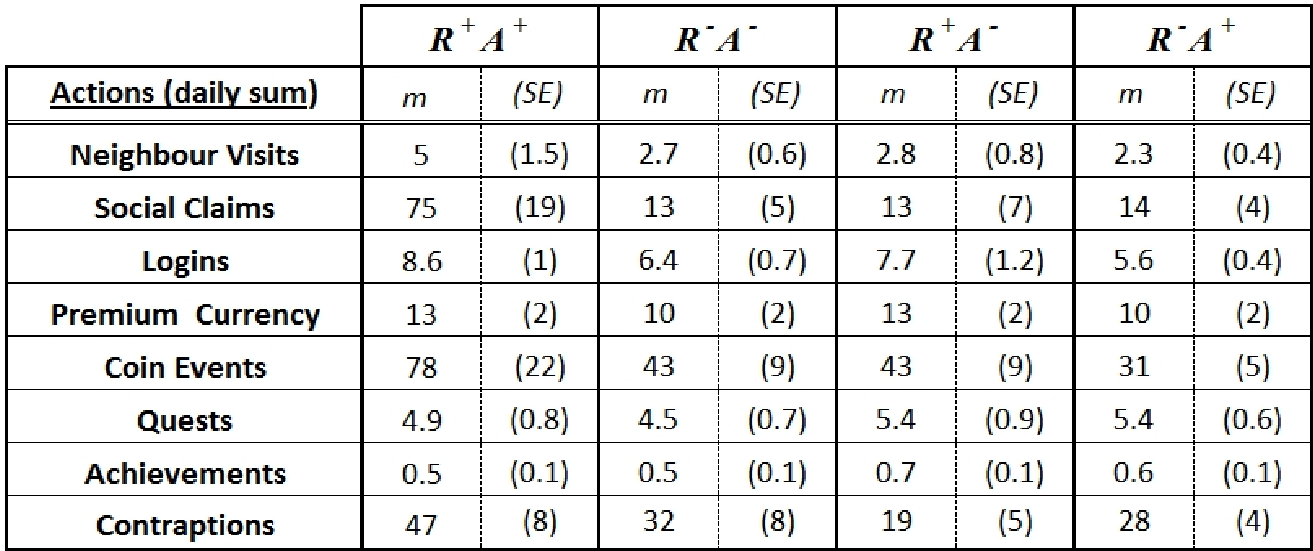
- The Behavioral Proof: Players categorized as High Achiever + High Relatedness showed significantly higher social activity in the logs than any other group.
2. Intuitive Control vs. Traits
For most players, easy and intuitive controls lead to higher enjoyment. But for players scoring high in Daredevil or Openness traits, the "Intuitive Control" variable became a weaker predictor of enjoyment. These players may actually enjoy a bit of "friction" or novelty that challenges their mastery of the interface.
From Models to Implementation: Adaptive Design
The true value of this paper lies in its roadmap for Adaptive Game Design. If a game engine can classify a player as an "Achiever" based on early-game telemetry, it can then:
- Trigger Social Prompts: If the player's social claim count is low, offer a "neighbor visit" quest, knowing it will likely boost their motivation.
- Avoid Annoyance: If the player is a "Low Achiever," don't force social mechanics on them, as it won't impact their enjoyment and might actually decrease their autonomy.
Critical Analysis & Conclusion
Takeaway
This work elevates player modeling from simple categorization to a dynamic predictive system. It proves that the "Why" (Motivation) and the "Who" (Traits) are inseparable.
Limitations
- Genre Specificity: The study was conducted on a farming simulation on Facebook. The dynamics of a high-stakes FPS or an immersive RPG might shift how these traits moderate needs.
- Survey Reliance: To build the model, players still had to take a survey. The ultimate "Holy Grail" for industry application would be a model that maps these traits purely from telemetry without ever asking the player a question.
Future Outlook
The next frontier is Real-time Personality Inference. By using the behavioral benchmarks established here (like the link between social claims and achiever traits), developers could build AI systems that adjust game rewards, difficulty, and social prompts on-the-fly to keep every individual in the "Flow" state.