
Forecasting the Fate of Communities: A Survival Analysis Approach to Social Networks
Modeling and Predicting Community Structure Changes in Time-Evolving Social Networks
This paper introduces a hybrid statistical framework for modeling and predicting critical events (split, merge, expand, shrink, stable) in time-evolving social networks. The method combines Vector Autoregression (VAR) to forecast community features and a Dynamic Cox Model based on survival analysis to estimate the temporal probability of specific structural changes.
TL;DR
Predicting how groups change in social networks is hard because they don't just grow—they split, merge, and sometimes vanish for a while. This paper moves beyond simple "next-step" classification by combining Survival Analysis with Vector Autoregression (VAR). This allows researchers to predict not just what happens next, but how likely a community is to "survive" or "transform" multiple steps into the future across diverse datasets like DBLP and Yelp.
The Evolution Problem: Why Classifiers Fail
Traditional community prediction treats the problem as a standard supervised learning task: look at time and predict time . However, real-world social networks are messy:
- Non-consecutive Evolution: A community might be active in January, silent in February, and return in March. Standard tracking fails here.
- The Horizon Problem: Classifiers are usually "blind" to or . They can't tell you the long-term trend.
- Ad-hoc Snapshots: Choosing to look at a network every day vs. every month changes the results significantly.
Methodology: The Dynamic Cox Model
The authors solve this by introducing two key innovations: an Automated Sliding Window and a Dynamic Cox Model.
1. Optimal Windowing
Instead of guessing a timeframe, the authors calculate a "fluctuation score" () based on how many nodes appear, disappear, and remain. They find a window size that minimizes variance, ensuring that the detected communities are consistent and meaningful.
2. The Hybrid Predictive Engine
The core of the paper is the integration of two mathematical disciplines:
- Vector Autoregression (VAR): This is used to predict the future values of topological features (like density, conductance, and diameter). It treats the community's history as a multi-dimensional time series.
- Survival Analysis (Dynamic Cox): Borrowed from medical research (predicting patient survival), the Cox model calculates a "hazard rate"—the instantaneous risk that an event (like a 'Split') will occur. By using predicted features from the VAR model, the Cox parameters become time-dependent.
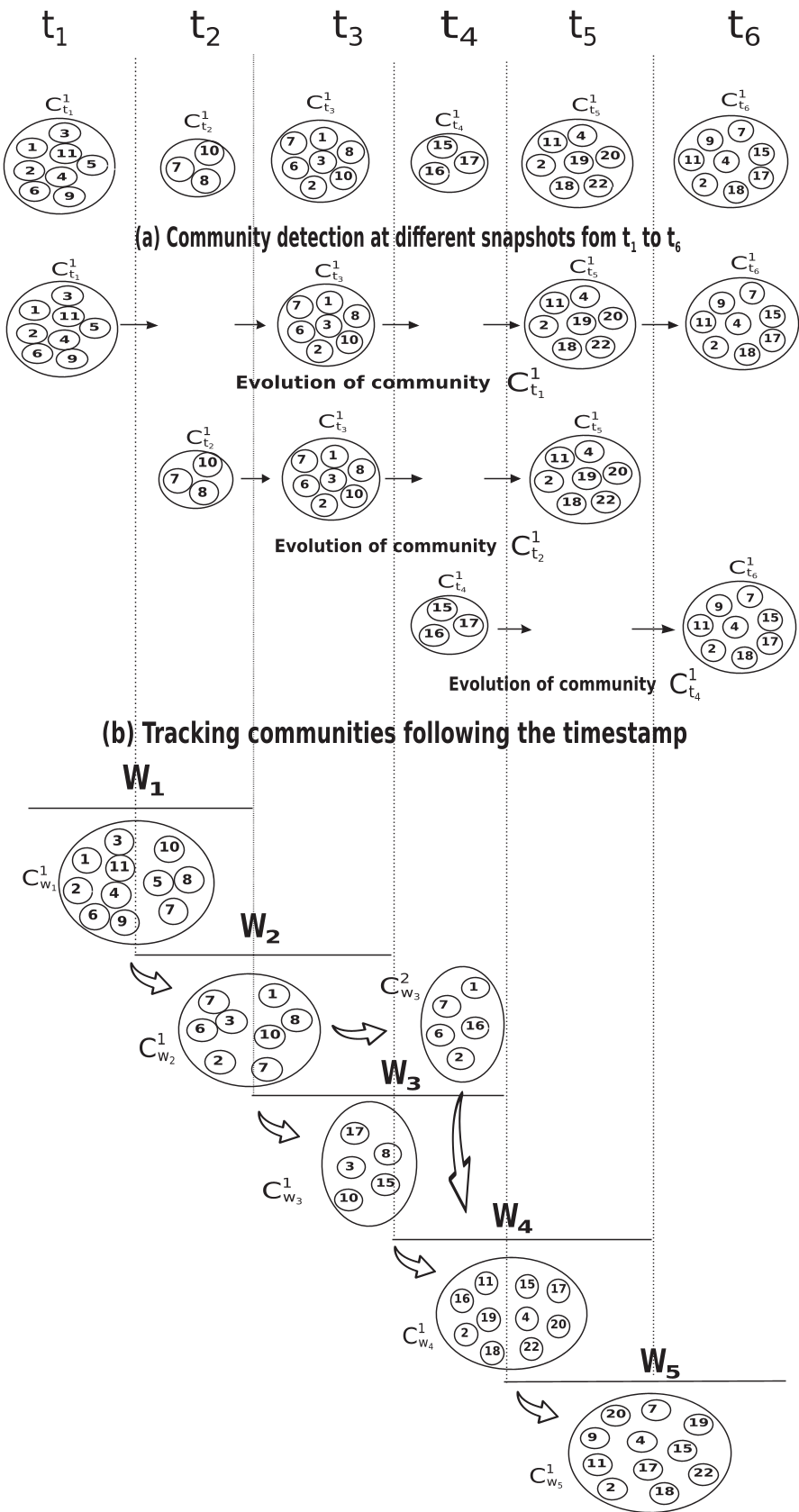 Figure 1: The workflow from snapshot collection to event prediction.
Experiments and Results
The researchers tested their model against four major datasets: AS-Caida (Internet topology), AS (BGP logs), Yelp (User friendships), and DBLP (Co-authorship).
Feature Accuracy
Using the Root Mean Square Error (RMSE) and Kullback-Leibler Divergence (KLDIV), they proved that VAR could forecast community features with remarkably low error even up to five time-stamps ahead.
Event Prediction (The "Battle" with Classifiers)
When compared against Support Vector Machines (SVM), Logistic Regression (LR), and Naive Bayes (NB) for predicting the immediate next event, the Dynamic Cox model showed superior performance, particularly in complex scenarios like 'Split' and 'Merge' events.
 Table 1: F-measure comparison showing the Proposed Model (Prop.) often outperforming baseline classifiers.
Critical Insight: Why Does This Work?
The reason this approach succeeds where others fail is its probabilistic nature. Instead of forcing a "hard" classification, the model understands the accumulated risk. If a community's density is dropping and its inter-degree is rising, the "hazard" for a Split event accumulates over time. By modeling this as a continuous survival process, the authors capture the "physical intuition" of community decay and growth.
Conclusion & Future Directions
The paper successfully bridges the gap between time-series forecasting and survival analysis. However, it still treats all communities as having similar life cycles. The next frontier, as the authors suggest, is identifying unique life cycles—some communities are meant to be fast and fleeting (like a viral hashtag group), while others are built for endurance (like a core research field in DBLP).
Takeaway for Practitioners
If you are building a recommendation system or a churn prediction tool for social platforms, don't just look at the last snapshot. Look at the "hazard rate" of your user clusters. The history of how a group's topology behaves is often a better predictor of its death (dissolution) than any single static feature.