
Nexus-Identity Networks: Architectural Role-Based Privacy for Social Media
Modeling Role-Based Privacy in Social Networking Services
This paper introduces the "Nexus-Identity Network" (NIN), a novel graph-based model designed to integrate Role-Based Privacy (RBP) into social networking services. The model achieves multi-level anonymity by replacing direct user-user edges with "nexuses" (communities), enabling sophisticated identity management in complex social environments.
TL;DR
To address the growing privacy concerns in Social Networking Services (SNS), researchers have proposed the Nexus-Identity Network (NIN). This model moves away from the "one user, one node" paradigm, introducing "Nexuses" as gateways that allow users to manage multiple, unlinkable identities based on their social roles. It provides a formal framework for achieving levels of anonymity ranging from pseudonyms to total invisibility.
The "One-Identity" Trap: Why Current Social Networks Fail Privacy
Most social platforms are built on a simple undirected graph: users are nodes, and friendships are edges. This structure has an inherent flaw regarding data minimization. If you are a politician, a teacher, and a gamer, current systems often struggle to keep these personae separate. Once an attacker links one identity to your real-world persona, the entire social graph collapses into a single, traceable entity.
The authors argue that the solution is Role-Based Privacy (RBP)—a technique borrowed from business systems but adapted here for the high-intensity data sharing found in social media.
Methodology: The Nexus-Identity Model
The core innovation is the transition from a standard graph to a tripartite-like structure involving Identities () and Nexuses ().
1. The Power of the Nexus
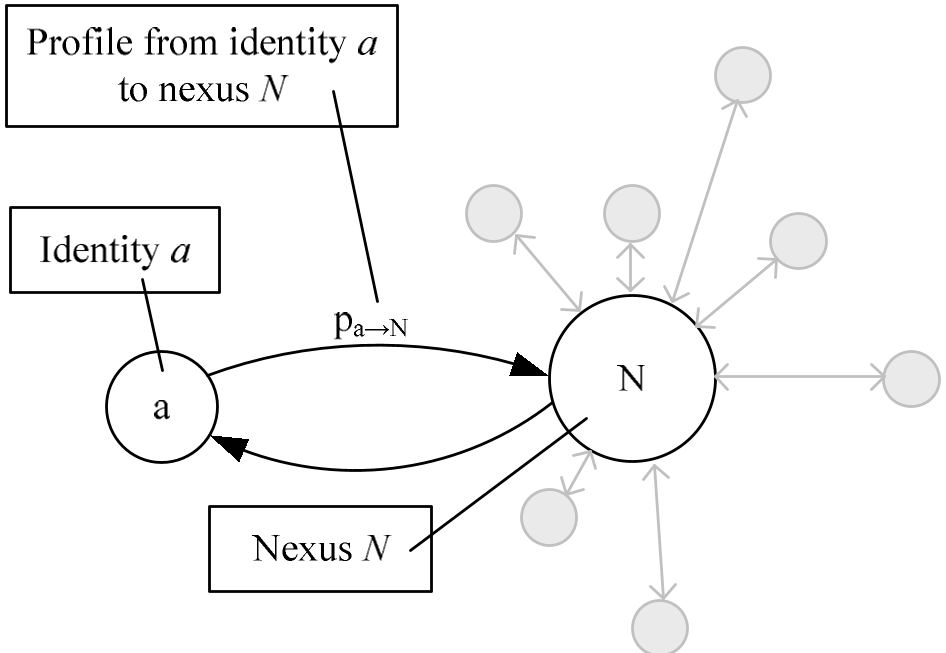
In this model, users do not connect to users. Instead, they interact through a "Nexus"—a generalization of a community, room, or group.
- Outgoing Edges: Represent profile information shared and messages sent.
- Incoming Edges: Represent subscriptions to events or other users' shared data.
2. Hierarchical Identity Management
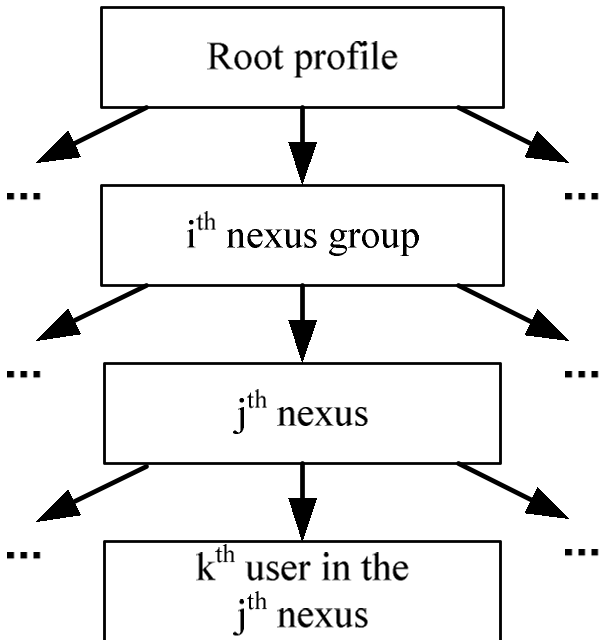
To keep the system user-friendly, the authors suggest a Tree Hierarchy for profiles. A user might have a "Root Profile" containing all data, but they spawn sub-profiles for specific contexts. These sub-profiles inherit only necessary data, effectively automating the principle of data minimization.
Defining the Spectrum of Anonymity
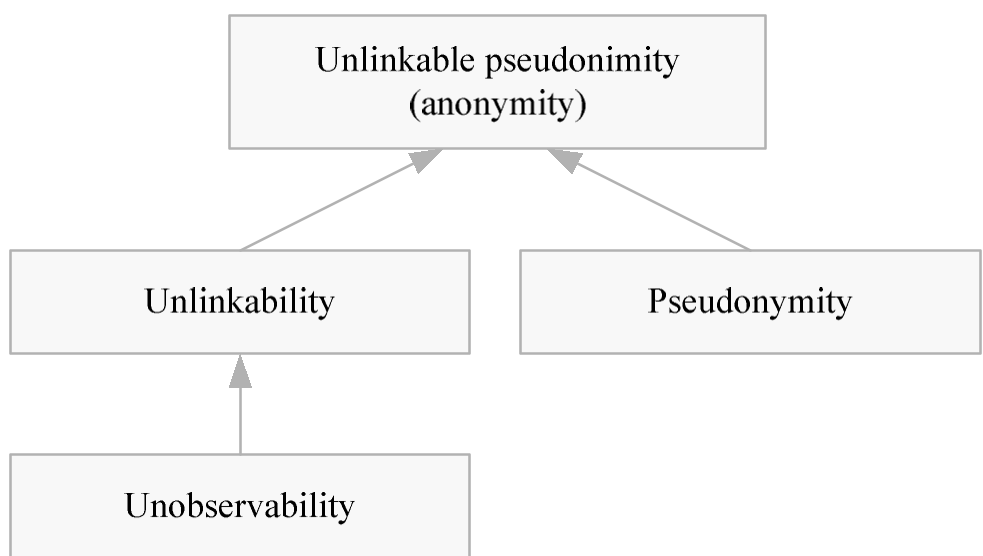
The paper maps out a clear hierarchy of privacy levels, essentially a technical implementation of the "Nymity Slider":
- Pseudonymous Identification: Global ID exists; identities are linkable across the whole network.
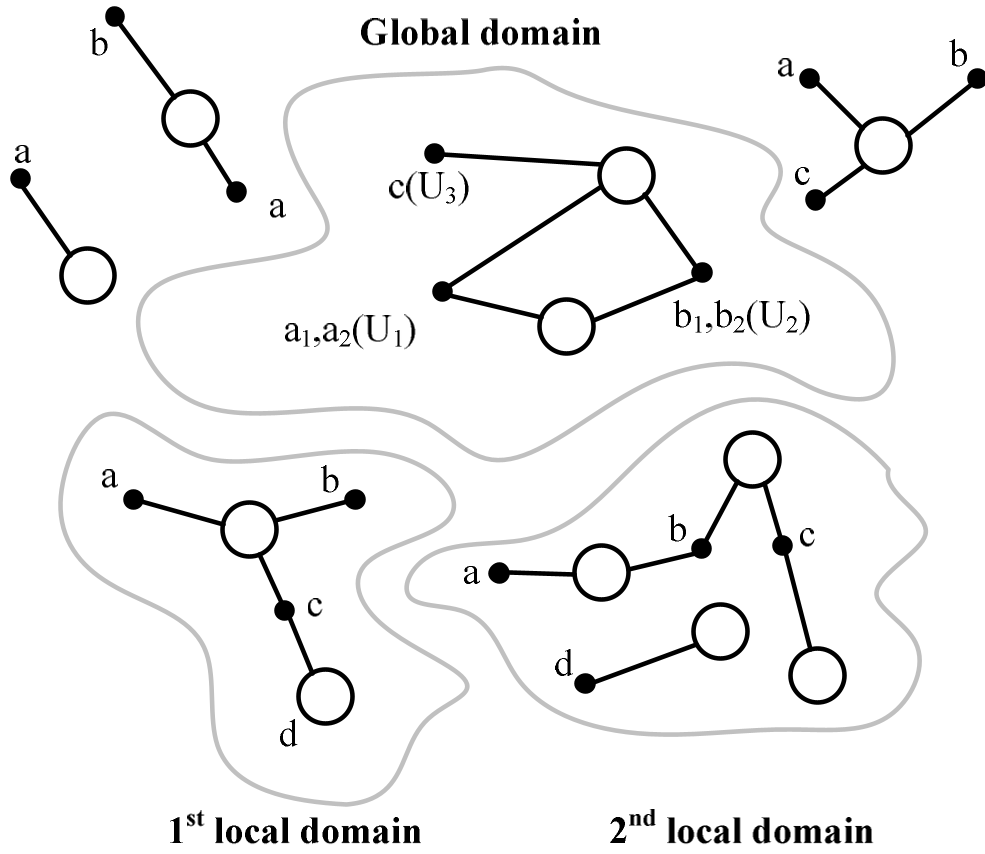
- Unlinkable Pseudonymity: Identifiers are only unique within a "local domain" (e.g., a specific chat room). Different personae cannot be mathematically linked to the same user.
- Total Anonymity: No identifiers are used. Only behavioral patterns could potentially leak identity.
Impact on Network Topology
One of the most striking findings is how NIN changes the "shape" of social networks. Because identities are decoupled, the visible network becomes a disconnected graph. Unlike Facebook or LinkedIn, where you can find a path between almost any two people, a properly implemented NIN creates "Islands of Interaction." This structural fragmentation is a feature, not a bug—it prevents malicious actors from performing mass "deanonymization" by traversing the graph.
Critical Insight & Conclusion
While the Nexus-Identity Network offers a robust mathematical foundation for privacy, its success depends on Domain Management. If a user "leaks" their global ID into a local domain, they create a bridge that can merge disconnected subgraphs, potentially compromising their entire privacy tree.
Takeaway: The NIN model proves that privacy in social networks isn't just about "hiding" data; it's about architectural decoupling. By moving to a nexus-based system, developers can build platforms where users are free to inhabit different roles without the fear of unintended cross-contextual exposure.