
Rethinking Tradition: Modern Service Design for Suzhou’s Ancient Alleys
Modern Service Design Thinking on Traditional Culture-Based Services: A Case Study of the Service Businesses in Suzhou Old Town Areas
The paper applies modern Service Design Thinking (SDT) to investigate traditional culture-based services in Suzhou's historic districts, Pingjiang Road and Shantang Street. Utilizing ethnographic methods and prototyping tools, it identifies systematic service gaps and provides a framework for transforming heritage-based businesses into user-centered cultural experiences.
TL;DR
This research bridges the gap between ancient heritage and modern consumption by applying Service Design Thinking (SDT) to 15 traditional businesses in Suzhou Old Town. The study moves beyond architecture to look at the "invisible" service layers—mapping customer emotions and identifying how teahouses, snuff shops, and opera theaters can transform from passive displays into high-value, user-centered experiences.
The Problem: The "Culture Gap" in Heritage Sites
Suzhou’s Pingjiang Road and Shantang Street are more than just tourist spots; they are "Landscape-Tourism-Business" hybrid spaces. However, the study identifies a painful paradox: while the setting is culturally rich, the service is often poor.
Traditional shops suffer from:
- Service Bottlenecks: A single staff member at a snuff shop cannot manage a customer reading history, a customer testing products, and a customer paying, leading to "neglect" during the journey.
- Intangibility Loss: After a traditional "peep show," visitors leave with no physical "evidence" (souvenirs) to anchor their memory, leading to low post-service engagement.
- Language Barriers: High-value cultural assets like Pingtan (ballad singing) remain inaccessible to foreign tourists due to a lack of multilingual touchpoints.
Methodology: Mapping the Intangible
The authors don't just critique; they deconstruct the service using an ethnographic and visual toolkit.
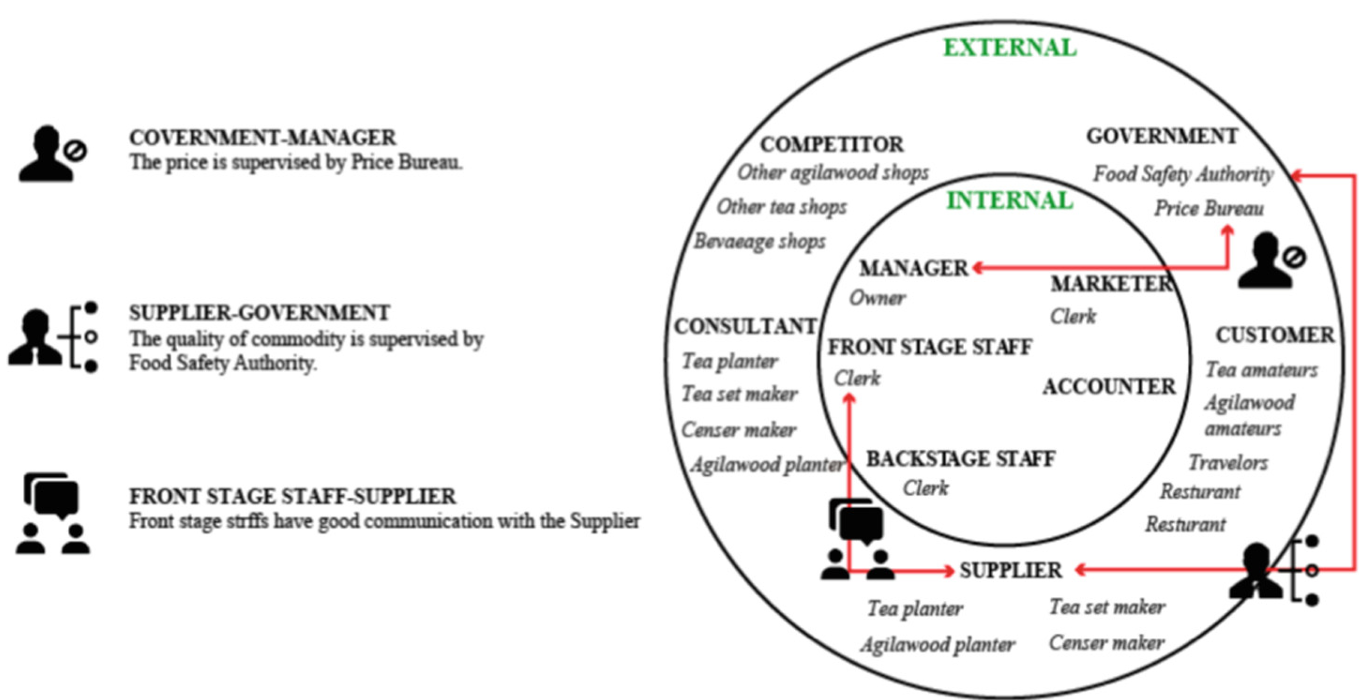
1. The Stakeholder Map
By mapping every entity from government regulators to local tea suppliers, the researchers identified that these businesses don't operate in a vacuum—they are part of a complex "symbolic economy."
2. Customer Journey Mapping (CJM)
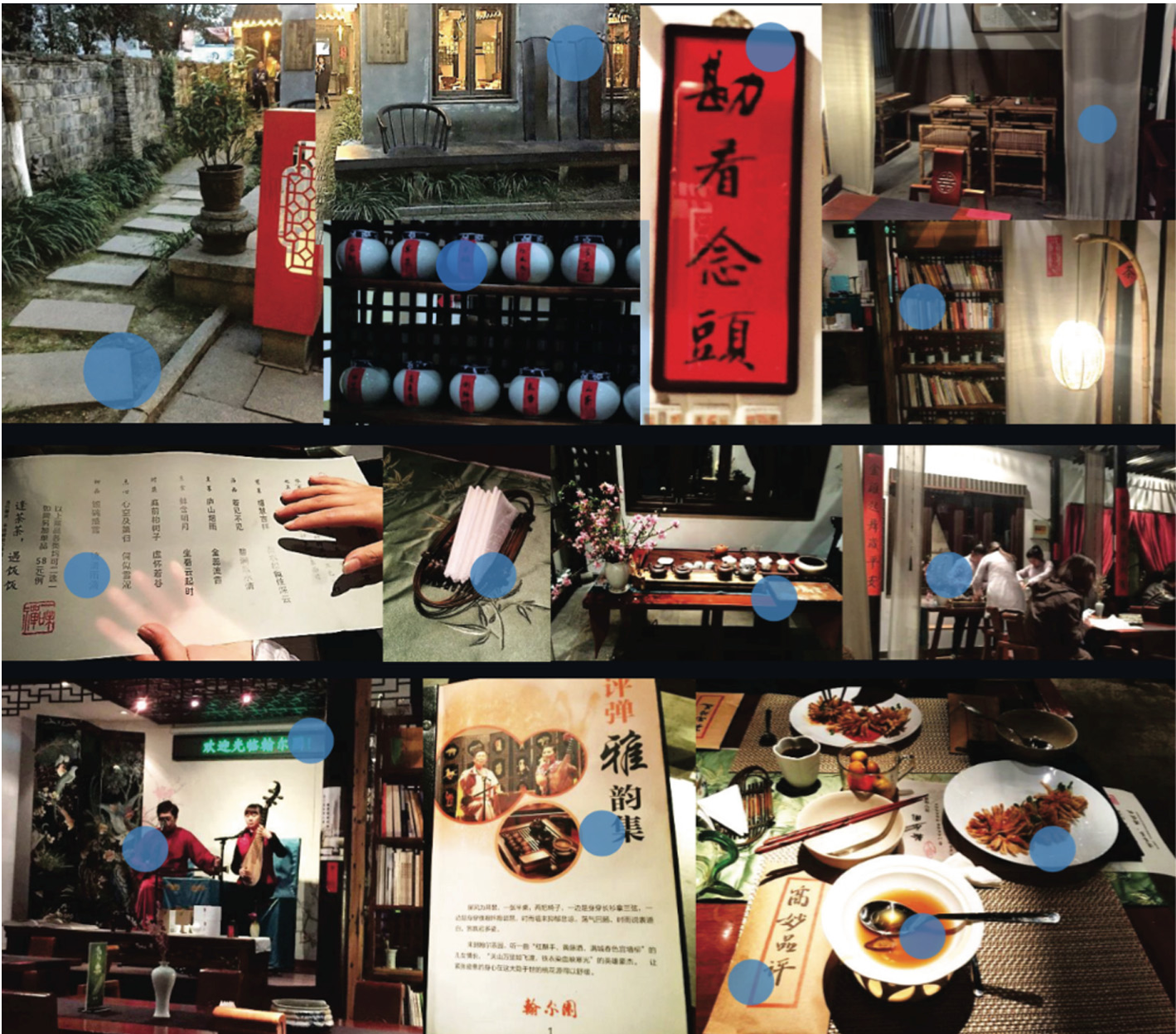
Using the Higher Tea House as a case study, the researchers tracked a customer’s emotional state from "Pre-order" to "Leaving." This revealed that while the environment provided an "emotional high," the waiting time for dishes created a significant "service dip."
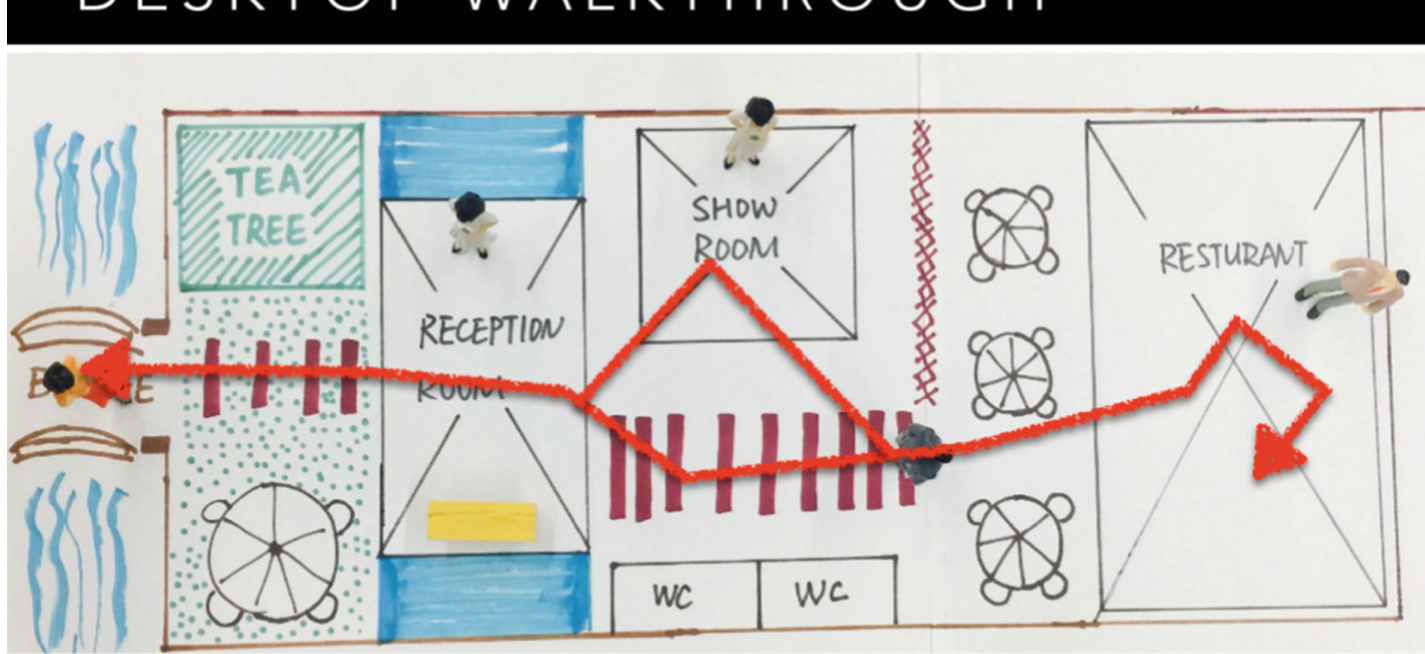
3. Desktop Walkthrough & Prototyping
To fix these dips, the authors used Desktop Walkthroughs—small-scale physical mock-ups—to simulate how moving characters and changing touchpoints could improve the flow of a theater or restaurant.
Core Insight: Moving Toward the "Experience Economy"
The paper argues that modern tourists are "lifestyle consumers." They aren't buying tea; they are buying the atmosphere of tea.
The study highlights that Service Blueprints (like the one created for the snuff shop) are essential for traditional owners. These blueprints allow owners to visualize "Front-stage" interactions (customer-facing) and "Back-stage" operations (crafting/stocking) as a single, holistic system.
Strategic Recommendations
The authors conclude with a roadmap for the "Modernization of Tradition":
- Multiple Platforms: The service journey starts online (WeChat/Dianping). The "first touchpoint" is the digital review, not the physical door.
- Richer Forms & Automation: Use digital screens to explain the history of Kunqu opera. This frees up human staff from repetitive explanations to focus on high-value hospitality.
- Cross-Cultural Design: Heritage sites must adopt multilingual signage and digital translation to invite the "Cross-cultural encounter."
Conclusion
This work serves as a vital reminder that Heritage Preservation is not just about keeping the walls standing—it's about making the service within those walls relevant to the modern world. By applying the rigor of Service Design to the charm of ancient Suzhou, the authors provide a scalable model for the global "symbolic economy."