
Monitoring Patients via a Secure and Mobile Healthcare System: Balancing Reliability, Intelligence, and Privacy
13757_Monitoring patients via a secure and mobile healthcare system.
This paper presents a comprehensive architecture for mobile healthcare (m-healthcare) focused on patient monitoring via Body Sensor Networks (BSNs) and Mobile Ad Hoc Networks (MANETs). It introduces strategies for balancing data reliability, energy efficiency, and security using advanced techniques like Incremental Diagnosis Methods (IDM) and Trust-based Multicast Strategies (TrE).
TL;DR
The shift from hospital-centric care to mobile e-health (m-healthcare) requires a paradigm shift in how we handle data. This paper outlines an integrated framework for monitoring patients using wearable sensors that communicate through mobile ad hoc networks (MANETs). By combining context-aware AI for sensor management and biometric-based security for data protection, the authors address the triple challenge of energy efficiency, transmission reliability, and patient privacy.
Problem & Motivation: The Constraints of the "Unplugged" Patient
The primary driver for m-healthcare is patient freedom. However, once a patient leaves the structured environment of a hospital, three technical hurdles arise:
- Energy Scarcity: Wearable biosensors (ECG, EEG, etc.) have tiny batteries. High-power transmission to reach a distant base station quickly kills the device.
- Volatile Connectivity: In a MANET, devices move. A data path that exists now may disappear in seconds, yet "emergency signals" must have near-100% reliability.
- The Privacy Paradox: Wireless airwaves are inherently "leaky." Transmitting sensitive vitals over open channels invites eavesdropping and malicious data injection.
Methodology: The Core Pillars of Secure Monitoring
1. Reliable and Energy-Efficient Communication
The authors analyze several transmission strategies. The core insight is that cooperation is better than brute force. Instead of a sensor boosting its own power to reach a gateway, it leverages neighboring devices as relays.
- Optimal Power Relay: The system calculates the minimum power needed to reach the next "trustworthy" hop, significantly extending the lifecycle of the patient's primary wearable.
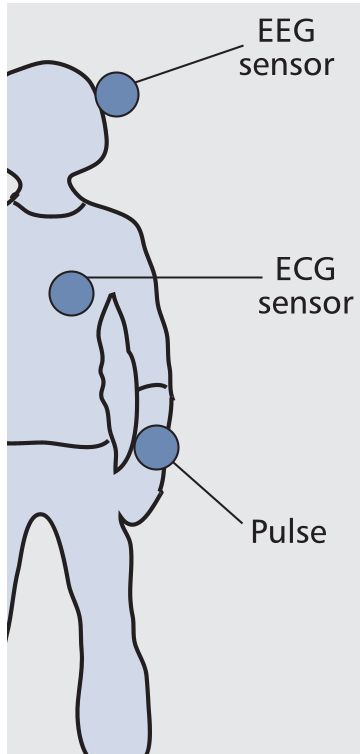 Figure 1: Typical m-healthcare architecture involving BSNs, MANETs, and Emergency Response Centers.
2. Intelligent Sensor Management (IDM)
Not all data is equally important at all times. The Incremental Diagnosis Method (IDM) acts as an intelligent filter:
- Feature Extraction: Analyzes frequency/energy of signals.
- Naïve Bayes Classifier: Predicts the probability of different patient states.
- Sensor Selection: If the diagnosis confidence is low, the system dynamically activates more sensors. This "sleeping mode" for secondary sensors saves immense amounts of energy.
3. Security: The Biometric Key
The paper introduces a fascinating approach to cryptography: EKG-based Key Agreement (EKA). Instead of pre-sharing a digital key (which can be stolen), two sensors on the same body sample the patient's heart rate simultaneously. Because they see the same unique physiological "noise" (Interpulse Intervals), they can generate a matching symmetric key locally without ever sending the key over the air.
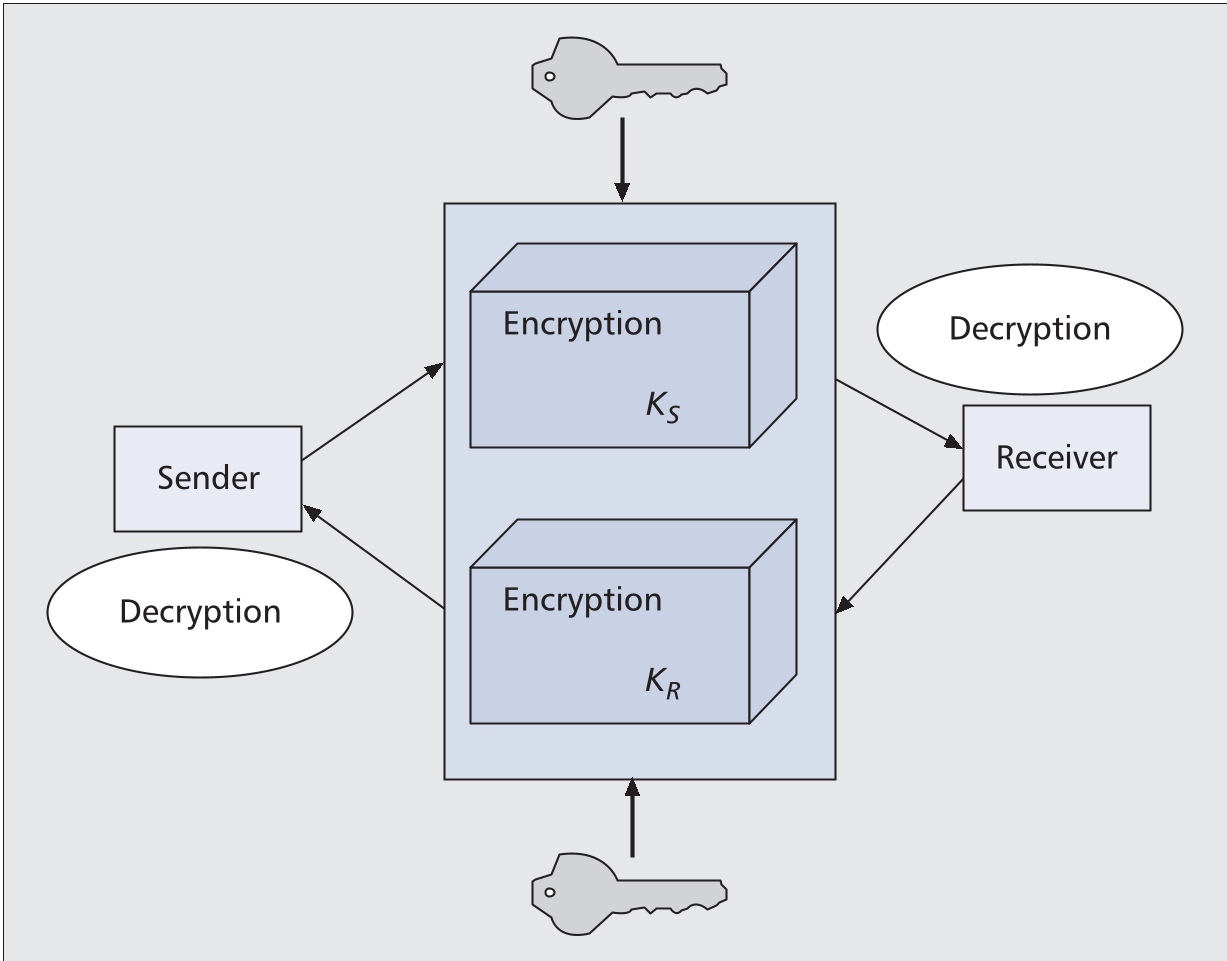 Figure 2: Trust-based Multicast Strategy (TrE) where only nodes meeting a trust threshold (TR) engage in data forwarding.
Experimental Insights & Results
The paper highlights that Elliptic Curve Cryptography (ECC) is the superior choice for mobile healthcare. Compared to RSA, ECC provides equivalent security with much smaller key sizes, which reduces the computational burden on PDAs and wearable units.
From a networking perspective, the Trust-based Evaluation (TrE) model effectively isolates "selfish" or malicious nodes. By monitoring the historical behavior of relay nodes, the system ensures that medical data is only handled by devices that have a high probability of successful delivery, maintaining the integrity of the medical record.
Critical Analysis & Future Outlook
Takeaway
The genius of this work lies in treating the patient's body itself as a source of security (via biometrics) and the surrounding mobile environment as a collaborative resource (via MANETs).
Limitations
- Synchronization: EKG-based key agreement requires extremely tight temporal synchronization between sensors, which can be difficult in high-latency wireless environments.
- AI Complexity: While Naive Bayes is efficient, it may struggle with the high-dimensional, non-linear data found in complex multi-morbidity cases where deep learning might now be more appropriate.
Future Work
The next frontier is integrating these MANET-based systems with 5G/6G slicing, where "healthcare slices" could provide guaranteed bandwidth for the emergency signals identified by the IDM engine described here.