
Social Media as a Sensor: Real-Time Customer Problem Identification via Statistical Event Detection
Monitoring and analyzing customer feedback through social media platforms for identifying and remedying customer problems
This paper presents an automated system for monitoring and analyzing customer feedback across social media platforms like Twitter and Facebook to identify consumer problems. It employs statistical event detection techniques, specifically targeting negative sentiment posts, to help organizations detect "new" and "anomalous" service issues in both batch and real-time modes.
TL;DR
This research by Xerox and FIU transforms the "noise" of social media into a structured alerting system for customer service. By integrating sentiment analysis with statistical anomaly detection (Grubbs' test) and a time-decayed TF-IDF metric, the system automatically distinguishes between routine chatter and critical emerging issues, allowing companies to intervene before a local complaint turns into a PR crisis.
Background & Motivation
With 74% of consumers basing purchase decisions on online experiences, social media has become the primary battleground for brand reputation. However, the sheer volume of data is overwhelming. The authors identify two major gaps in existing business intelligence:
- Lack of Real-time Response: Traditional surveys are "post-mortem" in nature.
- Signal-to-Noise Ratio: Businesses need to know not just what people are saying, but which negative topics are statistically significant deviations from the norm.
Methodology: The Architecture of Detection
The system operates through a four-stage pipeline: Monitor, Pre-processor, Event Detector, and Web Service Front-end.
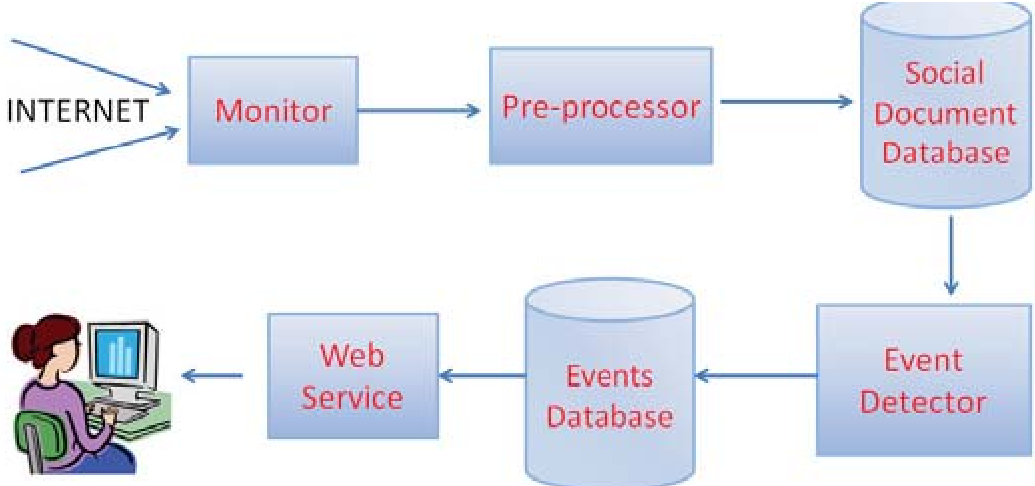
1. Sentiment-Driven Filtering
The core intuition is that customer care agents have limited bandwidth. Positive feedback is "nice to have," but negative sentiment provides the actionable signal for remediation. The system filters for negative polarity before calculating importance.
2. Time-Normalized TF-IDF
Traditional TF-IDF ignores the "when." The authors propose a decay function to ensure that an issue appearing 50 times today is weighted more heavily than one that appeared 50 times last month:
3. Categorizing Events: New vs. Anomalous
- New Events: Terms that have not appeared in the 30-day historical window but pass a minimum frequency threshold (e.g., a new product flaw or a specific local incident).
- Anomalous Events: Known terms that experience a "burst." The system uses the Grubbs' Test to determine if the negative term frequency in a specific window is a statistical outlier compared to the historical average.
Experimental Results & Case Studies
The system was tested on real-world datasets from Sprint-Mobile, Crest, and Holiday-Inn.
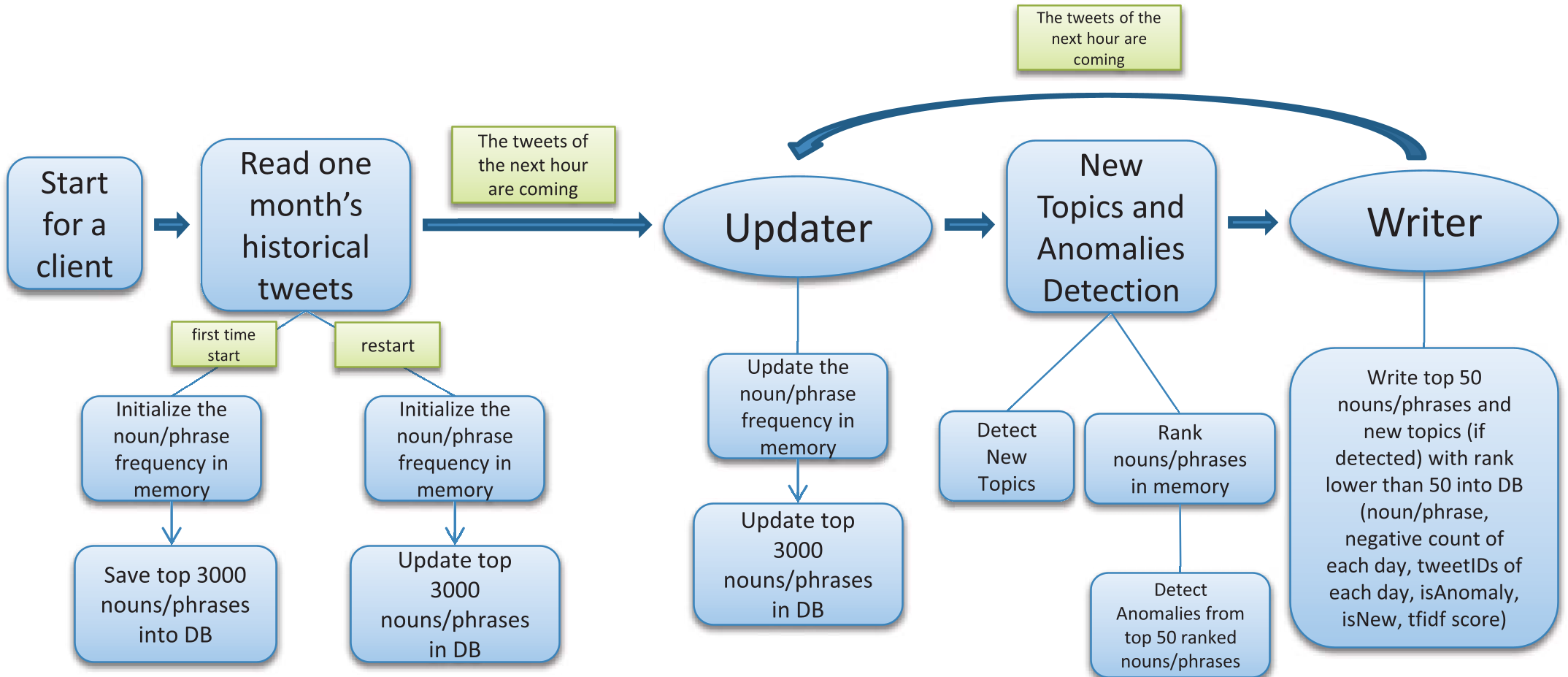
Key Insights from the Case Studies:
- The "Celebrity Arrest" Effect: For Holiday-Inn, the term "marijuana" was flagged as a New Event. Tracking the tweets revealed a specific celebrity was arrested at a brand location.
- The "Ad Backlash" Effect: For Crest, the term "advert" was flagged as Anomalous. While "advert" is a common word, its frequency spiked due to a poorly received commercial, signaling a need for the marketing team to pivot.
| Brand | Negative Tweets | Total Tweets |
|---|---|---|
| Sprint-Mobile | 1,928 | 8,390 |
| Holiday-Inn | 2,339 | 43,916 |
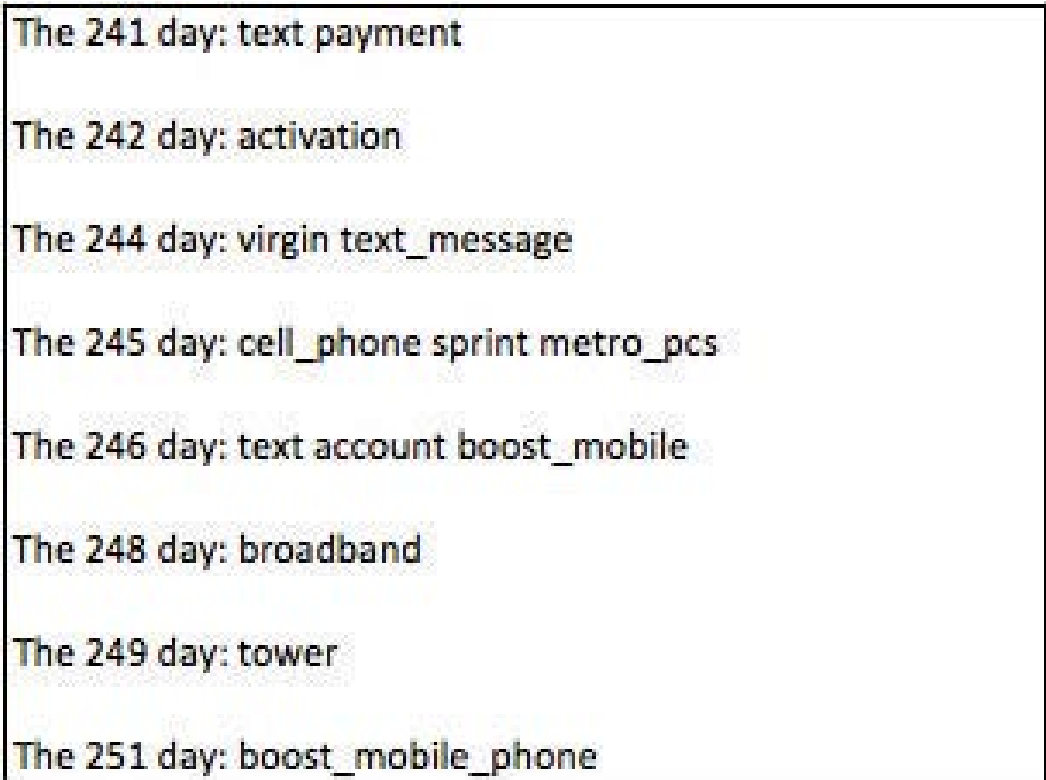
The system effectively narrowed down tens of thousands of tweets into a handful of prioritized daily alerts, as shown in the detection log below:
Critical Analysis & Conclusion
Strategic Takeaway
The paper successfully demonstrates that event detection is an effective proxy for issue management. By treating Twitter users as "social sensors," companies can achieve a "mean time to recovery" (MTTR) for brand incidents that was previously impossible.
Limitations
- Noise in NLP: The authors admit that "dirty" social media text (slang, typos) remains a challenge for standard POS taggers.
- Lack of Geo-specificity: While the system identifies what is happening, it doesn't currently pinpoint where unless users explicitly mention a location.
Future Outlook
The next evolution of this work likely involves Generative AI to summarize the clusters of negative tweets into a single concise "Problem Statement" for the agent, further reducing the cognitive load on customer service teams.