
Belief-VOI: Balancing Accuracy and Cost in Crowdsourcing via Monte-Carlo Value of Information
A Monte-Carlo Approach to the Value of Information in Crowdsourcing Quality Control Tasks
The paper introduces Belief-VOI, a decision-making framework that leverages the Value of Information (VOI) to optimize quality control in crowdsourcing. By utilizing a Belief-State Monte Carlo Tree (BMCT) algorithm, it effectively determines the optimal stopping time for hiring workers, achieving a superior trade-off between decision accuracy and economic cost.
TL;DR
In the world of crowdsourcing, every data point comes with a price tag. How do you know when you've gathered enough worker opinions to make a reliable decision without overspending? This paper introduces Belief-VOI, a framework that uses Markov Decision Processes (MDP) and a specialized Monte Carlo Tree Search (BMCT) to calculate the "Value of Information." It identifies the exact moment when the cost of hiring another worker outweighs the potential gain in decision quality.
Problem & Motivation: The Economic Blindspot of AI
Most quality control algorithms in crowdsourcing focus solely on accuracy—aggregating votes to find the truth. However, real-world platforms face a dual challenge:
- Uncertainty: Workers are not ground truth; they have varying accuracy levels.
- Economic Cost: Every observation (worker answer) requires compensation.
Existing solutions using Partially Observable Markov Decision Processes (POMDPs) are theoretically sound but practically broken due to the "Dimensional Curse." As the number of possible worker interactions grows, the state space explodes, making the calculation of an "optimal stopping time" computationally impossible for real-time systems.
Methodology: The Belief-VOI Framework
The authors solve this by shifting the perspective from "What is the state?" to "What is our belief about the state?"
1. The VOI Logic
The core of the methodology is the Value of Information (VOI) formula. For any given belief state , the system calculates: If VOI is positive, the potential improvement in the final decision is worth more than the cost of the next worker. If VOI is negative, the system stops and outputs the current best guess.
2. The Forecasting & Decision Modules
The architecture (shown below) splits the task into two engines:
- Forecasting: Uses an improved confusion matrix to track worker reliability and Bayesian updates to aggregate answers.
- Decision: Uses the BMCT algorithm to simulate future paths and estimate the reward of continuing vs. quitting.
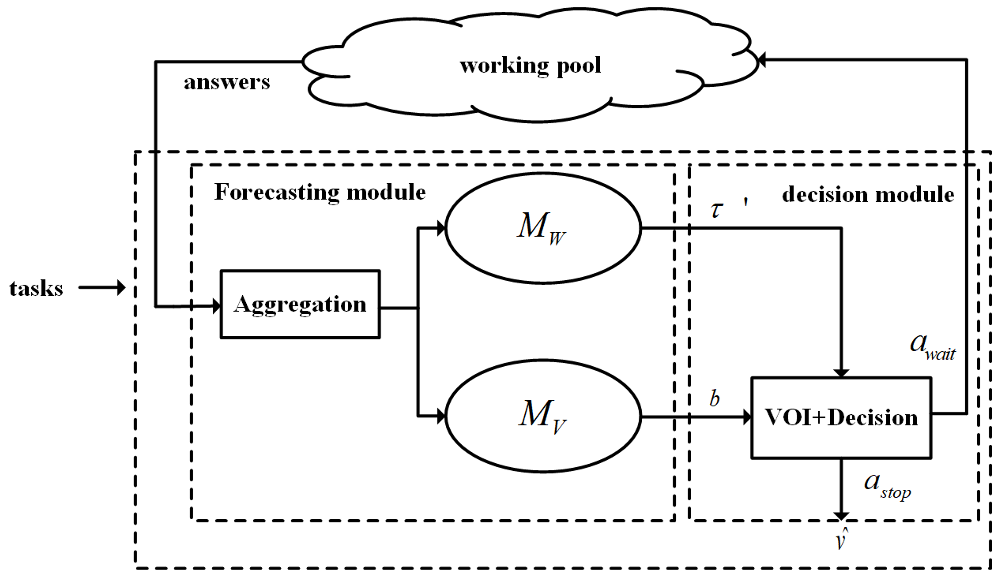 Figure 1: The dual-module framework for real-time quality control.
3. BMCT (Belief-state Monte-Carlo Tree)
Unlike standard search algorithms, BMCT evaluates the effectiveness of actions through single-path sampling from the root (current belief) to the leaf (terminal decision). This allows the agent to focus computational power on likely future belief transitions rather than the entire theoretical state space.
Experiments & Key Results
The paper formalizes the reward functions for stop and wait actions. The stop reward is tied to the probability of the most likely answer being correct, while the wait reward incorporates the cost .
Key Insights from the Algorithm:
- Efficient Exploration: By sampling "Belief States" rather than raw environmental states, the BMCT reduces noise from early updates.
- Accuracy-Cost Tradeoff: The algorithm identifies the "optimal stopping time" by monitoring when the utility value of stopping exceeds the expected utility of further hiring.
Note: The BMCT employs a two-step "Sample" and "Evaluate" process to refine the policy dynamically.
Critical Analysis & Conclusion
Takeaway
The Belief-VOI model provides a rigorous mathematical bridge between decision theory and economic reality. By framing quality control as a sequential optimization problem, it moves crowdsourcing away from simple "majority voting" toward "intelligent resource allocation."
Limitations
While the paper addresses the state-space explosion, it assumes that worker accuracy (the confusion matrix) can be reasonably estimated or initialized. In highly dynamic environments where worker quality fluctuates wildly or tasks are subjective, the "Answer Model" might require more complex latent variable modeling than the matrix provided here.
Future Outlook
This approach is highly extensible. Beyond crowdsourcing, the logic of "Value of Information" is vital for Active Learning and Autonomous Systems, where an AI must decide if its current "belief" is sufficient to take a high-stakes action or if it needs to trigger more expensive sensors/data collection.