
Distributed Agency: Decoding the Knowledge Society via Neuro-Fuzzy Multi-Agent Systems
On the Multi-Agent Modelling of Complex Knowledge Society for Business and Management System Using Distributed Agencies
This paper proposes a multi-agent modeling framework for the Knowledge Society using the Distributed Agency (DA) methodology. It integrates Neuro-Fuzzy Systems and Data Mining to represent complex business behaviors in the IT sector of Baja California, Mexico, aiming to identify keys to industrial competitiveness.
TL;DR
This research tackles the complexity of the "Knowledge Society" by moving beyond static economic models. By utilizing Distributed Agency (DA) and Interval Type-2 Fuzzy Neural Networks, the authors simulate how SMEs in Baja California's IT sector transform intellectual capital into regional competitiveness. It’s a bridge between mathematical logic, computational intelligence, and organizational sociology.
Background: Why Conventional Analysis Fails
In a world where "Knowledge" is the primary economic driver, traditional linear models collapse. The transition from an Information Society (managing data) to a Knowledge Society (leveraging interpreted experience) involves human subjectivity and systemic uncertainty that standard statistics cannot capture.
The authors argue that agency is not just found in individuals but is distributed across layers—employees, firms, and clusters. The friction between these layers defines a region's competitive edge.
The Methodology: Distributed Agency & Fuzzy Logic
To model this complexity, the paper introduces a framework that doesn't just ask "What do agents do?" but "How do agents interpret ambiguous information?"
1. The Distributed Agency (DA) Layer
Instead of atomized agents, DA treats interactions as a multi-layered language. It creates a link between social sciences and programmable terminology.
- Instrumental: The ability to learn.
- Interpersonal: The ability to collaborate.
- Systemic: The ability to apply knowledge in the real world.
2. Neuro-Fuzzy Intelligence
The core engine is the Interval Type-2 Fuzzy Neural Network (IT2FNN). Unlike traditional binary logic, Type-2 Fuzzy sets can handle high levels of uncertainty (subjectivity).
- Optimization: Using back-propagation and hybrid learning (BP+RLS) is shown to be more efficient than genetic algorithms.
- Rule Generation: The system automatically extracts rules from real-world data of 14 IT companies, allowing agents to act autonomously and flexibly.
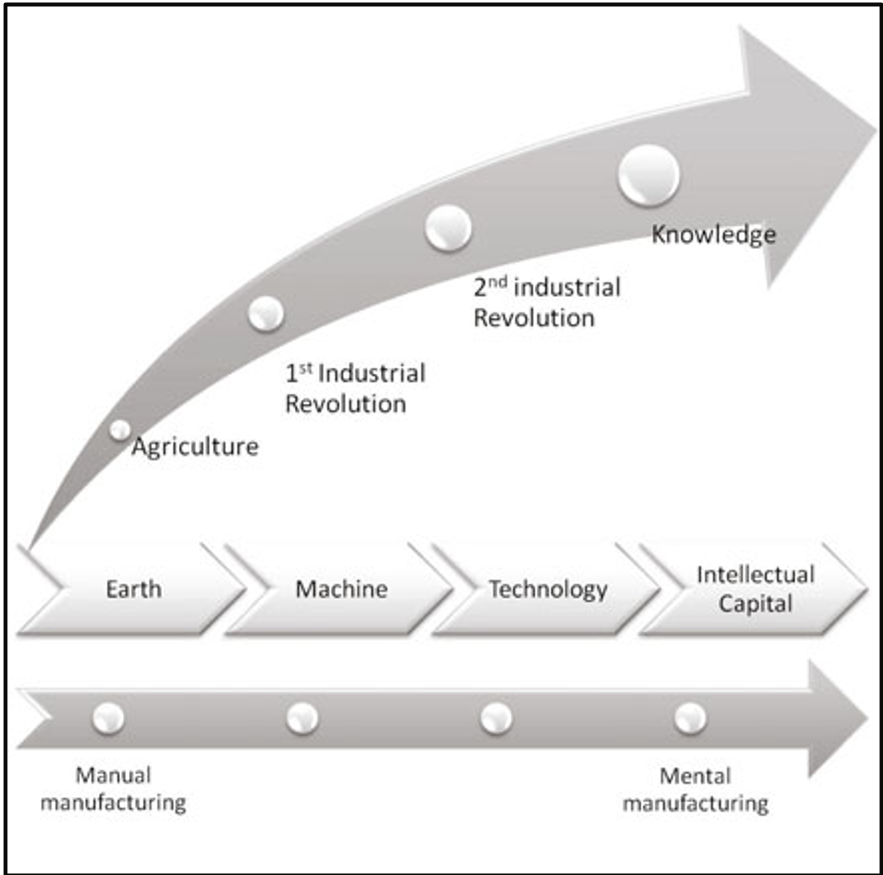 Figure 1: The architecture of the Distributed Agency methodology.
Case Study: The Baja California IT Cluster
The paper examines a strategic region: Baja California, Mexico. Despite being close to the US market, the local IT market is often underdeveloped or fragmented.
The researchers mapped 14 key regional actors (including companies like Honeywell Aerospace and Gameloft) into their model. They focused on three pillars:
- Intellectual Capital: Human and structural assets.
- Business Intelligence: Strategic decision-making and innovation.
- Business Cluster: The interaction between companies, universities, and government.
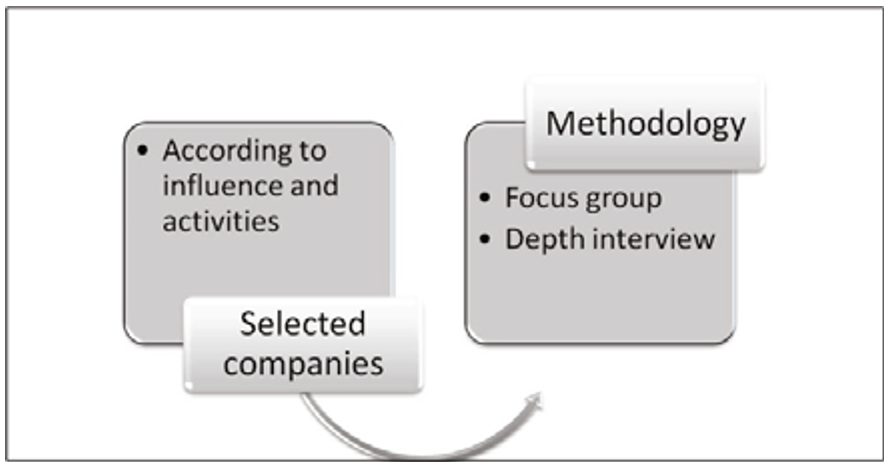 Figure 2: Workflow for modeling Distributed Complexity, from Data Mining to Validation.
Experimental Insights & Results
The paper’s neuro-fuzzy approach allows for a reduction in complexity—achieving higher modeling accuracy with a smaller, more interpretable rule set.
- Competitiveness is Sequential: The study finds that developing intellectual capital is the prerequisite for business intelligence, which naturally leads to the formation of clusters.
- Joint Responsibility: Higher performance in the IT sector is not the burden of businesses alone but a "joint responsibility" involving regional public policy and educational institutions.
Critical Analysis & Future Outlook
The strength of this work lies in its interdisciplinary synthesis. By quantifying "subjective interpreted experience" through fuzzy logic, it provides a tool for policymakers to see the hidden levers of industrial growth.
Limitations: The current paper focus is on the modeling framework and rule extraction. The actual large-scale simulation (using NetLogo) and temporal validation are slated for future work.
Takeaway: For modern management, this paper signals a shift: we must stop modeling companies as black boxes and start modeling them as "Cognitive Agencies" that thrive on the flow of fuzzy, subjective knowledge.
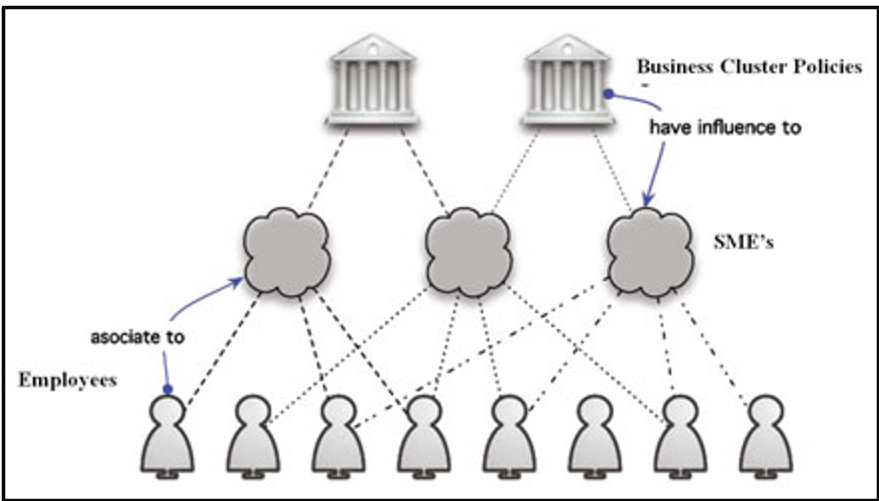 Figure 3: Conceptual mapping of knowledge assets within the agency framework.