
Eco-Commuting and the Small World: How Social Networks Drive Modal Shifts
Multi-agent transport simulation model with social network in small world
This paper presents a multi-agent transport simulation (MATS) model that integrates a Small World social network to simulate the dynamics of "eco-consciousness" and modal shift behavior. By combining a logit-based mode choice model with the Watts-Strogatz network algorithm, the study explores how social interactions influence the transition from private cars to public transit (eco-commuting).
TL;DR
To combat rising CO2 emissions, individual "eco-consciousness" is as vital as infrastructure. This paper introduces a multi-agent simulation that models how environmental attitudes spread through a Small World social network. By simulating agents in Tokushima, Japan, the authors demonstrate that social interaction can either solve or exacerbate the "social dilemma" of eco-commuting, proving that peer influence is often more powerful than simple fare discounts.
The Missing Link: Why Infrastructure Isn't Enough
Current transport policies often rely on "carrots and sticks"—lowering bus fares or taxing carbon. However, these methods ignore the psychological Inductive Bias of commuters. Why do people revert to cars even when public transit is subsidized? The answer lies in the decay of environmental awareness and the lack of social reinforcement. The authors argue that urban traffic is a "complex system" where individual consciousness is not static but behaves like a virus spreading through a network.
Methodology: Engineering the "Artificial Society"
The core of this research is the integration of the Watts-Strogatz model into a transport simulator. This captures the "non-local structural peculiarity" of real human relationships—where we are mostly influenced by local neighbors but are occasionally connected to distant perspectives.
1. The Utility of Green Choices
The model uses a modified logit function where the utility () of public transport is defined not just by time () and cost (), but by an agent's internal eco-consciousness ():
2. The Small World Engine
Agents are placed in a "conceptual space." Instead of a rigid grid, links are periodically "rewired" (5% probability) to create a Small World. This allows for the "spillover effect," where one highly motivated "green" agent can influence a wider cluster of commuters.
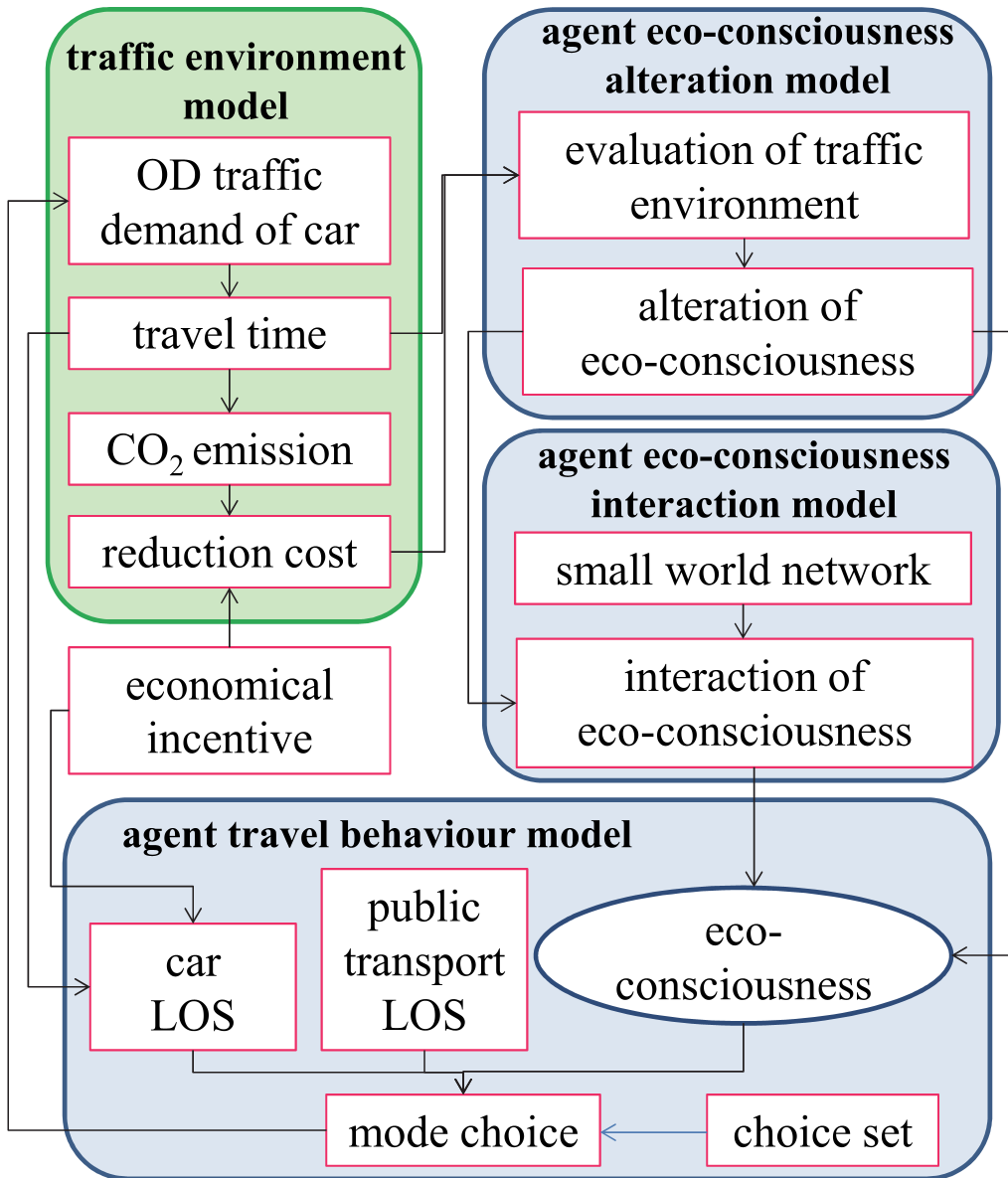 Figure 1: The architecture of the multi-agent system, linking individual behavior to the global traffic environment.
Experiments: The Decay of Consciousness
The researchers conducted several sensitivity analyses to see how different parameters affected the society's "greenness."
- The Social Dilemma (Internal Alteration): When agents only learn from their own experience (), eco-consciousness tends to drop. They prioritize their own travel time over the "invisible" CO2 emissions of the city.
- The Power of Interaction: As the interaction index () increases, the society reaches a stable state of eco-consciousness. A "green" agent can pull their peers up, preventing the total collapse of environmental awareness.
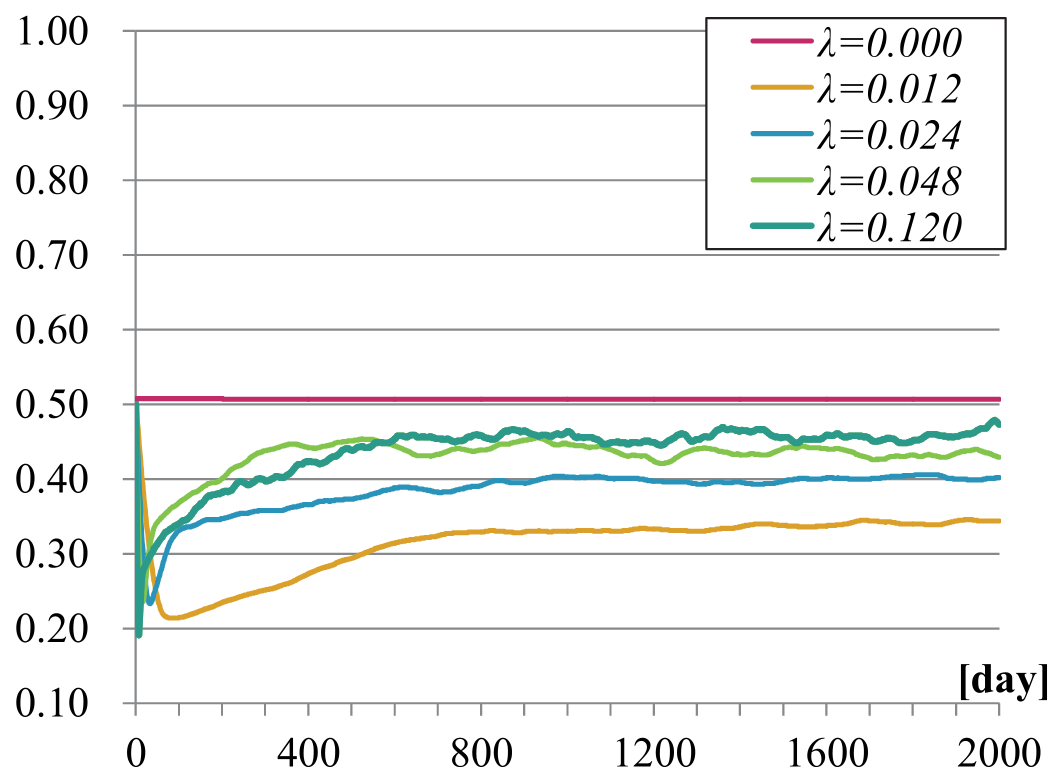 Figure 2: Time-series analysis showing how the rate of individual alteration affects the overall moral baseline of the artificial society.
The Bus Fare Paradox
In a critical experiment, the authors reduced bus fares significantly. While this led to an initial surge in bus users, the ridership eventually declined in the long term (see Figure 6). This occurs because if the underlying eco-consciousness isn't reinforced by social networks, the convenience of the car eventually wins back the commuter.
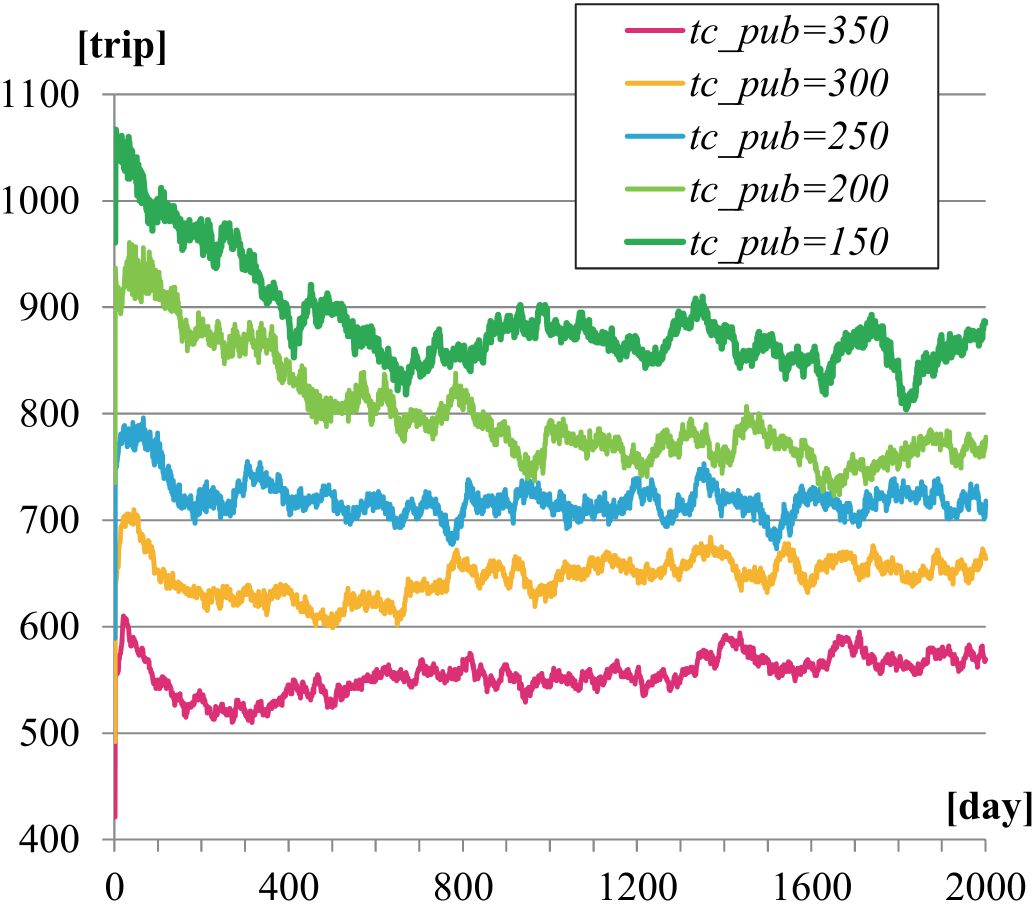 Figure 3: The "Sustained Effect" problem—fare discounts offer a temporary boost, but social dynamics determine the final steady state.
Critical Insight & Conclusion
This study shifts the focus from Economic Man (deciding on price) to Social Man (deciding based on peers).
Key Takeaways:
- Network Topology Matters: The "Small World" structure of our cities dictates how fast eco-commuting habits can spread.
- Interaction vs. Incentive: Economic incentives (fare discounts) are great "kick-starters," but social interaction is the "fuel" that keeps the modal shift running.
Limitations: The model currently relies on estimated parameters from a 2011 Japanese social experiment. Future work needs to integrate real-time social media graph data to better map how influence flows in the modern digital age.