
MTK: Mastering Multi-Constrained Search in Contextual Social Graphs
Multi-Constrained Top-K Graph Pattern Matching in Contextual Social Graphs
This paper introduces the Multi-Constrained Top-K Graph Pattern Matching (MC-Top-K-GPM) problem and proposes the MTK algorithm. It aims to identify the top-K matches of a designated node in large-scale social graphs by integrating graph simulation with multiple social context constraints (trust, intimacy, and impact).
TL;DR
Finding the right "expert" in a social network isn't just about finding a matching job title; it's about navigating a web of trust, intimacy, and influence. This paper introduces the MC-Top-K-GPM problem and the MTK algorithm, which allows users to find the top-K matches for a specific node under multiple social constraints. By using a specialized HB-Tree index and early termination logic, MTK achieves high efficiency on graphs with millions of nodes.
Contextual Motivation: Why Structure via Isomorphism Isn't Enough
In the world of Graph Pattern Matching (GPM), we often struggle with a dichotomy: Isomorphism is too strict (and NP-Complete), while basic Graph Simulation is too loose and returns thousands of irrelevant results.
More importantly, real-world social networks are "contextual." A Project Manager (PM) is only effective if they have trustworthy relationships with their developers. Previous "Top-K" methods ignored these attributes (Trust , Intimacy , and Impact ). The authors argue that a useful matching algorithm must prioritize these multi-dimensional constraints.
Methodology: The MTK Framework
The authors solve the efficiency-effectiveness trade-off through three key innovations:
1. The Unity Ranking Function
Instead of a single score, the paper proposes a bi-criteria function:
- Relevance (): Uses relevance flooding to determine how well a node satisfies the user's structural preferences.
- Trust (): Measures the aggregate trustworthiness of the paths connecting the matches.
- Unity (): A normalized weighted sum of both using functions to map values to .
2. HB-Tree Indexing
To avoid scanning the entire data graph , the HB-Tree (Hybrid B+ Tree) indexes nodes based on their Label, Indegree, and Outdegree. This allows the algorithm to instantly retrieve only the valid candidates for the "designated node" (e.g., searching only for nodes labeled 'PM' with sufficient connections).
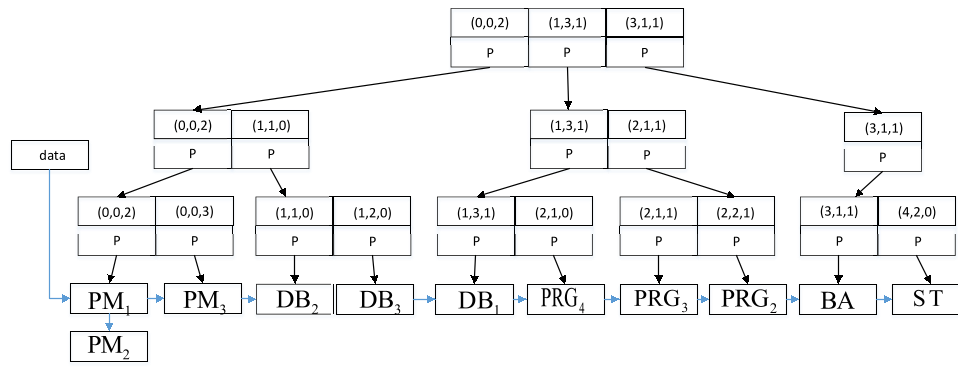 Figure 3: The HB-Tree allows for rapid filtering of candidate nodes based on structural metadata.
3. Early Termination Strategy
The "magic" of MTK lies in its search procedure. It calculates the Lower Bound () and Upper Bound () for candidates.
- Phase 1 (Initialization): Uses BFS to estimated upper bounds.
- Phase 2 (Propagation): Refines lower bounds.
- Stopping Criterion: As soon as the lower bound of the current top-K candidates exceeds the upper bound of the remaining candidates, the algorithm stops. This prevents the "Brute-force" waste of computing every possible match.
Experimental Performance
The researchers tested MTK against a Brute-force baseline across five massive datasets, including YouTube (1.7M nodes) and Twitter.
Efficiency vs. Complexity
As the search depth (Bound Length ) increases, MTK's query time grows much slower than the baseline. In some cases, it reduces the number of nodes checked by nearly 86%.
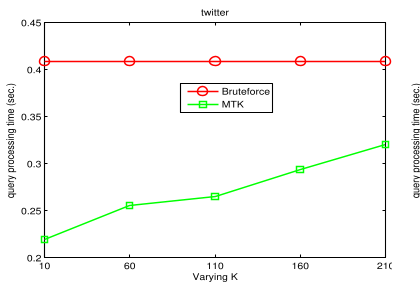 Figure 5: Performance across different bound lengths, showing MTK's resilience to pattern complexity.
Scalability
The algorithm demonstrates linear scalability relative to the number of nodes in the data graph, making it a viable candidate for production-grade social search engines.
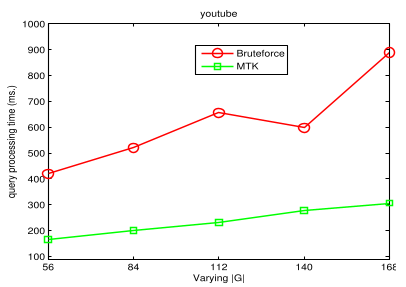 Figure 7: Data showing that MTK inspects significantly fewer candidates (NChecked) than total available (NTotal).
Critical Insight & Conclusion
By shifting the focus from "finding everything" to "finding the best few under constraints," the MTK algorithm effectively "prunes" the search space of social networks.
Takeaway: This research highlights that in large-scale social systems, Social Context is a first-class citizen. Future work might involve integrating these graph simulation techniques with Graph Neural Networks (GNNs) to handle even noisier, dynamic attribute data.