
Improved SVM-Radial Bias: Elevating Diagnostic Accuracy in Healthcare Monitoring
Multi-disease prediction model using improved SVM-radial bias technique in healthcare monitoring system
The paper introduces a multi-disease prediction framework utilizing an Improved SVM-Radial Bias Kernel technique. It targets Chronic Kidney Disease (CKD), Diabetes, and Heart Disease, achieving high-accuracy benchmarks including 98.3% for CKD and 98.7% for Diabetes using reduced feature sets.
Executive Summary
TL;DR: This research tackles the critical challenge of early disease detection by introducing a refined Support Vector Machine (SVM) model using a Radial Bias Kernel. By optimizing the interplay between margin size and cost parameters, the researchers achieved state-of-the-art diagnostic accuracy—reaching 98.7% for Diabetes—outperforming traditional ensemble methods and linear classifiers.
Academic Context: This work functions as a performance-driven refinement of classical machine learning within the healthcare domain. It moves the needle from general classification to precision diagnostics by emphasizing the importance of feature selection and kernel optimization over raw model complexity.
Motivation: The Complexity of Clinical Data
In the digital age, healthcare practitioners are overwhelmed with data (EHRs, IoT sensors, and clinical trials). The core problem isn't the lack of data, but the noise within it. Existing diagnostic models often fail because:
- High Dimensionality: Irrelevant features (like administrative patient IDs) can degrade model performance.
- Linear Limits: Biological relationships are rarely linear; hence, simple linear classifiers often suffer from high Bias.
- The Precision Trap: In medicine, a "False Negative" (missing a sick patient) is far more costly than in other industries, requiring models with exceptionally high Sensitivity.
Methodology: The Improved SVM-Radial Bias Framework
The authors propose a three-layer architecture: Data Source, Storage, and the Decision Support System (DSS). The DSS is the "brain" of the operation, consisting of four sub-modules:
1. Feature Optimization
Instead of using all features, the authors utilized Chi-Square testing to select the most relevant clinical markers. For example, in Diabetes, features like Glucose levels and BMI were prioritized over less impactful variables.
2. The Radial Bias Kernel
The core innovation lies in the mathematical tuning of the Radial Basis Function (RBF). Unlike Linear kernels, the RBF can map data into an infinite-dimensional space to find a non-linear hyperplane.
The authors emphasized the relationship: Where is the Margin and is the Cost parameter. By decreasing the margin size strategically, they ensured that vectors were classified into their corresponding spaces more strictly, effectively lowering the Misclassification Rate (MCR).
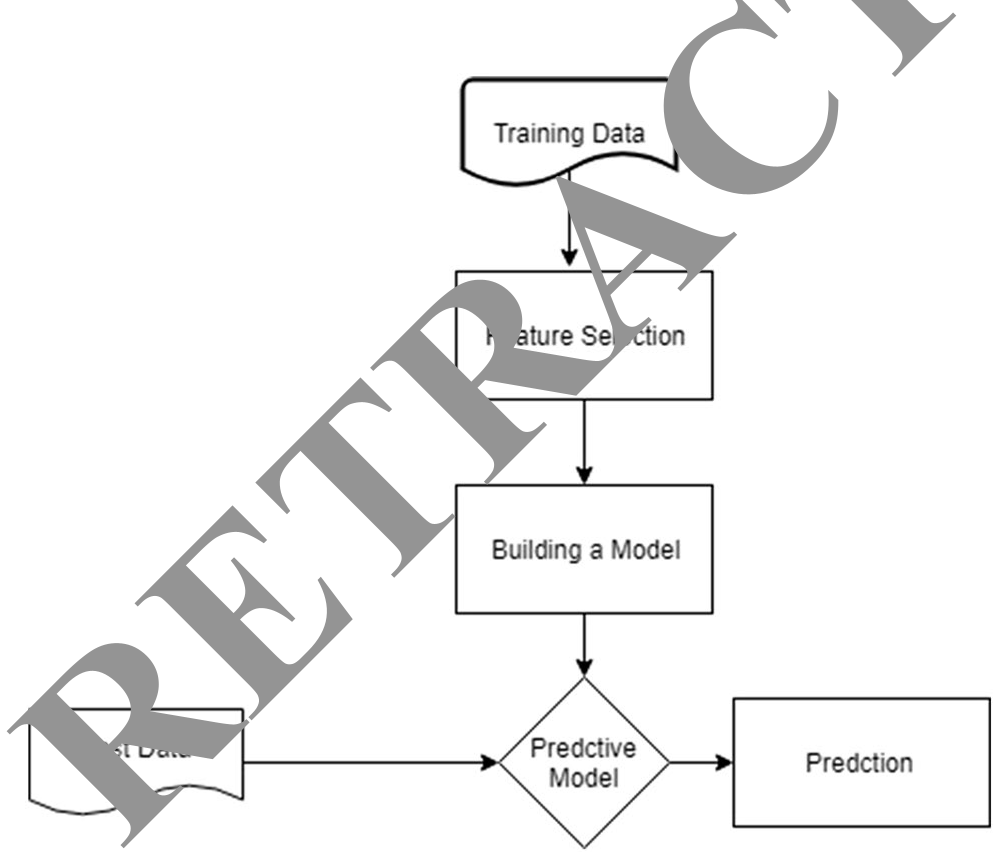 Fig 1. The Decision Support System Flow: From Pre-processing to Disease Prediction.
Experiments & Performance Benchmarks
The model was validated using the world-renowned UCI Repository for three specific conditions: Chronic Kidney Disease (CKD), Diabetes, and Heart Disease.
Key Metrics Comparison
The Improved SVM-Radial technique showed a clear dominance across almost all clinical metrics:
| Disease | Model | Accuracy | Precision | Sensitivity |
|---|---|---|---|---|
| Diabetes | Improved SVM-Radial | 98.7% | 100.0% | 95.5% |
| Decision Tree | 97.4% | 96.1% | 96.1% | |
| CKD | Improved SVM-Radial | 98.3% | 95.0% | 100.0% |
| Heart Disease | Improved SVM-Radial | 89.9% | 81.4% | 97.2% |
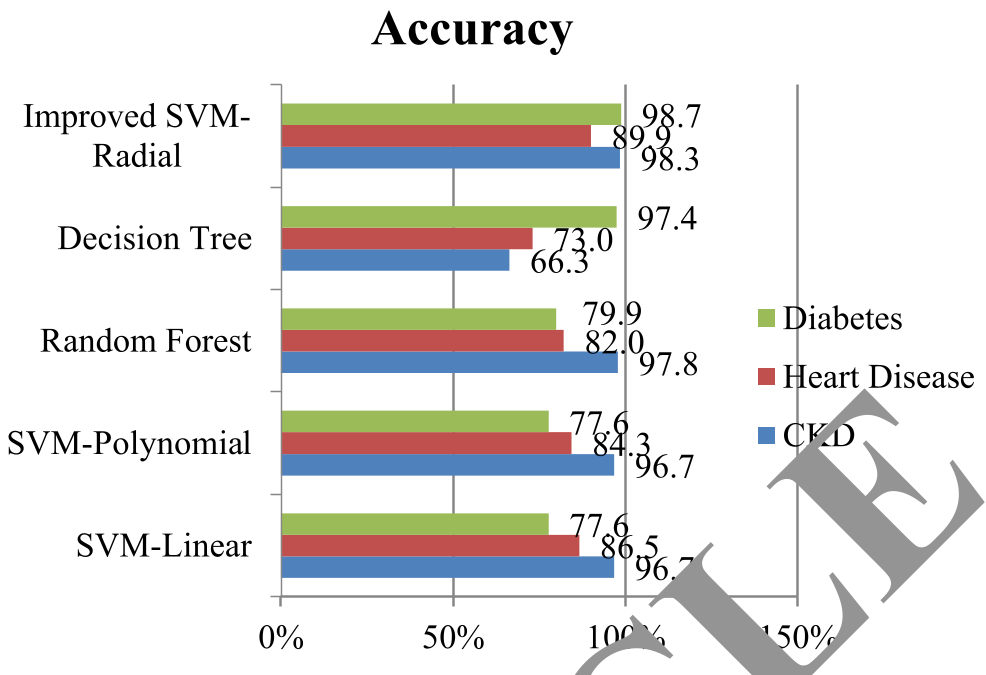 Fig 2. Accuracy comparison showing the superiority of the Radial Bias technique over Linear and Polynomial SVMs.
Deep Insights & Conclusion
While modern AI research often focuses on "Black Box" Deep Learning, this paper proves that Support Vector Machines, when properly tuned with non-linear kernels, remain incredibly potent for tabular clinical data.
Takeaways for Research
- Kernel Choice Matters: The significant jump from 77.6% (Linear) to 98.7% (Radial) in Diabetes accuracy underscores that the "geometry" of the data is inherently non-linear.
- Specific Over General: The model achieved better results by reducing the feature set, proving that in medical AI, "Less is often More."
Limitations
The primary limitation is the reliance on the UCI dataset. While these are gold-standard benchmarks, real-world clinical data is often much "messier" than curated repositories. Future work should focus on Cross-Institutional Validation to ensure the model's robustness against different EHR standards.
Ultimately, the Improved SVM-Radial Bias model provides a reliable, high-precision tool for doctors to reduce diagnosis time and begin treatments earlier, potentially saving lives through early intervention.