
The TDR System: Bridging Ancient Philosophy and Modern IoT through Slow Intelligence
A multi-level slow intelligence system for visualizing personal health care
The paper introduces the TDR system, an experimental multi-level Slow Intelligence System (SIS) designed for personal health care visualization. Built on a Chinese philosophical framework of Tian (Heaven/Environment), Di (Earth/Residence), and Ren (Human), it utilizes a distributed component-based architecture to integrate environmental and physiological data through varying computation cycles.
TL;DR
The TDR system is a multi-level "Slow Intelligence System" (SIS) that reimagines personal healthcare by integrating environmental, residential, and physiological data. Grounding its architecture in the Chinese philosophical trinity of Tian (Heaven), Di (Earth), and Ren (Human), it uses a unique abstract machine model to process complex health data through iterative computation cycles, moving beyond simple reactive monitoring to a more holistic, adaptive intelligence.
Problem & Motivation: The Gap in Human-Centric Systems
In current health-monitoring paradigms, we often see a "quick cycle" dominance. If a sensor detects a high heart rate, it alerts; that is a quick response. However, these systems often lack the "slow intelligence" required to understand why the heart rate rose. Was it an environmental heatwave? Poor atmospheric conditions?
The authors identify that human-centric psycho-physical systems suffer because quick decision cycles often override long-term insights, leading to better performance in the short run but potentially poor outcomes in the long run. The challenge is creating a system that can continuously learn, adapt, and propagate knowledge across different layers of human existence.
Methodology: The TDR Framework and Slow Intelligence
The core of the TDR system is the Slow Intelligence System (SIS) framework. An SIS is defined by its ability to solve problems by trying different solutions, propagating knowledge, and running continuously to improve performance over time.
1. The Trinity Architecture
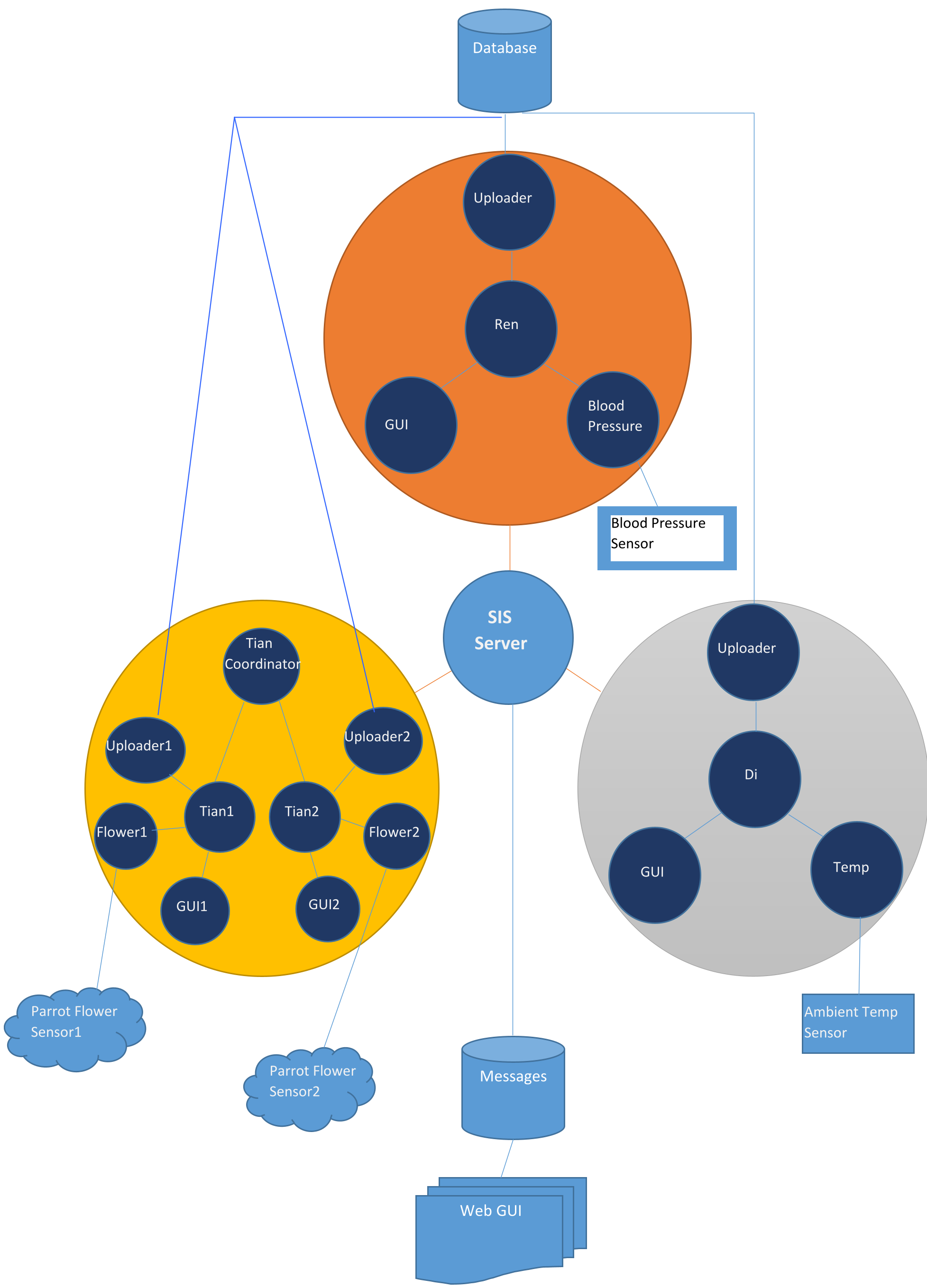
The system is divided into three "super-components":
- Tian (Heaven): Focuses on the macro-environment. In this paper, it uses plant sensors (moisture, sunlight) as proxy indicators for environmental health.
- Di (Earth): Represents the immediate residential environment, such as ambient room temperature and humidity.
- Ren (Human): Covers personal health indicators like heart rate, SpO2, and blood pressure.
2. The Abstract Machine Model
The logic is driven by a formal specification: . The authors use a specific sequence of operators to process "problem elements":
- +adap: Adapting to incoming environmental input.
- -enum<: Enumerating related problem possibilities.
- >elim-: Eliminating non-solution elements.
- prop+: Propagating the final solution or alert to peers.
System Components and Distributed Logic
The TDR system utilizes Component-Based Software Engineering. Each super-component is managed by an SIS Server and consists of:
- Controllers: The "brains" that maintain state machines.
- Basic Components: The interface for raw sensor data (e.g., Parrot sensors).
- Advertisers/Uploaders: Responsible for pushing alerts to databases.
- Coordinators: Managing the communication between sub-systems.
The system even includes a Social Network aspect, particularly in the "Chi" (Qi) implementation, where "friends" or "masters" can vote on subjective health attributes (Fatigue, Weak Breadth), creating a hybrid objective-subjective diagnostic loop.
Experiments & Results: Visualizing Health
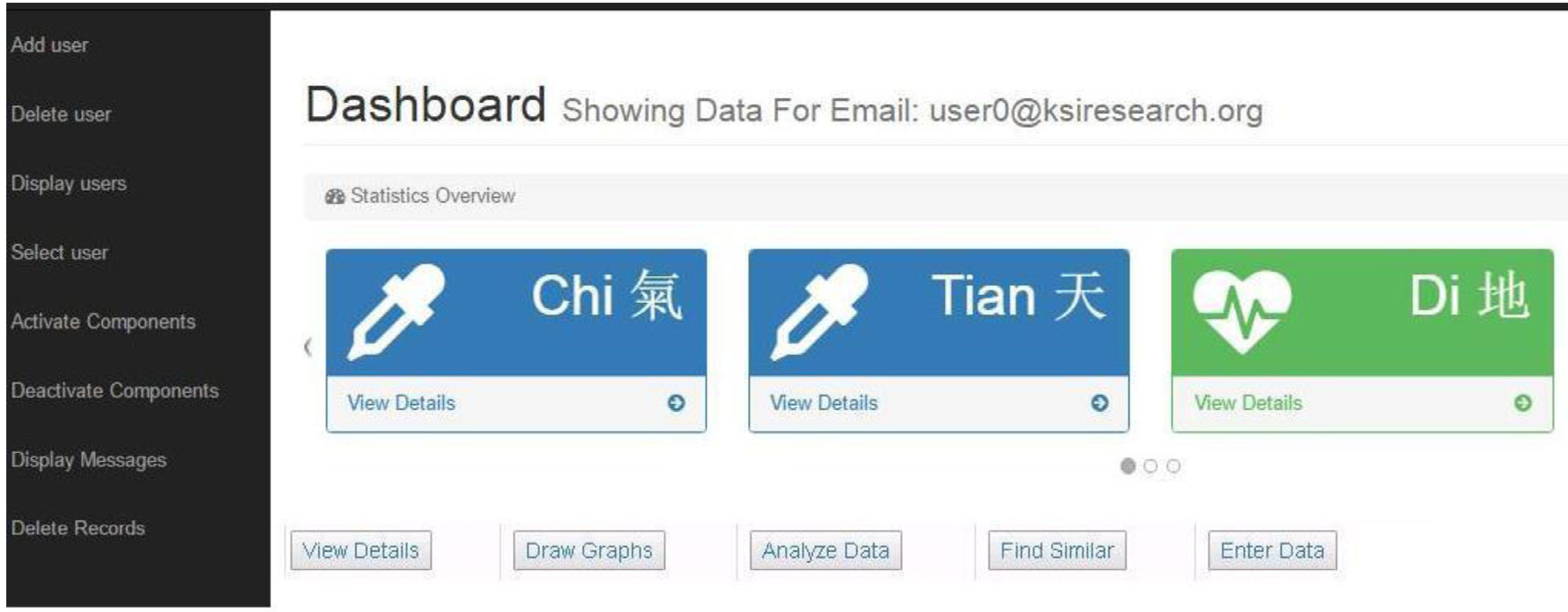
The TDR system was prototyped using Java and PHP. The most striking aspect of the results is the Visual Computing interface.
- Color-Coded State Awareness: The GUI uses color psychology—moving from a "Tranquil Blue" when cycles are normal to "Red" when an alert state is triggered.
- Multi-Device Scalability: The "Carousel" interface was designed to be responsive, reducing from four items on a PC to a single-panel view on smartphones without losing the core visualization of the computation cycles.
Critical Analysis & Conclusion
Takeaway
The TDR system represents a transition from "Sentient" networks (which just feel) to "Intelligence" networks (which reason). By formalizing the relationship between the environment (Tian/Di) and the individual (Ren), it provides a blueprint for future IoT systems that don't just report numbers but interpret health within a context.
Limitations
While the philosophical grounding is innovative, the use of plant sensors (Parrot) as the primary indicator for "Tian" remains a loose proxy for a person's physical environment. Furthermore, the reliance on subjective user input for "Chi" factors introduces potential bias that requires more robust verification through the suggested social net voting.
Future Work
The authors aim to further define the state of Resonance and Harmony among multiple computation cycles. This suggests a future where your smart home doesn't just adjust the thermostat because you're hot, but because it understands the "Slow Intelligence" link between the outside weather, your home's insulation, and your rising blood pressure.