
Efficient Multi-mode Retrieval: Harnessing Machine Learning for Economic Big Data
Multi-mode Retrieval Method for Big Data of Economic Time Series Based on Machine Learning Theory
The paper introduces a multi-mode retrieval method for economic time series big data leveraging machine learning theory. It employs a binary data conversion strategy and trend-based similarity filtering to optimize search performance, achieving a peak retrieval efficiency of 95% in large-scale datasets.
TL;DR
In the era of exploding financial information, retrieving specific patterns from massive economic time series is becoming a "needle in a haystack" problem. This paper proposes a novel retrieval framework that combines binary data conversion, trend-based normalization, and multi-stage threshold filtering. The result? A retrieval efficiency of up to 95%, significantly outpacing traditional indexing methods by over 20% in large-scale scenarios.
The Bottleneck in Economic Data Search
The primary challenge in econometrics today isn't just collecting data, but effectively querying it. Traditional search engines often struggle with:
- Index Creation Latency: As data grows, the time required to build and update indices scales poorly.
- Data Oscillation: Economic time series are notoriously noisy. Standard distance metrics (like Euclidean distance) often fail because they focus on raw values rather than the "shape" or "trend" of the data movement.
- Computational Waste: Calculating similarity for every sub-sequence in a massive dataset is computationally prohibitive.
Methodology: From Raw Values to Binary Trends
The core innovation lies in how the researchers represent and filter data. Instead of comparing raw numbers, the system focuses on the behavior of the series.
1. The Retrieval Architecture
The system is decoupled into six distinct modules, separating the index library from the data repository. This allows for full-text retrieval based on inverted indices while maintaining stable performance.
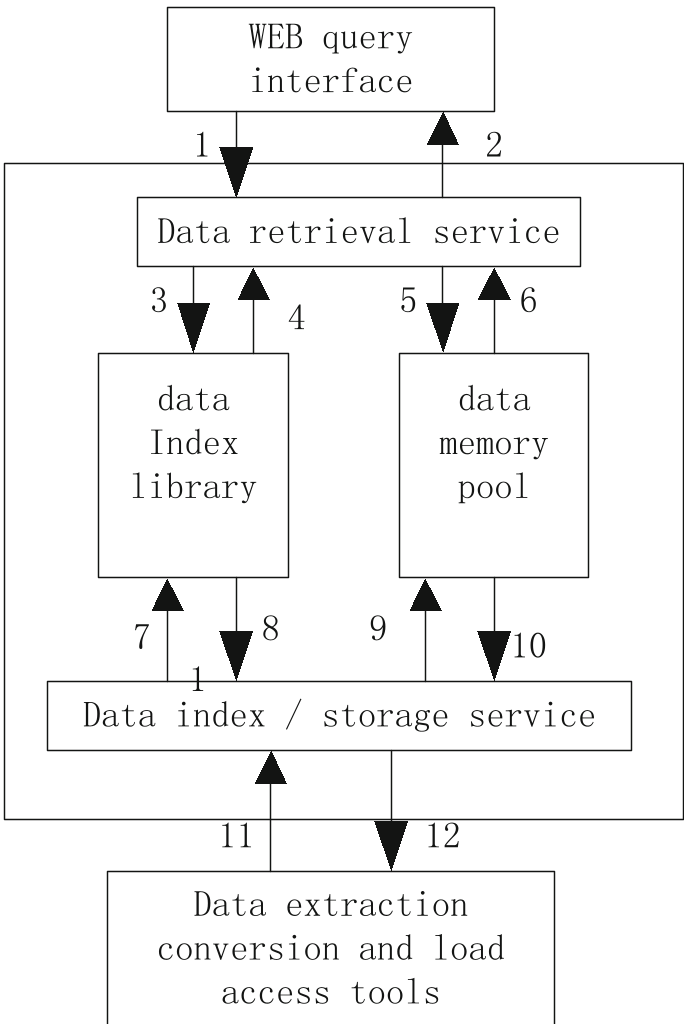 Figure 1: The proposed retrieval model design, highlighting the separation of indexing and storage.
2. Binary Trend Encoding
Instead of high-precision floats, the method converts sequences into binary signals. By analyzing the relationship between three adjacent points, the system identifies:
- Convex Growth/Decrease: Accelerating or decelerating trends.
- Concave Growth/Decrease: The "hollow" curves of the data.
This binary representation acts as a high-level "fingerprint" that is much faster to compare than raw numerical values.
3. Multi-Threshold Filtering
To solve the "computational explosion" problem, the authors implement a hierarchical filtering strategy using several key thresholds:
- Total Feature Quantity: If a candidate has vastly different feature counts, it's discarded immediately.
- Accumulated Distance: If the distance exceeds a threshold during the partial match, the process terminates early.
- Sampling Matching: By sampling at fixed intervals rather than checking every single point, the system speeds up the judgment of global similarity.
Experimental Results & Performance Analysis
The researchers tested their method against a database of 40,000 records, varying data sizes from 32MB to 512MB.
Key Findings:
- Speed Stability: While traditional methods saw performance degradation as data size hit the "sweet spot" of server capacity, the proposed machine learning approach remained robust.
- Efficiency Gains: At 128MB, the proposed method was 27% more efficient than traditional baselines. Even at the largest test size (512MB), it maintained a 19% lead.
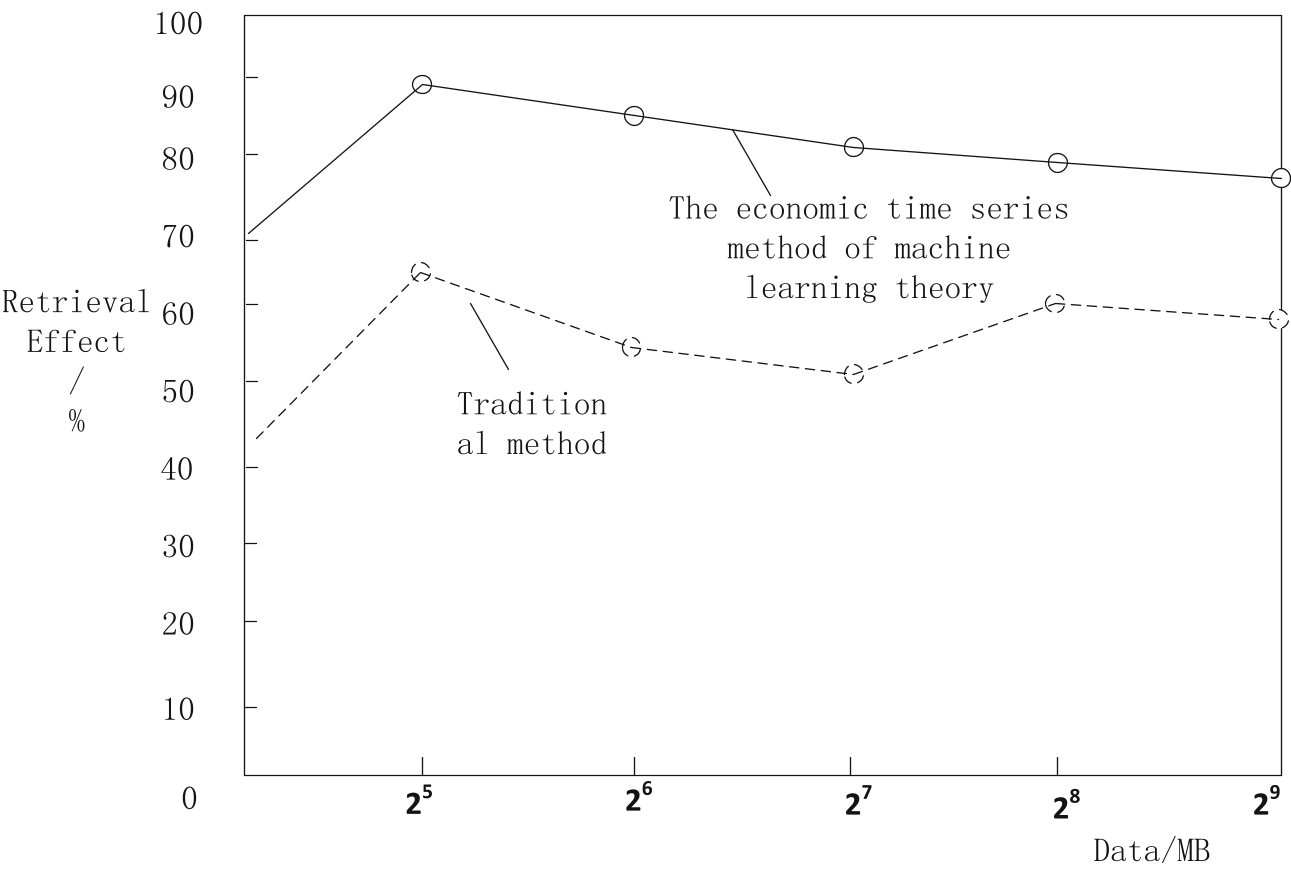 Figure 2: Comparison of retrieval efficiency between traditional methods and the proposed ML-based method.
Critical Insight & Conclusion
The success of this method proves that in high-dimensional economic data, shape matters more than scale. By normalizing data to a [0, 1] interval and focusing on binary trend relationships, the authors have effectively mitigated the "noise" inherent in economic cycles.
Limitations: While the efficiency is high, the binary conversion might lose some granular intensity information (e.g., the difference between a small dip and a crash if both are "concave"). Future work could involve adaptive binary thresholds to capture the magnitude of change more effectively.
Takeaway: For developers and researchers in Fintech, this paper provides a blueprint for building scalable, high-speed search engines for time-series data by shifting from "value-matching" to "trend-matching."