
Evolutionary Homomorphic Encryption: A Multi-Layer Shield for Big Data Privacy
A Multilayer Evolutionary Homomorphic Encryption Approach for Privacy Preserving over Big Data
The paper introduces a multilayer encryption approach for Big Data privacy, combining Evolutionary Cryptography (Genetic Algorithms) with the TSZ (To, Safavi-Naini, and Zhang) Homomorphic Encryption scheme. This hybrid framework achieves data obfuscation and computation-on-ciphertext capabilities while mitigating known vulnerabilities in standard homomorphic systems.
Executive Summary
TL;DR: This paper presents a hybrid cryptographic approach that fuses Evolutionary Computing (Genetic Algorithms) with Homomorphic Encryption (TSZ scheme). By applying a stochastic "disorder" layer before the mathematical encryption, the authors create a system capable of resisting sophisticated attacks like the anonymous pirate decoder, although at the cost of increased computational time and ciphertext expansion.
Background: In the landscape of Big Data, Homomorphic Encryption (HE) is the "Holy Grail" because it allows processing data without decrypting it. However, pure HE is often mathematically rigid and vulnerable to specific algebraic attacks. This work acts as a structural reinforcement, positioning itself as a hybrid security framework for Privacy-Preserving Data Mining (PPDM).
Analysis of the Core Problem
The authors identify a critical "Achilles' heel" in standard Homomorphic Encryption: Algebraic Predictability.
Most HE schemes rely on complex mathematical structures (like bilinear pairings or elliptic curves). While robust, these structures can be susceptible to:
- IND-CPA/IND-CCA Attacks: Where attackers reveal patterns by observing chosen plaintexts or ciphertexts.
- Anonymous Pirate Decoders: Specifically in the TSZ scheme, a single malicious user can construct a functional decoder without revealing their identity, effectively breaking the system’s traceability.
The motivation here is Obfuscation. If the data is scrambled into a chaotic state before the math hits it, a mathematical breach of the second layer only reveals a scrambled mess from the first layer.
Methodology: The Two-Level Defense
The proposed system operates through a sequential pipeline of two distinct cryptographic paradigms.
Level 1: The Evolutionary Obfuscator
Instead of traditional substitution, the authors use a Genetic Algorithm (GA) to create "total disorder."
- Codification: Plaintext is converted to ASCII-based "populations."
- Genetic Operators: Through iterative rounds of Selection, Cross-over (swapping parts of text), and Mutation (random character permutation), the text is transformed into a Pre-Ciphered Text (PCT).
- The Session Key (SK): The specific permutation resulting from the GA serves as a "Genetic Key" required for recovery.
Level 2: Enhanced TSZ Homomorphic Layer
The PCT is then passed into a modified TSZ algorithm.
- Fibonacci Group Generation: The group is filled using a Fibonacci principle (), adding a non-trivial layer of generation complexity.
- Bilinear Mapping: The actual encryption uses pairing-based cryptography, allowing for homomorphic properties.
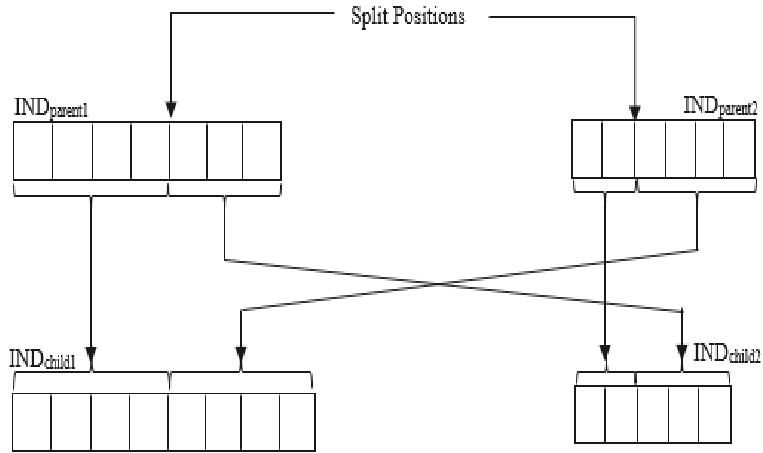 Figure 1: The dual-layer workflow showing the transition from Plaintext to Pre-ciphered text (via GA) to final Ciphered Text (via TSZ).
Experimental Insights & SOTA Comparison
The authors conducted experiments fixating on a 2048-bit key size while varying the cross-over probability in the GA.
1. The Impact of Randomness
The results demonstrate that the final ciphertext size (SC) and encryption time (TE) do not scale linearly with plaintext size (SP). This non-linearity is a hallmark of the Evolutionary approach—the complexity is driven by the stochastic convergence of the GA rather than the raw input length.
2. Comparison with Classical Schemes
When compared against standard algorithms (Paillier, Goldwasser-Micali, etc.), the proposed system shows a distinct profile:
| Algorithm | Ciphertext Size (SC) | Encryption Time (TE) |
|---|---|---|
| Our System | ~5.2 Million | 5,765 s |
| Original TSZ | ~4.2 Million | 1,699 s |
| Paillier | 2,251 | 276 s |
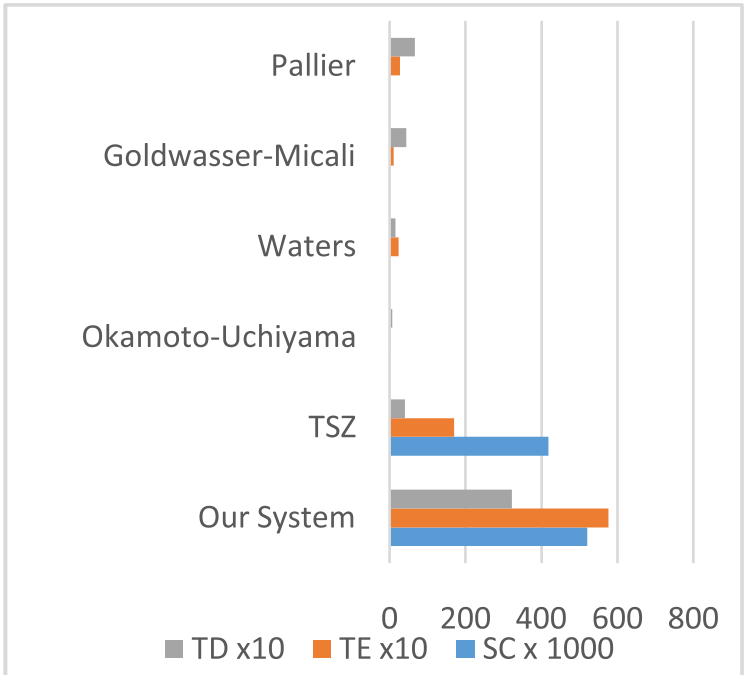 Figure 2: Performance comparison showing the trade-off between the proposed high-security hybrid system and classical lightweight algorithms.
The Trade-off: The system increases ciphertext volume by roughly 20% over the base TSZ and introduces significant latency. However, it provides a "disorder" barrier that classical algebraic-only schemes lack.
Critical Analysis & Future Outlook
Takeaway
This research successfully moves the "defense line" of homomorphic encryption. By introducing the Genetic Key, the authors force an attacker to solve two unrelated problems: a hard mathematical problem (Bilinear Pairing/DL) and a hard combinatorial problem (Genetic Permutation).
Limitations
- Efficiency: The encryption/decryption times (measured in thousands of seconds for small texts) are currently prohibitive for real-time Big Data applications.
- Ciphertext Expansion: A 751-character input resulting in 5 million characters of ciphertext indicates a massive storage overhead.
Future Work
The authors suggest that while the multi-level approach is theoretically superior in protection, the next 2026-era challenge will be optimizing the Iterative Complexity. Future research should focus on "Lightweight Evolutionary Methods" to prune the GA rounds without sacrificing the entropy of the obfuscation.
Subject Expertise Note: In the context of Privacy-Preserving Data Mining (PPDM), this work highlights a shift towards "Defense in Depth" where the vulnerability of a single mathematical structure is mitigated by the chaotic nature of evolutionary algorithms.