
Beyond Words: Decoding Personality Through Multimodal Fusion and Induced Behavior
Multimodal analysis of personality traits on videos of self-presentation and induced behavior
The paper presents a multimodal deep learning framework to estimate "Big Five" personality traits from audio-visual cues and transcribed speech. It introduces the SIAP dataset, which uniquely includes both self-presentation (interview) and induced behavior (reactions to stimuli) videos, achieving performance comparable to state-of-the-art on the ChaLearn LAP First Impressions dataset.
TL;DR
This research advances automated personality analysis by introducing the SIAP dataset, which captures both interviews and induced behavioral responses. By employing deep spatio-temporal models (3D-ResNext, LSTNet, and BERT), the study demonstrates that our facial reactions to specific stimuli are potent indicators of the "Big Five" traits, often proving more objective than self-reported data.
The "Social Desirability" Gap
Traditional personality assessment is plagued by the "social desirability" effect—people tend to overrate traits like Openness and underrate Neuroticism. This paper highlights a significant discrepancy between how individuals see themselves and how experts perceive them. The authors argue that to build truly reliable AI systems for clinical or recruitment use, we must move beyond speech and look at non-verbal dynamics and reactive behaviors.
Methodology: The Multimodal Engine
The core of the proposed system is a collection of expert deep models designed for specific behavioral "channels":
- Facial Appearance: Captured via 3D-ResNext-101, which uses 3D temporal convolutions to track micro-expressions over time.
- Dynamics (AUs and Pose): LSTNet (Long- and Short-term Time-series Network) processes 1-D signals like Facial Action Units, head pose, and body posture to capture both rhythmic and sudden behavioral shifts.
- Language & Audio: Multilingual BERT process speech transcripts, while pyAudioAnalysis extracts vocal features (MFCCs, energy), all fed into temporal models.
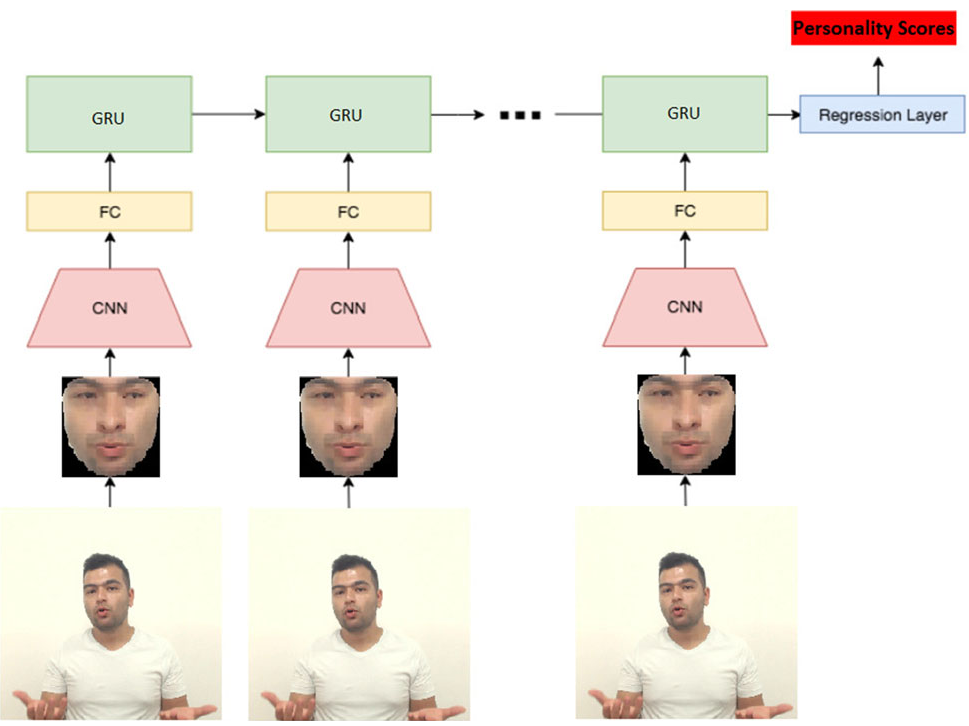 Fig 1: CNN-GRU architecture for temporal facial modeling.
The SIAP Dataset: A New Frontier
Unlike the standard ChaLearn FID dataset, which features YouTube vloggers talking to a camera, the SIAP (Self-presentation and Induced Behavior archive) dataset introduces a critical variable: Stimuli.
- Interview Mode: Participants answer open-ended questions.
- Induction Mode: Participants watch video clips (e.g., extreme sports for Openness, disorganized environments for Conscientiousness) while their reactions are recorded.
The study proves that induced behavior contains clear "signatures" of personality. For instance, high-Neuroticism individuals showed significant discomfort (squinting, leaning back) even when stimuli were subtly unsettling rather than overtly graphic.
Experimental Insights
The researchers found that facial modalities are the undisputed kings of personality estimation. While voice and text provide useful context, the 3D visual representation of the face consistently yielded the lowest error rates.
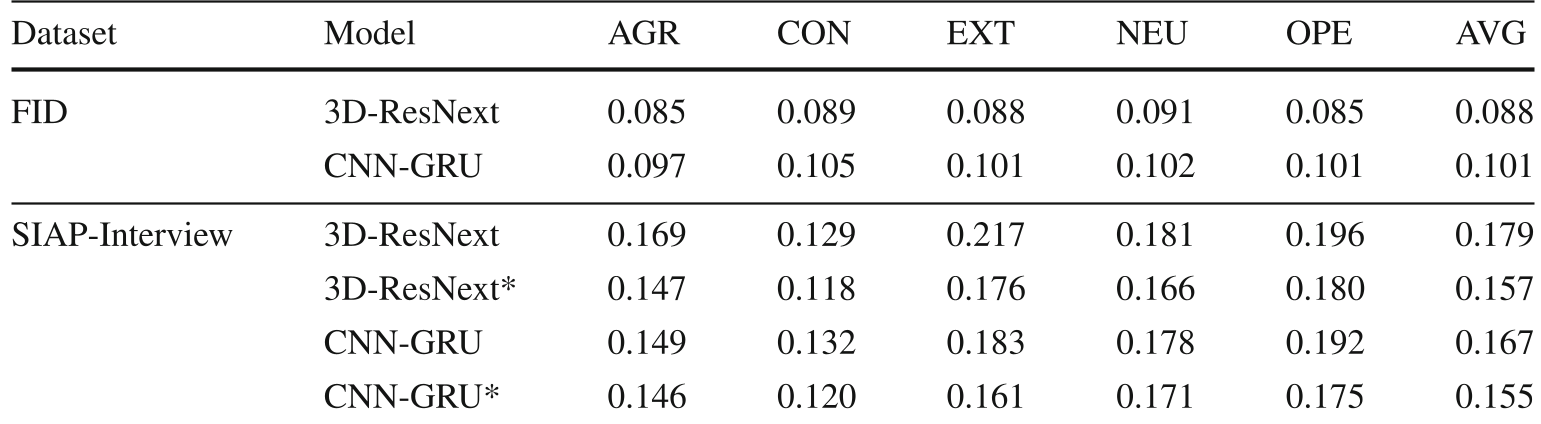 Table 1: Comparison of facial appearance models across datasets.
In terms of fusion, Late Fusion using Linear SVR (LSVR) performed best on large-scale data, suggesting that simply weighing the final scores from each "expert" model is more robust than trying to fuse complex high-dimensional features early in the pipeline.
Latent Space Visualization
Using t-SNE, the authors visualized how the model "sees" different behaviors. Interestingly, the facial patterns displayed during self-presentation (interviews) occupy a vast, diverse manifold compared to the more focused, clustered patterns of induced behavior. This suggests that while we all talk differently, our biological reactions to stimuli may be more patterned and predictable.
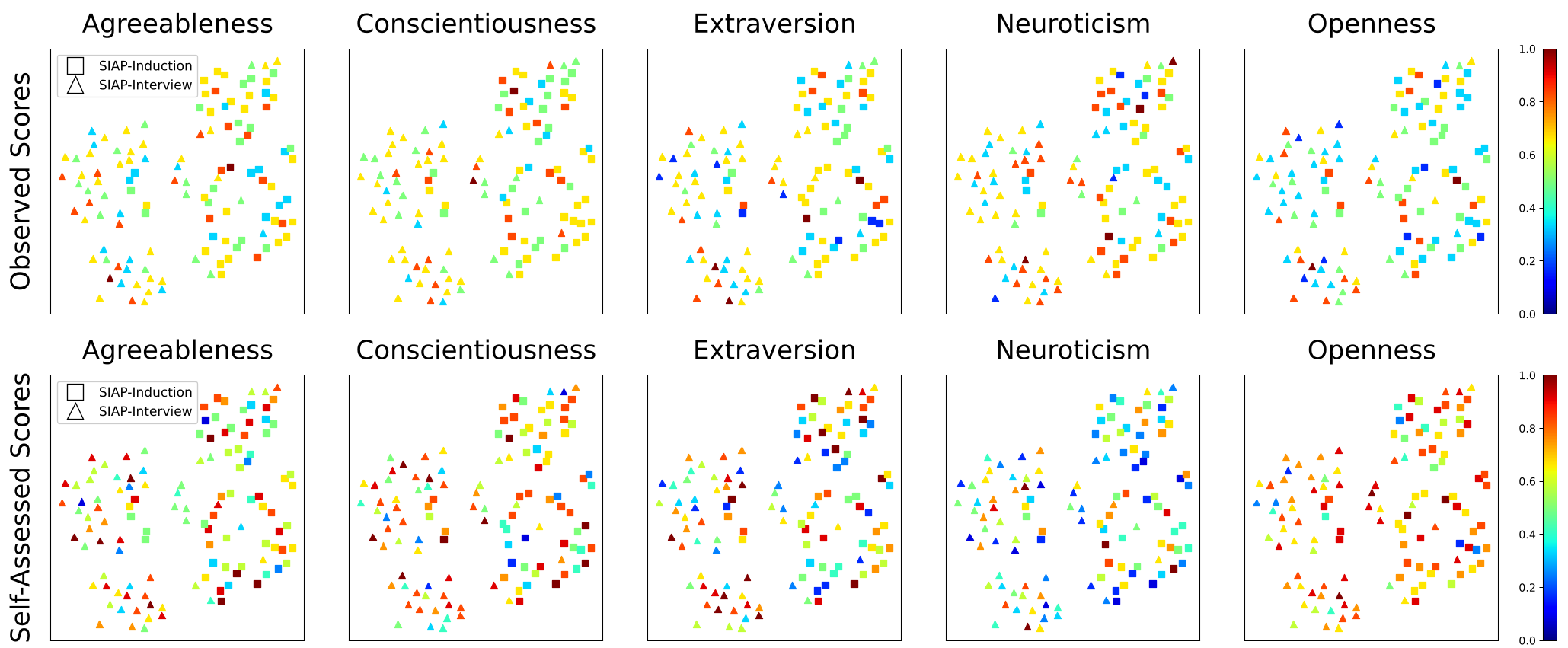 Fig 2: Joint visualization showing the cluster separation between interview and induction behaviors.
Conclusion & Key Takeaways
- Induced Reactions Matter: AI models should not rely solely on what people say, but how they react to the environment.
- Facial Dominance: 3D-CNNs capturing temporal facial dynamics are currently the most effective tool for automated trait estimation.
- Clinical Potential: By automating these assessments, we can move toward objective markers for mental disorders like depression and schizophrenia, where personality traits play a crucial prognostic role.
Despite the success, the authors note that traits like Conscientiousness remain harder to "catch" in short videos compared to Extraversion, indicating that certain aspects of the human soul require much longer observation windows.