
Multimodal Social Networking: Bridging the Gap in Professional Healthcare Collaboration
Multimodal Social Networking for Healthcare Professionals
This paper explores "Health 2.0" by proposing a multimodal Social Networking platform specifically designed for healthcare professionals. The system integrates Skype-based peer-to-peer communication with decentralized data sharing to facilitate teleconsulting and collaborative medical education.
TL;DR
This research addresses the "Health 2.0" revolution by proposing a specialized social networking platform for physicians. By integrating multimodal interaction—the ability to share and discuss everything from ECG signals to 5D PET scans—the platform uses a decentralized Skype-based architecture to enable teleconsultation and medical education without the overhead of massive centralized infrastructures.
Background & Positioning
In the landscape of digital health, we often see platforms for patients (like PatientsLikeMe) or general professional networks. However, this paper carves out a niche in professional-to-professional (P2P) healthcare networking. It positions itself as a SOTA attempt to solve the "lack of presence" problem in digital medicine by enabling doctors to share high-fidelity medical data alongside real-time communication.
The Problem: Why Doctors Aren't "Liking" Digital Health Yet
Through a series of interviews with medical professionals, the authors identified three core friction points:
- The Loss of Nuance: Non-verbal communication and physical examinations are hard to replicate online.
- Information Overload & Availability: Doctors fear being "always-on" for patient queries without proper compensation or boundaries.
- Data Complexity: Standard social media cannot handle the complexity of medical data—ranging from 1D ECG rhythms to 4D flow simulations.
Methodology: The Multimodal Architecture
The core innovation lies in the MultiModal Interaction (MMI) API layered over a peer-to-peer structure. Instead of a centralized server that could become a bottleneck or a privacy risk, the platform uses a decentralized approach.
1. Architectural Design
The system utilizes the Skype directory for scalability and adds a middleware service level to manage health-specific metadata. This allows doctors to "annotate" clinical data in real-time during a call.
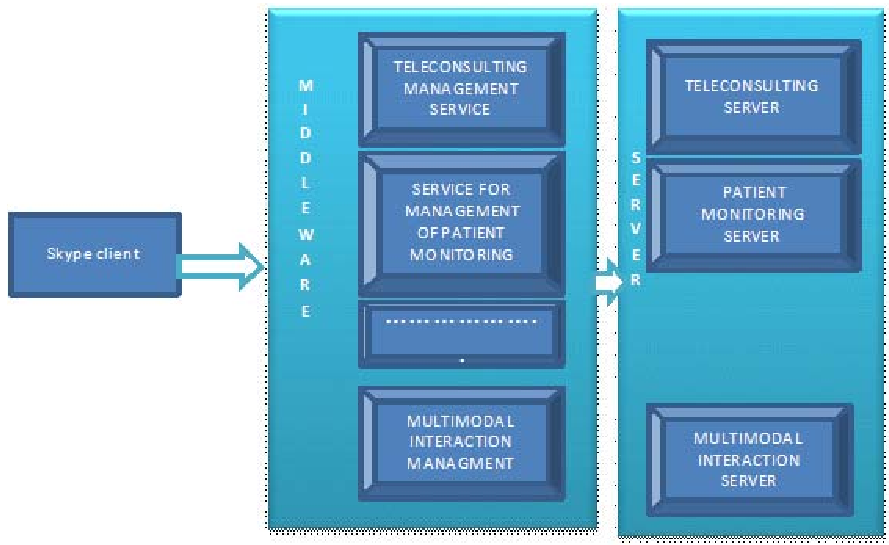 Figure 3: High-level schema showing the integration of Skype API for multimodal clinical interaction.
2. Handling Diversified Medical Sources
The platform is designed to handle "n-D combinations of modalities," including:
- 1D Signals: EEG, ECG.
- 3D/4D/5D Data: MRI slices, flow simulations, and PET/CT reconstructions combining anatomical and temporal information.
Experimental Insights: Trust and Efficacy
The authors conducted qualitative research to validate the need for such a system. The results emphasize the "Wisdom of Professional Crowds." By aggregating daily observations in a virtual space, physicians can identify trends in medication side effects or treatment outcomes much faster than through traditional journals.
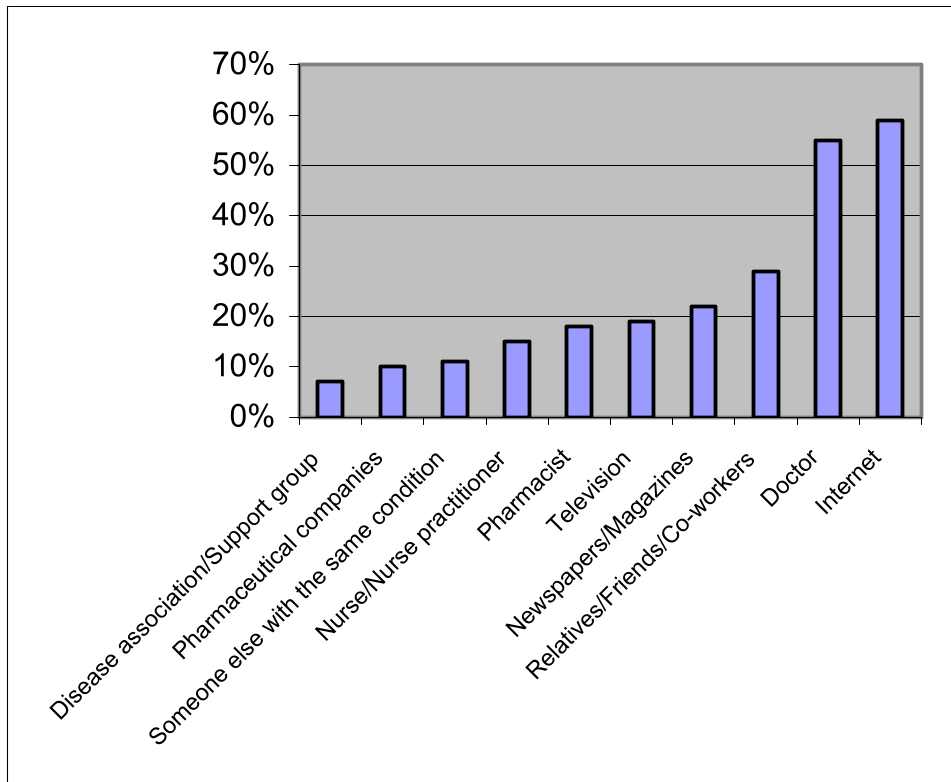 Figure 1: Contextualizing the growth of digital health search, highlighting the urgency for professional-grade platforms.
Critical Analysis & Future Outlook
Takeaway
The paper correctly identifies that for healthcare social networks to succeed, they must be multimodal. Text alone is insufficient for clinical excellence. The use of P2P architectures solves the scalability problem while maintaining a level of privacy desired by medical institutions.
Limitations
- Privacy & Encryption: While the paper mentions privacy, the specific cryptographic protocols for securing n-D medical data over a P2P network need more rigorous definition.
- User Experience: Relying on Skype (as of the paper's writing) introduces a dependency on a third-party proprietary API which has evolved significantly since the study.
Conclusion
This work serves as a foundational blueprint for Specialized Social Networks. By focusing on the specific data needs of physicians—multimodal, high-dimensional signals—it moves the conversation of Health 2.0 away from simple "socializing" toward "collaborative diagnosis."