
MPAC: Solving the "Tagged Photo" Privacy Dilemma in Social Networks
Multiparty Access Control for Online Social Networks: Model and Mechanisms
The paper introduces a Multiparty Access Control (MPAC) model for Online Social Networks (OSNs), specifically designed to manage shared data associated with multiple users (e.g., tagged photos). It features a collaborative policy specification scheme, a flexible voting-based conflict resolution mechanism, and a logic-based representation using Answer Set Programming (ASP) for formal security analysis.
TL;DR
Online Social Networks (OSNs) have long suffered from a "single-controller" flaw: only the owner of a photo or post decides who can see it. But what about the other people tagged in that photo? This paper presents MController, a Multiparty Access Control (MPAC) system that gives stakeholders a vote in privacy settings, using a sophisticated logic-based backend to resolve conflicts between different users' desires.
The Problem: The "Owner-Centric" Bias
In current platforms like Facebook or X (Twitter), if Alice uploads a photo of Bob and Carol, Alice is the sole "governor" of that data.
- The Conflict: Bob might want the photo private, while Alice wants it public.
- Existing "Fixes": Bob can "untag" himself, but his face is still in the photo, and Alice's friends can still see him.
- The Gap: There is no native mechanism for collaborative authorization where everyone in the photo has a say.
Methodology: How MPAC Works
The researchers redefined the OSN data model by identifying four distinct roles that grant a user the right to control data:
- Owner: The user whose space the data resides in.
- Contributor: The user who uploaded or posted the content.
- Stakeholder: Users explicitly tagged or mentioned.
- Disseminator: Users who re-share the content to their own feed.
1. The Voting Mechanism
To manage the inevitable "I want it public" vs. "I want it private" clashes, the paper introduces a weighted voting scheme:
- Decision Value (DV): Each controller's policy yields a 1 (Permit) or 0 (Deny).
- Sensitivity Score (Sc): Each controller assigns a weight reflecting how "sensitive" they feel the data is.
- Aggregation: The system calculates an aggregated value (). Access is granted only if .
2. Formal Analysis with ASP
The authors didn't just build an app; they formalized the model using Answer Set Programming (ASP). This allows the system to perform "Correctness Analysis" to ensure no logic loops exist and "Oversharing/Undersharing Analysis" to alert users if their current settings might lead to accidental data leaks.
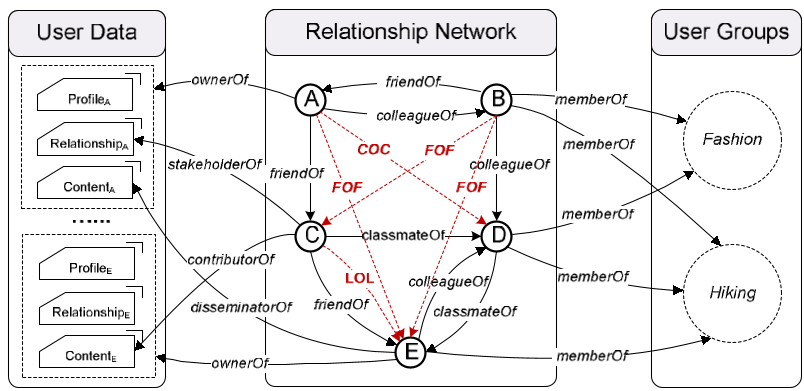 Figure 1: The dual-step evaluation process, checking individual policies before aggregating them into a final decision.
Implementation: MController on Facebook
The team built MController, a proof-of-concept Facebook app. It provides a gallery where users can see photos they are associated with (even if they don't own them) and set their own privacy preferences.
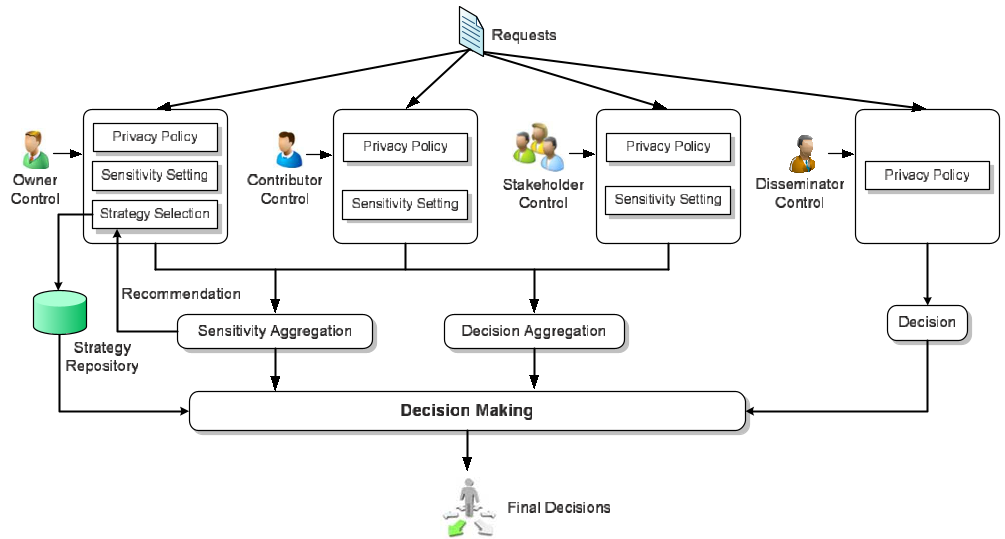 Figure 2: The MController architecture showing the integration between Facebook's API and the ASP-based reasoning server.
Key Results
- Usability: In trials, users felt much more "in control." The Likability score for the system was 0.83, compared to just 0.20 for Facebook's native settings.
- Efficiency: Despite the complex math and logic reasoning, the system scaled linearly. Evaluating a request for a photo with 20 controllers was fast enough for real-time social media use.
- Flexibility: The system supports multiple strategies, including "Owner-overrides" (traditional) and "Full-consensus" (maximum privacy).
Critical Insight & Conclusion
The genius of this paper lies in moving privacy from a static attribute (set by one person) to a dynamic consensus (negotiated by many). While there are risks of "collusion" (malicious users tagging themselves to change the vote), the authors suggest that facial recognition and reputation scores can mitigate these threats.
As we move toward a more interconnected digital world, the "My Space, My Rules" logic is becoming obsolete. The MPAC model provides the blueprint for the next generation of social privacy—one that is collaborative, logical, and fair.