
Strategizing Social Privacy: Thwarting Mutual Friend Attacks via k-NMF Anonymity
Mutual Friend Attack Prevention in Social Network Data Publishing
This paper introduces a novel anonymization approach to prevent "Mutual Friend Attacks" in social network data publishing. By proposing a k-NMF (Number of Mutual Friends) anonymity model and a sequence-based edge insertion algorithm, the authors ensure that every connection in a published graph shares its NMF value with at least k-1 other edges, effectively thwarting re-identification.
TL;DR
As social media data becomes a goldmine for research, "Mutual Friend Attacks" have emerged as a potent threat to user privacy. This paper presents an optimized k-NMF (k-Number of Mutual Friends) anonymization framework. By strategically inserting edges based on a global "impact value," the researchers achieve high levels of privacy (k-anonymity) while keeping graph distortions, such as path lengths and clustering, below a negligible 1%.
The "Mutual Friend" Vulnerability
In a social network, your identity is not just your name; it is the unique shape of your connections. Even if a publisher replaces names with IDs (e.g., User A, User B), an adversary can often find the Number of Mutual Friends (NMF) between two people via public profiles on Facebook or LinkedIn.
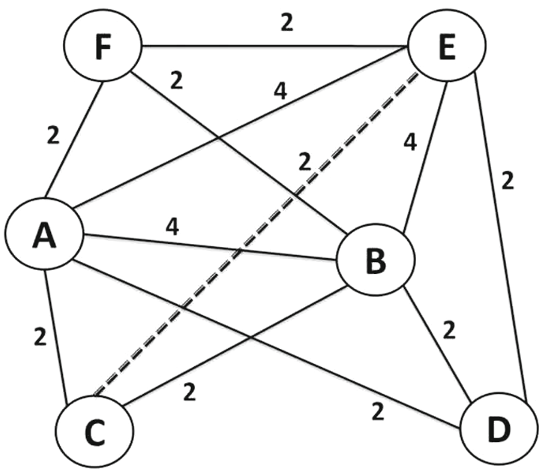
If "John" and "James" have 4 mutual friends, and only one pair of nodes in the published graph has an NMF of 4, the relationship is instantly deanonymized. This structural "fingerprint" is the core of the Mutual Friend Attack.
Methodology: The Global Optimization Advantage
While previous works (like BFSEA) attempted to fix this by modifying one edge at a time, the authors of this paper argue that such local fixes are inefficient and "blind" to the rest of the graph.
1. NMF Sequence Partitioning
The algorithm first sorts all edges by their NMF values and clusters them into groups of at least k. The highest NMF in each group becomes the "target."
2. Strategic Edge Insertion & Impact Points
Instead of randomly adding edges to increment NMF, the authors calculate an Impact Value (IV).
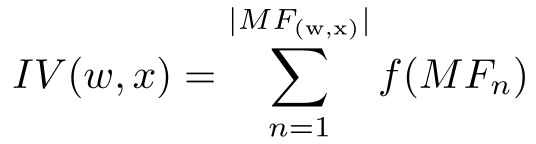
The intuition is simple: find a vertex whose addition to an edge's neighborhood helps the most other edges satisfy their own k-anonymity requirements. This "one-to-many" optimization drastically reduces the total number of edges added to the graph.
3. Maintaining Topology
The method uses Breadth-First Search (BFS) to select candidate vertices within a 2-hop or 3-hop radius, ensuring that the "small-world" nature of the social network isn't destroyed by connecting wildly unrelated nodes.
Experimental Battle: Quality vs. Privacy
The researchers tested their approach against the Hamsterster and Facebook (SOCFB) datasets.
Key Findings:
- Data Utility: The Average Path Length (APL) and Clustering Coefficient (CC) showed less than 1% deviation even as k (the privacy level) increased to 100.
- Graph Alteration: By considering the "Impact Value," the proposed method added significantly fewer edges than the existing BFSEA algorithm.
- Efficiency: Although the complexity is theoretically higher (), in practice, the lower number of required modifications makes the algorithm faster than baselines at higher values.
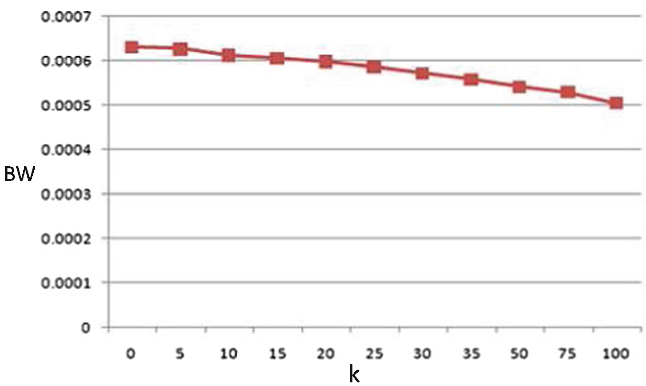 The charts above demonstrate that the proposed method (solid lines) maintains better graph utility as privacy requirements grow.
Critical Analysis & Future Outlook
The primary contribution is the shift from local edge fixing to sequence-based global optimization. By maintaining a requirement data structure, the algorithm "repurposes" every new edge to serve multiple privacy goals.
Limitations:
- Edge Insertion Only: The current model focuses strictly on adding edges. In extremely dense graphs, this might actually decrease utility more than a hybrid approach involving edge swapping or deletion.
- Computational Weight: For massive graphs (billions of edges), the term may become a bottleneck, suggesting a need for localized sub-graph processing in future iterations.
Conclusion
This work proves that structural privacy in social networks doesn't require "shredding" the data's value. By understanding the mutual friend sequence as a global resource, we can mask identities while keeping the network's mathematical soul intact for researchers.