
Beyond the Micro: Why Nanorobotics is a Sociotechnical Masterpiece
Nanotechnology and HFE: critically engaging human capital in small-scale robotics research
This paper presents a pioneering ethnographic study at the intersection of Human Factors and Ergonomics (HFE) and small-scale robotics (micro/nanorobotics). Focused on the University of Waterloo Nanorobotics Group (UWNRG), it conceptualizes the nanorobot not merely as a technical artifact, but as a "sociotechnical endeavor" emerging from a specific organizational and social ecology.
TL;DR
Nanorobotics is often viewed through the lens of physics and material science—fluids at low Reynolds numbers or magnetic flux pinning. However, this paper argues that the human factor is the invisible engine behind these tiny machines. By studying the University of Waterloo Nanorobotics Group (UWNRG), the author reveals that building a nanobot is actually about building a "robotic ecology" composed of social networks, patronage, and decentralized knowledge.
Perspective: The Scale Problem
Human Factors and Ergonomics (HFE) has long mastered the art of the "visible"—cockpits, workstations, and macro-robotics. But as we shrink matter to the micro and nano scales, the traditional HFE toolkit feels inadequate.
The author, Vivek Kant, points out a critical oversight: we focus so much on the what (the robot) that we forget the who and the how. Specifically, in university settings, innovation isn't just happening in top-down, professor-led labs; it’s happening in "Mode 2" environments—heterogeneous, transdisciplinary, and decentralized student groups.
The "MAYA" Case Study: Logic Behind the Lens
To illustrate the sociotechnical nature of nanobots, the paper dives into the development of MAYA (Micro-Assembling YBCO Apparatus).
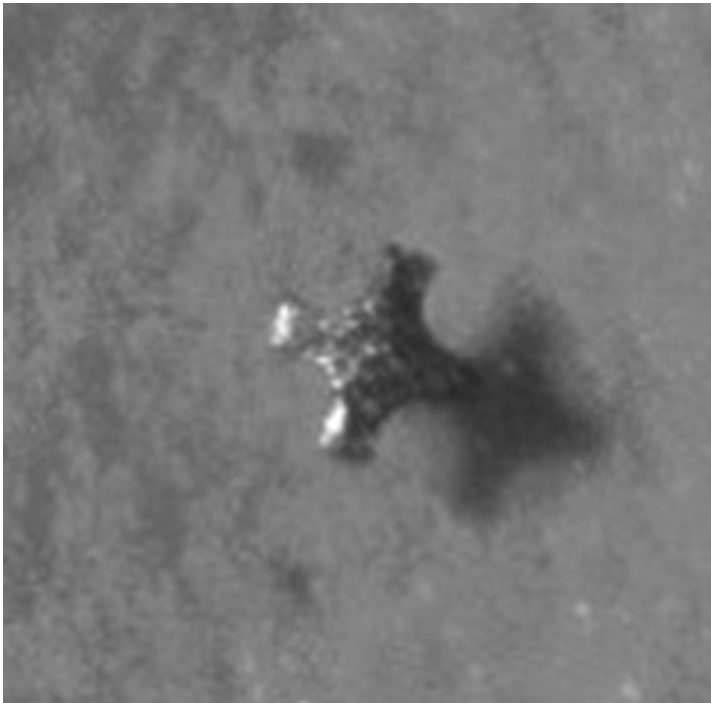 Above: The EMMA robot, a predecessor to MAYA, demonstrates the extreme scale challenges involved. Visualizing such artifacts requires significant technological mediation.
The Scientific Intuition
MAYA utilizes Type II Superconductors (YBCO). When placed in a magnetic field, the field partially penetrates the material through "flux tubes," effectively "pinning" the robot in space. This allows for precise actuation without physical contact.
The Social Reality
The "physics" was the easy part. The "sociotechnical" challenge involved:
- Resource Scavenging: Finding a specialized sputtering machine by networking through professors on sabbatical.
- Apprenticeship Knowledge: Senior students teaching freshmen how to handle silicon wafers that cost $40 a pop and are invisible to the naked eye.
- The "Pizza Box" Analogy: Cultivating a shared vocabulary (e.g., calling a robot part a "box tent") to bridge the gap between abstract design and physical fabrication.
Methodology: Mapping the Robotic Ecology
The paper utilizes Symbolic Interactionism, focusing on how meaning is constructed through social interaction. It identifies several "Generic Social Processes" essential for nanotech:
- Maintaining Patronage: Unlike labs with fixed grants, student groups must "seduce" sponsors with reports, social media tags, and letters of gratitude to secure expensive materials like silicon wafers.
- Navigating the Innovation Panarchy: The team exists within a "panarchy"—a complex structure involving the University, regional tech clusters (Waterloo’s Tech Triangle), and international competitions like ICRA.
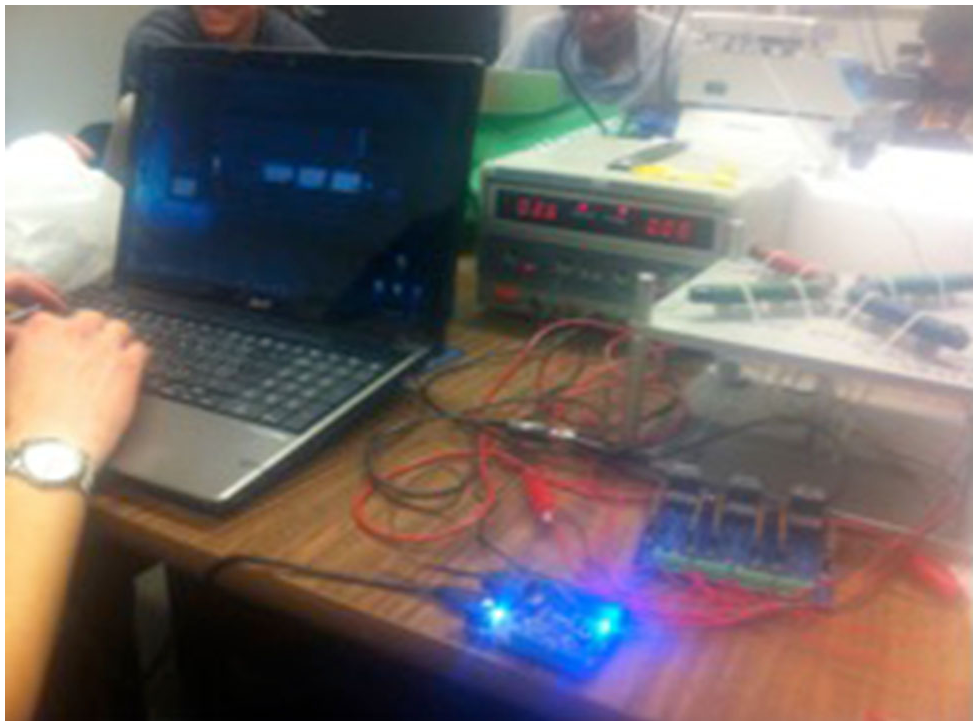 The SAM setup requires a robust integration of hardware, software, and human intervention—a true sociotechnical system.
Deep Insight: "Mode 2" Knowledge Practices
The most striking takeaway is the shift from Mode 1 (hierarchical, discipline-pure) to Mode 2 (problem-oriented, transdisciplinary) knowledge.
- Flexibility: When a sponsor refused to fund "perishable" chemicals, the team had to creatively re-classify silicon wafers as "durable assets" to secure funding.
- Democracy: Quality control and "handling deviance" (managing members who weren't contributing) were handled through group consensus rather than bureaucratic diktat.
Critical Analysis & Conclusion
Takeaway
Vivek Kant successfully argues that a nanobot is an ecological construct. Its design is a reflection of the team’s ability to navigate funding gaps, academic exam schedules, and inter-departmental politics.
Limitations & Future Work
The study is highly localized to the University of Waterloo. While the "generic processes" are insightful, how do these translate to a corporate nanotech startup where "vulture capital" replaces "student patronage"?
The future of HFE in nanotechnology lies in the "Human-Robot Interaction" (HRI) at the microscale. As we move from navigating obstacle courses to assembly tasks, the interfaces used to control these "negligible specks" of matter will become the next frontier of ergonomic design.
Final Thought: To build the technologies of the future, we must stop looking only through the microscope and start looking at the community holding the slide.